What 9/11 Taught Me About Corporate Leadership: Lessons from Tower One
Imagine standing on the 78th floor of World Trade Center Tower One when the floor beneath you suddenly heaves and the air fills with the scent of jet fuel. In that moment of absolute darkness, I didn’t reach for a flashlight or a crisis manual; I reached for the harness of my guide dog, Roselle, and the hands of my colleagues. This harrowing experience is the foundation of what 9/11 taught me about corporate leadership during times of extreme uncertainty. It’s a lesson in “blind trust” that goes far beyond the typical executive retreat or team-building exercise. It’s about the deep, quiet strength that comes from knowing your team has your back when the lights go out.
You probably agree that leading a modern organization feels increasingly volatile, especially when 2026 data shows that 93% of business leaders admit to missing critical red flags before a crisis strikes. It’s frustrating to watch employee trust erode while surface-level DEI initiatives fail to create a truly inclusive culture. This article will show you how to transform your leadership approach by embracing interdependence and radical transparency. We will explore how to build a resilient team that doesn’t just survive change but navigates it with clarity, ensuring your organization is prepared for the complex threats of the coming year.
Key Takeaways
- Redefine leadership as “blind trust,” a strategic choice to rely on the collective brilliance and expertise of your team rather than individual control.
- Uncover what 9/11 taught me about corporate leadership by learning how to maintain mission-critical focus and order when external conditions become chaotic.
- Move from simple collaboration to true interdependence by establishing shared stakes and communication channels that function effectively during high-pressure transitions.
- Leverage inclusive leadership as a practical tool for crisis prevention, using diverse perspectives to perceive organizational risks that others might overlook.
- Apply actionable frameworks for building a resilient culture that values adaptive living and rejects the limiting labels that often hinder team potential.
Redefining Leadership: The Power of ‘Blind Trust’ in Crisis
Most executives view leadership as a visual exercise. They watch metrics, observe body language, and monitor the “optics” of their organization to gauge health. However, what 9/11 taught me about corporate leadership is that the most effective leaders rely on something much deeper: “blind trust.” This isn’t a lack of awareness or a leap into the unknown. It’s a strategic reliance on the expertise and integrity of your team, choosing to believe in their capabilities even when you can’t see the path forward yourself.
On the 78th floor of Tower One, the environment was anything but clear. After the impact, the air was thick with the smell of jet fuel and the sounds of a building under immense stress. While others were understandably paralyzed by the visual chaos, my experience as a blind person allowed for a sensory-neutral approach to the situation. I didn’t need to see the smoke to know we needed to move; I relied on the training we had practiced and the bond I shared with my guide dog, Roselle. By focusing on the mission rather than the fear, we facilitated a calm, orderly evacuation. In the complex world of crisis management, leaders must learn to move from a “command and control” mindset to one of “trust and empower.”
Trust is a currency. You must make consistent deposits into your team’s emotional bank account during the good times before you can hope to make a withdrawal during a crisis. When I reflect on what 9/11 taught me about corporate leadership, I realize that true resilience isn’t born in the moment of impact. It’s born from the everyday habits of inclusion and mutual respect that you cultivate when the sun is still shining.
Preparation Over Panic: Building Trust in the Calm
The successful descent of 1,463 steps wasn’t an accident of fate. It succeeded because of pre-existing drills and the deep relationships we had forged in the office long before that Tuesday morning. Preparation is the ultimate antidote to organizational fear. When you’ve practiced for the “what ifs,” panic doesn’t have room to take root. This level of partnership is a core theme in the Thunder Dog book, which details how Roselle and I navigated the stairs together. We didn’t learn to work together in the stairwell; we learned to work together in the quiet moments of daily life. For a keynote speaker like myself, this remains the most vital lesson for any executive team: build your bridge before you need to cross the canyon.
Tactical Teamwork: How Interdependence Drives Corporate Resilience
In the high-stakes environment of Tower One, my guide dog, Roselle, provided a masterclass in focus. While the building swayed and the air grew heavy with the scent of jet fuel, she didn’t bark or bolt. Her focus remained entirely on her job. This is the essence of mission-critical clarity. When I consider what 9/11 taught me about corporate leadership, I think of how that singular focus allowed us to move forward. In a corporate setting, when a crisis hits, leaders often try to do everything themselves. They believe they must be the hero. Real resilience, however, comes from interdependence.
Interdependence requires three specific pillars: vulnerability, clear communication, and shared stakes. You have to be willing to admit what you don’t know. Scholars at the University of Pennsylvania, when discussing leadership lessons from 9/11, note that decentralized decision-making is often more effective than top-down control. By trusting my colleagues to describe the visual environment while they trusted my calm, we created a survival loop. Understanding what 9/11 taught me about corporate leadership means recognizing that we are all stronger when we stop trying to be solo performers. Trusting your team isn’t a sign of weakness; it’s the ultimate organizational strength.
If you’re ready to dive deeper into these frameworks, I recommend reviewing my work on leadership and trust to see how these tactical lessons apply to your specific industry.
Communication as a Survival Tool
During market volatility or internal restructuring, your team listens for more than just your words. They listen for your “quiet strength.” Communication must be steady and deliberate. I often use sensory-rich language to help people “see” the goal, even if they can’t visualize the path yet. This clarity cuts through the noise of fear. If you’re looking for a keynote speaker who can help your team build this level of cohesion, I can share the specific strategies we used to navigate the descent. For more stories on how a shift in mindset can change your corporate culture, listen to the Unstoppable Mindset podcast for fresh insights on teamwork.
Why Inclusive Leadership is a Strategic Corporate Safeguard
When the smoke filled the stairwell, the visual world vanished for everyone. For my colleagues, this was a terrifying loss of data. For me, it was an environment I already knew how to navigate. This shift in perspective is exactly what 9/11 taught me about corporate leadership. True inclusion isn’t about charity or compliance; it’s about adding specialized skill sets to your team that function when standard systems fail. By valuing diverse ways of perceiving the world, you effectively eliminate the organizational blind spots that lead to catastrophe.
Why this matters for leaders and organizations
A team that excludes is a team that eventually fails. It’s that simple. In a volatile market, leaders must identify risks before they become crises. If your executive team is composed entirely of people who process information the same way, you’re vulnerable to the same surprises. Investing in corporate accessibility is a sophisticated risk management strategy. It ensures your organization remains functional and adaptive even when the traditional “lights” go out, providing a level of resilience that a homogenous team simply cannot match.
Cultivating an ‘Unstoppable Mindset’ Across the Organization
To build a truly resilient organization, leaders must move from simple disability awareness to a culture of ability appreciation. This means recognizing that every characteristic of your team members carries a specific set of strengths. HR leaders can drive this change by prioritizing inclusive hiring practices that seek out individuals who have already mastered the art of adaptive living. These individuals bring a wealth of problem-solving skills that can’t be taught in a standard training manual.
Fostering a resilient mindset starts with the understanding that obstacles are not barriers; they’re simply features of the landscape. When you hire people who have navigated a world not built for them, you bring in experts in innovation and perseverance. If you’re looking for a keynote speaker who can help your team navigate uncertainty and build a culture of genuine inclusion, Michael Hingson brings a perspective few others can offer. Together, we can transform your leadership approach into one that sees beyond the surface and prepares for the future with confidence.
Leading Beyond the Visible Horizon
The lessons learned in the stairwell of Tower One aren’t just survival stories; they’re blueprints for the modern executive. We’ve explored how “blind trust” serves as a strategic foundation and why interdependence is the true engine of corporate resilience. We’ve also seen how inclusive leadership acts as a vital safeguard by leveraging diverse perspectives to identify risks long before they manifest. Ultimately, what 9/11 taught me about corporate leadership is that the strongest organizations are those that cultivate trust and clarity in the quiet moments so they can move as one when the environment becomes volatile.
As a New York Times Bestselling Author, survivor of the World Trade Center Tower One, and global keynote speaker on resilience and trust, I’ve spent decades helping leaders redefine their boundaries. If you’re ready to move beyond the limitations of traditional management and build a culture that perceives beyond the obvious, let’s start that journey together. Ready to transform your team’s perspective? Book Michael Hingson for your next leadership event. No challenge is too great when your team is anchored in trust and prepared with a vision that sees beyond the horizon.
Frequently Asked Questions
What is the most important leadership lesson from 9/11?
The most important lesson is that trust must be built long before the crisis occurs. On the 78th floor, we didn’t have time to negotiate roles or verify competence; we relied on the bond established through months of preparation and mutual respect. This highlights what 9/11 taught me about corporate leadership: true resilience is the byproduct of a culture where every team member feels valued and heard long before the lights go out.
How can leaders build trust in a hybrid or remote work environment?
Leaders build trust in a hybrid world by prioritizing radical transparency and consistent, sensory-rich communication. When you aren’t in the same physical room, you must use language that paints a clear picture of the organizational mission. It’s about moving from monitoring presence to empowering performance. This shift creates a sense of interdependence. This is a topic I frequently cover as a keynote speaker for organizations looking to strengthen their remote culture.
Why is inclusive leadership considered a crisis management tool?
Inclusive leadership is a crisis management tool because it leverages diverse perspectives to identify risks a homogenous group might miss. In Tower One, my perspective as a blind professional was a unique asset that allowed us to navigate a smoke-filled environment with calm. This reflects what 9/11 taught me about corporate leadership: by embracing different ways of processing information, organizations can effectively eliminate the strategic blind spots that often lead to catastrophic failures.
What does Michael Hingson mean by ‘living with no limits’ in a corporate context?
Living with no limits in a corporate context means rejecting the labels and perceived barriers that prevent teams from reaching their full potential. It’s an invitation to view challenges as characteristics of the landscape rather than dead ends. When an organization adopts this mindset, they move beyond compliance-based diversity and into a space of true ability appreciation. This approach transforms obstacles into opportunities for innovation, ensuring the company remains unstoppable in any economic climate.
Article by
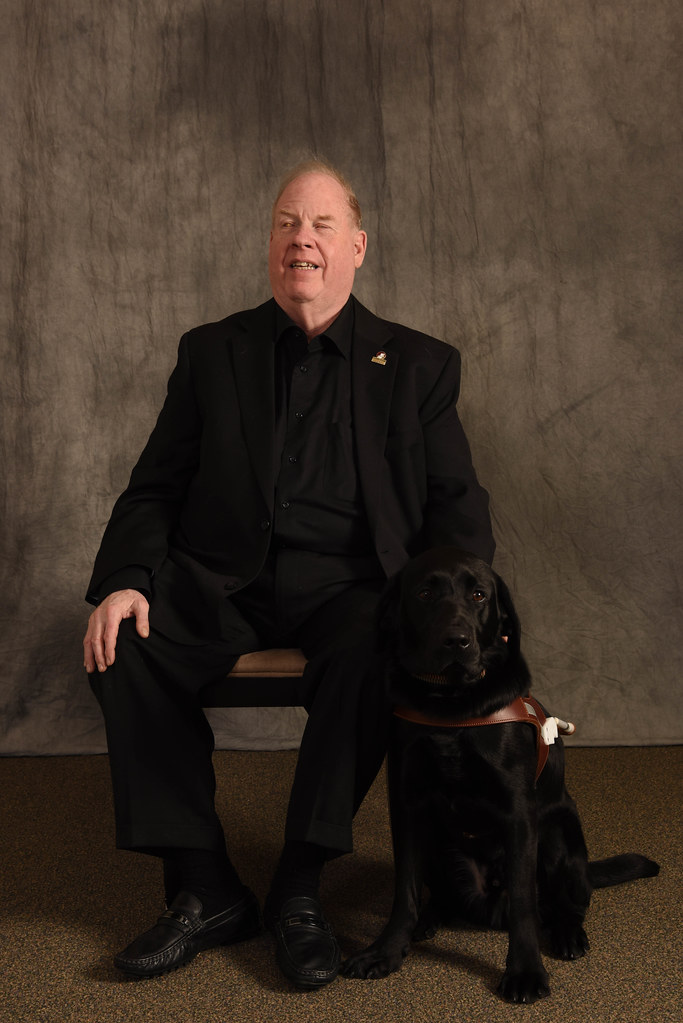
Michael Hingson
Michael Hingson is a keynote speaker, bestselling author of Thunder Dog, and a survivor of the September 11 World Trade Center attacks. Blind since birth, he brings a powerful and unique perspective on leadership, trust, and resilience in times of uncertainty.
He has spoken to organizations around the world, helping leaders and teams navigate change, build trust, and perform under pressure. His message combines real-world experience with practical insight that audiences remember long after the event ends.
👉 Book Michael Hingson for your next event.