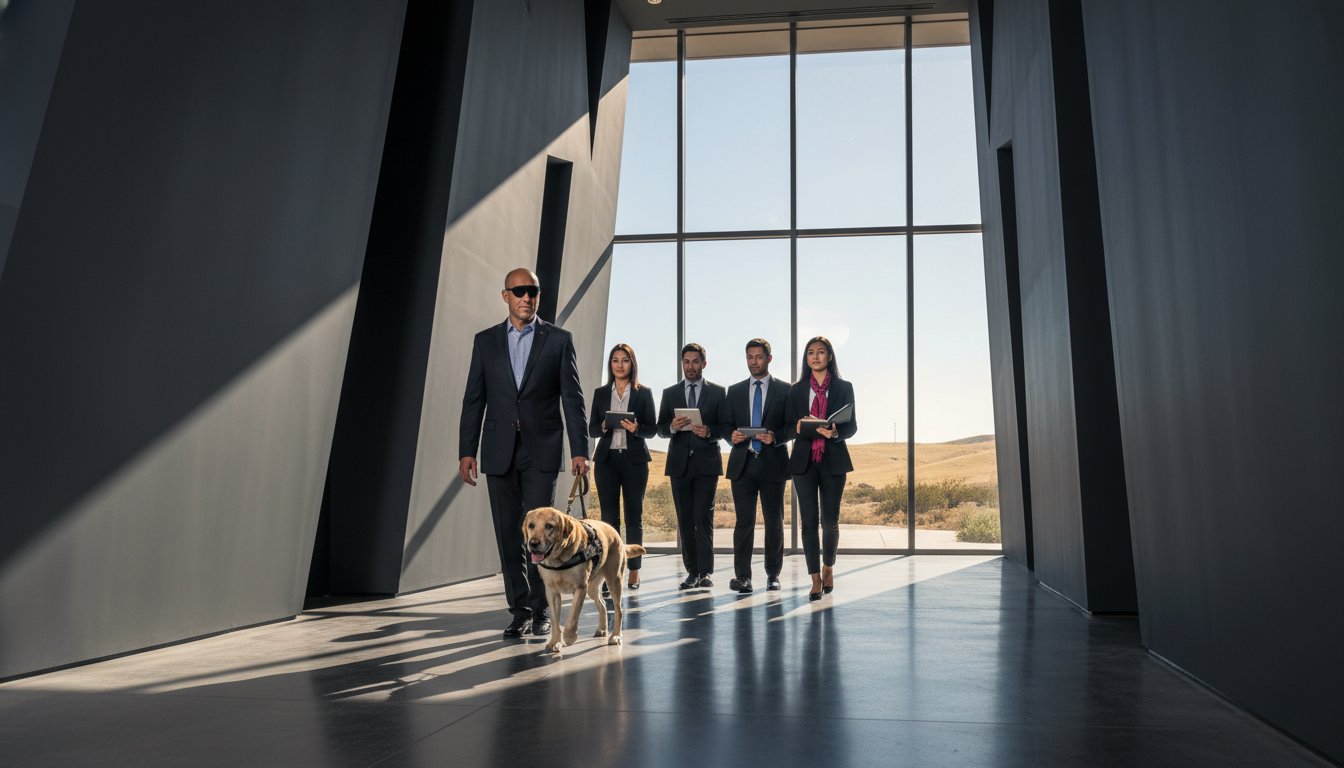
The True Importance of Teamwork: Beyond Productivity to Radical Trust
On September 11, 2001, at 8:46 AM, I sat on the 78th floor of the North Tower when a sudden, violent shudder changed everything. My guide dog, Roselle, looked at me with a calm that defied the chaos, signaling that our journey down 1,463 steps was about to begin. In those moments, the importance of teamwork became a literal matter of life and death as we joined a stream of people descending into the unknown. You’ve likely felt the weight of your own “tower moments” where the isolation of remote work or siloed departments makes you feel like you’re carrying the world alone.
It’s exhausting to operate when trust feels fractured and burnout feels inevitable. I’ll show you how shifting your vision toward radical interdependence can transform your leadership and build a foundation that no crisis can shake. This article explores how to develop an Unstoppable Mindset by fostering deep trust and inclusive cooperation. We’ll look at the specific lessons learned during that 78-story descent to help you lead your team with clarity and confidence.
Key Takeaways
- Shift your perspective from simple collaboration to radical interdependence, moving beyond the “Lone Hero” myth to build a truly resilient foundation.
- Learn how radical trust served as a life-saving tool during the 9/11 descent, proving that the importance of teamwork is most vital when the stakes are highest.
- Master the art of sensory-rich communication to ensure every member of your organization “sees” the same destination and moves in unison toward it.
- Identify and dismantle the “Ego Trap” and other common barriers that cause collective growth to stall in favor of individual recognition.
- Discover practical strategies to train for your “stairs” today, building an Unstoppable Mindset that ensures your team remains calm and effective during any crisis.
Redefining the Importance of Teamwork in 2026
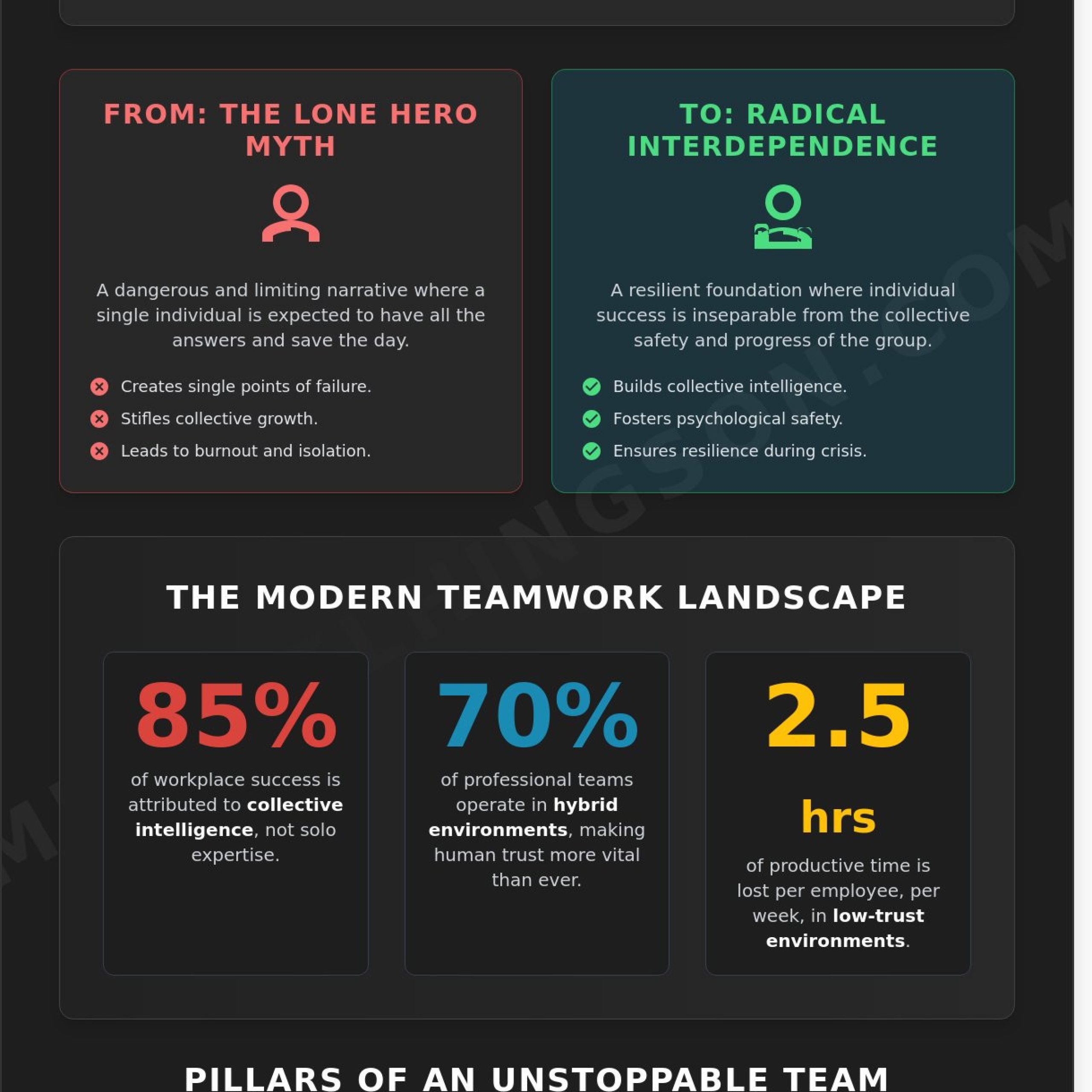
We often think of teamwork as a simple collection of people working in the same direction. By 2026, this definition has become obsolete. True teamwork is a state of radical interdependence where individual success is inseparable from the collective safety and progress of the group. It is no longer enough to just “get along” or “collaborate” on a shared document. We must move toward a model where every member functions like a guide and a partner, much like the bond between a traveler and a trusted companion in the dark. A foundational understanding teamwork requires us to see it not as a soft skill, but as a hard requirement for survival in a complex world.
The corporate world has long worshipped the myth of the “Lone Hero,” the singular genius who saves the day through sheer force of will. This narrative is dangerous and limiting. While an individual can provide a spark, they cannot sustain a fire. As of 2024, data from high-performance organizations shows that 85% of workplace success is attributed to collective intelligence rather than solo expertise. When we stop trying to be the hero, we start becoming the solution. This shift creates a collective vision, allowing us to see obstacles and opportunities that remain invisible to a single pair of eyes.
Modern challenges like AI integration and the fact that 70% of professional teams now operate in hybrid environments make human trust more vital than ever. Technology can process data at lightning speed, but it cannot foster the importance of teamwork required to navigate a crisis. Trust is the only currency that doesn’t devalue when the lights go out.
Why Interdependence Beats Independence
Individual brilliance has a natural ceiling. You can be the most talented person in the room, but your perspective is still limited by your own experiences and biases. Interdependence breaks this ceiling by weaving multiple perspectives into a single, stronger cord. This process requires psychological safety, the belief that you won’t be punished for making a mistake or asking for help. Without this safety, people retreat into independence to protect themselves, which ultimately stalls growth. Teamwork is the bridge between individual potential and organizational reality.
The Shift from ‘Working Together’ to ‘Trusting Together’
There’s a profound difference between task-based cooperation and trust-based partnership. Cooperation is transactional; you do your part, and I do mine. Trust-based partnership is transformational. It involves a deep reliance on the character and competence of your teammates. This level of trust significantly reduces the “emotional overhead” of workplace conflict, which a 2025 study found consumes nearly 2.5 hours of productive time per week in low-trust environments. When you trust your team, you don’t waste energy second-guessing intentions. You can find more about these foundational bonds in my Leadership and Trust pillar, where I discuss how the importance of teamwork saved lives during the descent of the North Tower. We didn’t just work together to find the stairs; we trusted together to find the way home.
Lessons from the 78th Floor: Teamwork as a Survival Strategy
On September 11, 2001, at 8:46 AM, the world changed in an instant. Standing on the 78th floor of the North Tower, the immediate challenge wasn’t just about finding an exit; it was about the importance of teamwork in its most radical form. Survival in that high-stakes moment didn’t depend on individual heroics. It required a collective, disciplined commitment to a single goal: getting every person down 1,463 stairs safely. This wasn’t a corporate exercise in productivity. It was a lived masterclass in how trust functions under extreme pressure. We didn’t just walk down stairs; we operated as a singular organism, where every person’s stability supported the next.
The Partnership of Man and Guide Dog
My guide dog, Roselle, and I formed the core “team of two” that anchored my experience. While the building swayed and the smell of jet fuel filled the air, Roselle remained focused. She didn’t react to the chaos with fear; she reacted to my cues with professional discipline. Our partnership was built on a constant feedback loop of mutual respect. Because I trusted her ability to navigate, I could project the calm authority needed to lead my colleagues. This synergy allowed us to move as one unit, proving that a team’s strength lies in how well members empower one another to lead from their specific strengths. [ALT TEXT: Michael Hingson, a blind man with a gentle expression, stands with his yellow Labrador guide dog, Roselle, who sits calmly by his side in a harness.] This partnership was the foundation that allowed me to look past the immediate danger and focus on the people around me.
Navigating the Unknown Together
As we descended, our group of colleagues transformed into a cohesive unit. We didn’t have all the answers, but we had a shared purpose that overrode individual panic. In a crisis, communication must be clear and non-sensational. We focused on the next flight of stairs, the next person needing help, and the constant need to stay together. By building a culture of teamwork even in those cramped stairwells, we managed to keep the group moving forward despite the uncertainty of the situation.
This experience taught me that the importance of teamwork is most visible when the path forward is dark. You don’t need to see the bottom of the stairs to take the next step; you just need to trust the person next to you. For a deeper look at these principles, you can read my leading through crisis article which details how resilience is forged in the fire of shared struggle. If you want to bring this level of trust to your own organization, you can explore how to build an unstoppable mindset through our training programs. We reached the ground at 10:28 AM, just moments before the tower fell, only because we chose to move as one.
The Three Pillars of Unstoppable Teamwork
Building a team that survives the unexpected requires more than just a shared spreadsheet or a weekly check-in. It demands a foundation built on three specific pillars that transform a group of individuals into a single, cohesive unit. When these pillars are in place, the importance of teamwork shifts from a corporate buzzword to a strategic advantage. This structure creates a resilient mindset, allowing an organization to pivot during crises rather than shattering under pressure.
Radical Trust: The Antidote to Micro-Management
On September 11, 2001, I didn’t tell my guide dog, Roselle, how to navigate the 1,463 stairs of the North Tower. I trusted her training, and she trusted my direction. This is what I call radical trust. Radical trust is the belief that your partner is as committed to the goal as you are. Leaders in 2026 cannot afford to hover over their subject matter experts. With global market volatility projected to increase by 15% over the next fiscal year, decision-making speed is the only currency that matters. You must trust your “guide dogs” to lead in their areas of expertise. When you stop micro-managing, you eliminate the friction that slows down innovation. Trust is the lubricant for high-speed execution.
Communication Beyond the Visual
Clarity is not a visual trait; it’s a linguistic one. I’ve spent my life “seeing” the world through verbal mapping, which is the process of describing a landscape so vividly that everyone can navigate it. In a boardroom or a virtual Slack channel, the importance of teamwork is realized when everyone “sees” the same objective. To prevent team silos, leaders must adopt sensory-rich communication. This is especially vital for the 42% of the workforce that continues to work in hybrid environments. Don’t just show a slide; describe the vision. Use active listening to ensure the quietest person in the room is heard. Effective communication includes:
- Verbal Mapping: Describing goals with specific, non-visual descriptors to ensure universal understanding.
- Active Feedback Loops: Confirming that the message sent was the message received.
- Digital Presence: Ensuring remote members are integrated into the conversation, not just observing it.
Adaptive Inclusion as a Strength
Inclusion isn’t about meeting a quota; it’s about survival. I view blindness as a characteristic, not a handicap. An unstoppable mindset recognizes that diverse characteristics are actually hidden strengths. When a team includes members with different physical, cognitive, or cultural backgrounds, it gains a 360-degree view of challenges. A 2023 study by Gartner revealed that inclusive teams improve performance by up to 30% in high-diversity environments. By leaning into these differences, teams become more adaptive. They don’t just solve problems; they anticipate them because they’re looking at the world through multiple lenses simultaneously.
Overcoming the Barriers to Effective Collaboration
Many leaders hesitate to embrace deep collaboration because they believe teamwork is too slow and messy. They’re right. It is slower to consult a team than to make a solo decision. However, speed without stability is a recipe for catastrophe. On September 11, 2001, I didn’t have the luxury of time, but I had the absolute necessity of trust. If Roselle and I hadn’t worked as a cohesive unit, the descent would’ve been impossible. Realizing the importance of teamwork means accepting that the “mess” is actually the sound of diverse perspectives refining a plan. It’s the friction that creates the fire of innovation.
The “Ego Trap” is perhaps the most common barrier to this synergy. It happens when individual recognition becomes the primary goal, causing collective growth to stop. A 2023 study by Gallup found that teams with high levels of trust are 50% more productive than those where ego drives the culture. To fix a “Vision Gap,” where members work toward different ends, leadership must align every person toward a singular North Star. If one person rows toward the shore and another toward the horizon, the boat simply spins. Rebuilding trust after a failure requires three specific steps:
- Own the mistake publicly without shifting blame.
- Conduct a “no-fault” debrief to analyze the data, not the person.
- Establish a new, shared micro-goal to regain momentum.
The Cost of the ‘Lone Wolf’ Mentality
The myth of the self-made hero is a dangerous one. Isolation doesn’t just create strategic blind spots; it leads to physical and emotional exhaustion. Data from the American Psychological Association shows that 77% of workers reported experiencing work-related stress in the last month. Much of this stems from the pressure to carry the weight alone. When you operate in a silo, you lose the benefit of a resilient mindset pillar that relies on external support. True resilience isn’t about individual toughness; it’s about the strength of the web you’ve built around you.
Inclusive Teamwork: Seeing Beyond Limitations
I’ve often said that blindness is not a lack of vision; it’s simply a characteristic. In a corporate setting, an “inclusion blind spot” occurs when a team lacks a specific perspective. By auditing your team for these gaps, you transform perceived limitations into unique vantage points. This approach is central to the Diversity and Inclusion pillar. Teams that prioritize cognitive diversity are 20% more likely to solve complex problems faster than homogenous groups. When you stop looking for “cultural fits” and start looking for “cultural adds,” the importance of teamwork becomes a competitive advantage that no competitor can easily replicate.
Learn how to foster an Unstoppable Mindset within your own organization today.
Cultivating an Unstoppable Team Culture for 2026
Trust isn’t a soft skill; it’s a survival strategy. As we look toward 2026, the importance of teamwork has shifted from simple collaboration to radical interdependence. I learned this truth while navigating 1,463 stairs in the North Tower on September 11, 2001. My guide dog, Roselle, and I didn’t survive because of individual heroics. We survived because we had spent years practicing a bond of absolute trust. Leaders must model this today by being the first to show vulnerability. When a leader admits they don’t have all the answers, it gives the team permission to be human, to learn, and to innovate without fear.
An Unstoppable Mindset is never a solo achievement. It is a collective state of being. According to a 2023 Gallup report, teams with high levels of trust see a 50% increase in productivity and a 106% increase in energy levels at work. To reach these numbers, you must prepare for the “stairs” before the crisis hits. This means building systems where people rely on each other’s strengths rather than competing to be the smartest person in the room. You don’t build a resilient culture during a disaster; you build it during the quiet moments of daily preparation.
Training for Trust
Most organizations waste time on social events that provide temporary fun but zero growth. True resilience comes from interdependence exercises. These are challenges that require every team member to contribute their unique perspective to reach a solution. In a “no limits” environment, every voice is heard because the team understands that a single missed detail can lead to failure. A true leader acts as a guide who walks the path alongside their team, not a boss who merely shouts directions from the safety of the rear. This shift in perspective turns a group of employees into a unified force capable of seeing beyond any obstacle.
Next Steps: Bringing the Message Home
The journey from a collection of individuals to an unstoppable team requires a fundamental shift in how we perceive trust and inclusion. We have moved past the era of individual silos. The future belongs to those who embrace the importance of teamwork as a lived reality. By focusing on preparation, interdependence, and a shared vision, your organization can overcome any challenge the market presents. I invite you to share these lessons with your people and start building that resilient foundation today.
If you are ready to transform your corporate culture and empower your leaders to see beyond their current limitations, let’s start a conversation. My keynote presentations provide the tools your team needs to develop an Unstoppable Mindset through the power of trust and resilience.
Primary CTA: Book Michael Hingson for your next corporate keynote.
Forging Radical Trust for the Path Ahead
The descent down 1,463 steps from the 78th floor of the North Tower on September 11, 2001, proved that survival is a collective effort. It wasn’t just about escaping a building; it was about the radical trust between a man and his guide dog, Roselle. As we navigate the complexities of 2026, the importance of teamwork has evolved from a productivity metric into a necessity for resilience. You’ve explored how the three pillars of interdependence, clear communication, and inclusive culture transform a group of individuals into a unified force. These aren’t just corporate theories. They’re the same principles that allowed a New York Times Bestselling Author to lead others to safety during a global tragedy. Michael Hingson’s journey shows that when you eliminate the barriers to collaboration, your potential becomes limitless. Trust is the bridge that carries us over any obstacle. You have the tools to build a culture where every member feels seen and valued. It’s time to lead with vision that goes beyond the physical. Your team’s strength lies in the quiet confidence of knowing you don’t walk alone.
Book Michael Hingson to transform your team’s trust and resilience and discover what it means to possess an Unstoppable Mindset. Your most resilient future starts with a single step taken together.
Frequently Asked Questions
What is the single most important factor in successful teamwork?
Radical trust is the single most important factor for success. On September 11, 2001, my life depended on the trust I had in my guide dog, Roselle. We descended 1,463 steps together because our bond was unbreakable. In business, teams don’t succeed unless they rely on one another with that same level of certainty to navigate complex challenges. Trust is the invisible thread that keeps a group focused when the smoke gets thick.
How can a team build trust when working remotely or in a hybrid model?
Teams build trust in remote settings through consistent, transparent communication and shared vulnerability. A 2023 Harvard Business Review study found that employees at high-trust companies report 74 percent less stress. You can’t see your teammates’ faces every day; you must rely on clear expectations. Schedule 15 minute human-first check-ins to replace the watercooler talk that builds organic bonds. This intentionality creates a foundation that physical distance cannot break.
Why is diversity and inclusion critical to effective teamwork?
Diversity is critical because it introduces varied perspectives that a homogenous group might miss. A 2020 McKinsey report showed that companies in the top quartile for ethnic diversity outperform others by 36 percent. When you include people with different lived experiences, you create a more resilient team. True inclusion means every voice matters. It ensures the importance of teamwork isn’t just a slogan but a measurable competitive advantage for the organization.
What can leaders learn about teamwork from Michael Hingson’s experience on 9/11?
Leaders learn that preparation and interdependence are the keys to surviving any crisis. When the plane hit the North Tower at 8:46 AM, I didn’t panic because Roselle and I had trained for years. We navigated 78 flights of stairs by working as a deliberate unit. Leaders shouldn’t try to be solo heroes. They need to empower their teams to act decisively when the path forward is unclear or dangerous.
How do you handle a team member who prefers to work alone?
You’ll handle a solitary worker by connecting their specific tasks to the larger organizational mission. Gallup research indicates that only 2 in 10 employees feel connected to their company culture. Show them how their unique contribution acts as a vital link in the chain. Remind them that while they can walk fast alone, they can only walk far by embracing the importance of teamwork and active collaboration with their peers.
What are the common signs of a team that lacks trust?
Common signs include heavy micromanagement and a visible fear of healthy conflict. Patrick Lencioni identified the absence of trust as the foundational failure of any group in his 2002 framework. If your team members are hiding mistakes or hesitating to ask for help, your foundation is crumbling. You’ll often see a 50 percent drop in productivity when people spend more time protecting their reputation than solving collective problems.
Can teamwork actually reduce employee burnout and stress?
Teamwork reduces burnout by distributing pressure across multiple people rather than a single individual. The American Psychological Association reported in 2022 that 79 percent of employees experienced work-related stress. When you have a supportive team, you aren’t carrying the weight of the world on your shoulders. You’ve got partners who can step in when your energy flags. This shared responsibility keeps the whole unit moving forward without breaking.
How does the ‘Unstoppable Mindset’ apply to corporate teams?
The Unstoppable Mindset applies to teams by shifting their focus from limitations to possibilities. It’s about seeing beyond the immediate obstacles, much like I’ve navigated life without physical sight for over 50 years. When a team adopts this philosophy, they stop viewing challenges as roadblocks. They see them as opportunities to innovate. This mindset turns a group of workers into a resilient force that thrives regardless of the specific market conditions they face.
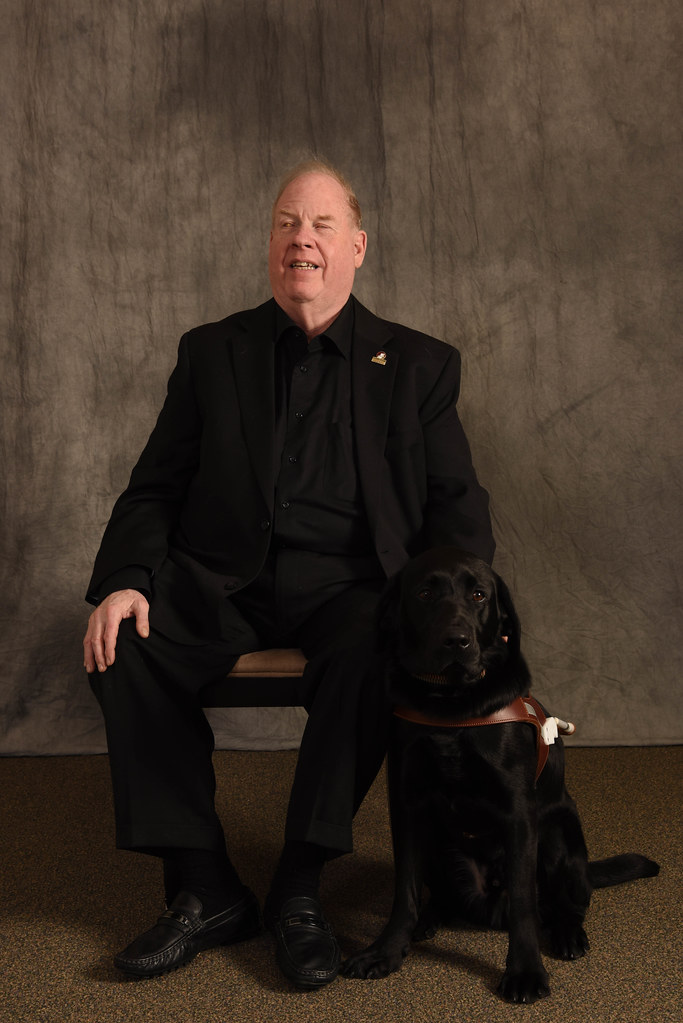
Article by
Michael Hingson
Michael Hingson is a keynote speaker, bestselling author of Thunder Dog, and a survivor of the September 11 World Trade Center attacks. Blind since birth, he brings a powerful and unique perspective on leadership, trust, and resilience in times of uncertainty.
He has spoken to organizations around the world, helping leaders and teams navigate change, build trust, and perform under pressure. His message combines real-world experience with practical insight that audiences remember long after the event ends.
👉 Book Michael Hingson for your next event.