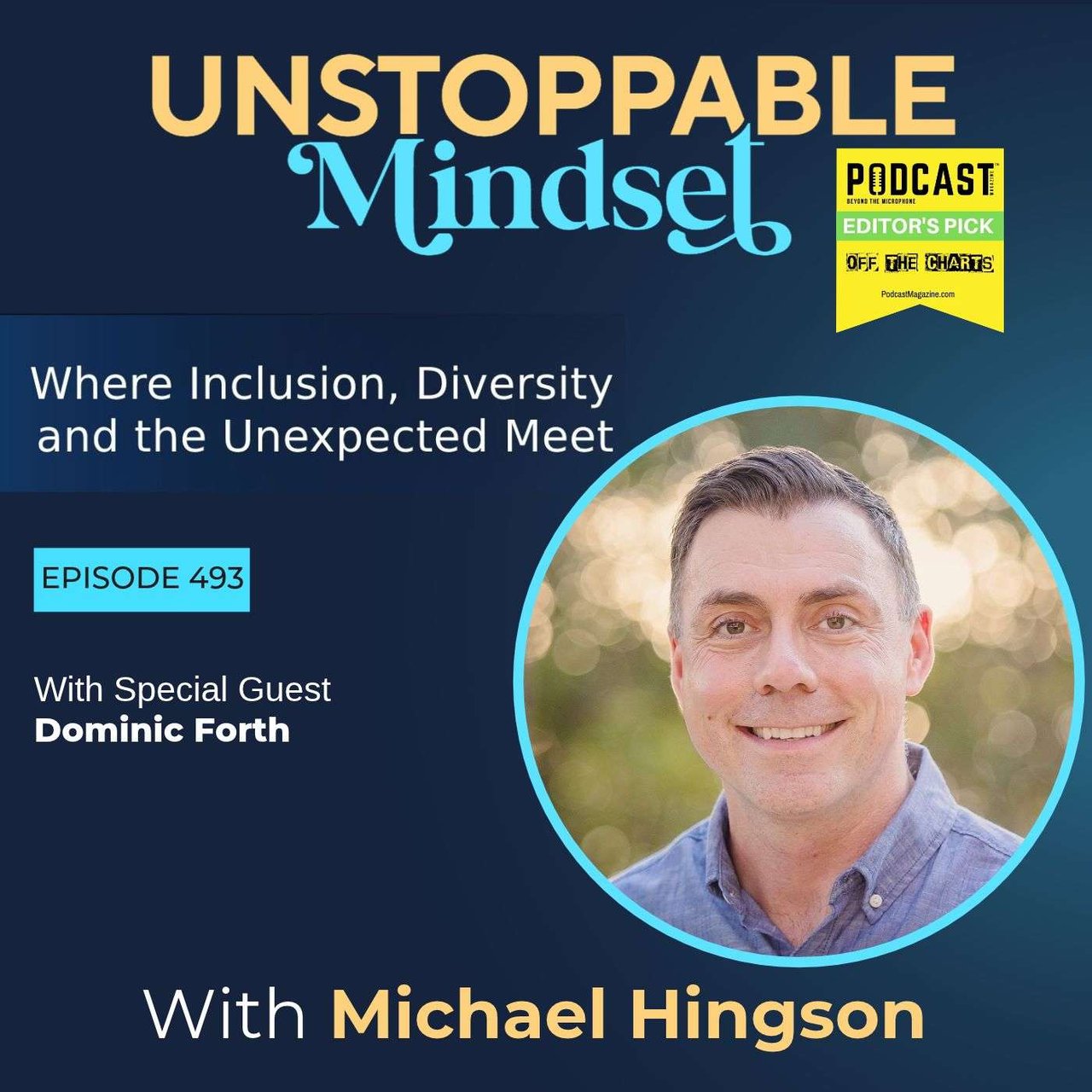
Episode 493 – Calm Is Your Competitive Advantage with Dominic Forth
What does surviving a near-death experience teach us about leadership, fear, and making better decisions under pressure? My guest, Dominic Forth, CEO of Thought Leaders America, knows firsthand. While whitewater rafting on Africa’s Zambezi River, Dominic became trapped beneath an overturned raft. His fight to survive changed how he viewed life, storytelling, and the power of staying calm in a crisis. Drawing on his career in broadcasting, media, and entrepreneurship, Dominic shares his three-part Zambezi Survival Mindset built on calm, clarity, and courage. We discuss how leaders can manage fear, handle stressful situations, build stronger teams, and make thoughtful decisions when everything seems to be going wrong. We also explore how artificial intelligence is changing our lives and why human connection matters more than ever. I believe Dominic’s story will help you see that fear doesn’t have to stop you, and that everyone has a story worth sharing.
Highlights:
08:15 – Challenging assumptions about what’s possible.
19:05 – Why putting your audience first matters.
37:09 – Life lessons from a near-death experience.
41:27 – The power of staying calm under pressure.
45:05 – Three pillars for overcoming fear.
1:02:01 – Why human connection matters in an AI-driven world.
About the Guest:
DOMINIC FORTH is the CEO of THOUGHT LEADERS AMERICA, a national media and PR agency that helps founders, CEOs, and innovators go from invisible to unforgettable. He’s worked with hundreds of leaders across tech, health, and professional services, helping them close the credibility gap and amplify their impact through strategic media exposure, investor access, and storytelling. an exceptional guest.
A decade ago, Dominic faced a life-or-death experience on the Zambezi River, where a near-fatal rafting accident forced him to confront fear, focus, and decision-making under extreme pressure. That moment became the foundation of his Zambezi Survival Mindset, a framework he now applies to leadership, entrepreneurship, and personal growth: mastering calm, clarity, and courage when it matters most.
Outside of work, Dominic is an Ironman finisher, marathoner, and global traveler. He blends adventure, psychology, and strategy to help leaders navigate high-stakes situations, transform fear into action, and emerge stronger from life’s flips—showing audiences how to think clearly under pressure, lead with focus, and move with courage in every part of life.
Ways to connect with Dominic**:**
Website: https://thoughtleadersamerica.com
LinkedIn: https://www.linkedin.com/in/dominicforth
Company LinkedIn: https://www.linkedin.com/company/thoughtleadersamerica
Instagram: https://www.instagram.com/thoughtleadersamerica
About the Host:
Michael Hingson is a New York Times best-selling author, international lecturer, and Chief Vision Officer for accessiBe. Michael, blind since birth, survived the 9/11 attacks with the help of his guide dog Roselle. This story is the subject of his best-selling book, Thunder Dog.
Michael gives over 100 presentations around the world each year speaking to influential groups such as Exxon Mobile, AT&T, Federal Express, Scripps College, Rutgers University, Children’s Hospital, and the American Red Cross just to name a few. He is Ambassador for the National Braille Literacy Campaign for the National Federation of the Blind and also serves as Ambassador for the American Humane Association’s 2012 Hero Dog Awards.
https://www.facebook.com/michael.hingson.author.speaker/
https://www.youtube.com/user/mhingson
https://www.linkedin.com/in/michaelhingson/
Thanks for listening!
Thanks so much for listening to our podcast! If you enjoyed this episode and think that others could benefit from listening, please share it using the social media buttons on this page. Do you have some feedback or questions about this episode? Leave a comment in the section below!
Subscribe to the podcast
If you would like to get automatic updates of new podcast episodes, you can subscribe to the podcast on Apple Podcasts or Stitcher. You can subscribe in your favorite podcast app. You can also support our podcast through our tip jar https://tips.pinecast.com/jar/unstoppable-mindset .
Leave us an Apple Podcasts review
Ratings and reviews from our listeners are extremely valuable to us and greatly appreciated. They help our podcast rank higher on Apple Podcasts, which exposes our show to more awesome listeners like you. If you have a minute, please leave an honest review on Apple Podcasts.
Transcription Notes:
Michael Hingson 00:04
What if the biggest thing holding you back isn’t what’s in front of you, but rather what you believe? Welcome to Unstoppable Mindset, where inclusion, diversity, and the unexpected meet. I’m your host, Michael Hingson, speaker, author, and advocate for inclusion and possibilities. This podcast explores how the beliefs we carry shape the way we live, lead, and connect with others. Each week, I talk with people who challenge assumptions, face adversity head-on, and show what’s possible when we choose curiosity over fear. Together, we focus on mindset, resilience, and the small shifts that lead to meaningful change. Let’s get started. Hi, everyone. We’re glad you’re with us again for another episode of Unstoppable Mindset. We hope you’re having a good day wherever you happen to be. Our guest today is Dominic Forth. Dominic is a really interesting sort of guy. He, among other things, is the CEO of Thought Leaders America, which is a media company, and it’s also a company that helps founders and CEOs survive. I think is probably one way I would put it, but I’m sure he’s got a lot of other things to say, and he’s got his own survival story. We’ll have to compare notes as we go forward. But Dominic, I want to welcome you to Unstoppable Mindset. We’re really glad you’re here.
Dominic Forth 01:40
Yeah, Michael. Thanks for having me.
Michael Hingson 01:42
Well, I’m really glad that you’re here. And and Dominic is originally from over in in the UK, but he now lives here in the US. I I assume that’s a good thing, and he enjoys being in the US. But we were just complaining about the cold weather. I suppose we could both complain about San Francisco, like Mark Twain once said. He spent a winter there one summer, so you know it gets it gets cold and it’s foggy, but we can cope. Well, why don’t we start? I love to start this way. Why don’t you tell us kind of about maybe the early Dominic growing up?
Dominic Forth 02:18
Yeah, it’s. I feel very fortunate because I had a very happy childhood, and I think one of the benefits at the time I didn’t appreciate as much as I should was that my father was a head teacher, and my mother was a deputy principal as well, and so we always had a very educational focused upbringing, and my dad was also very athletic. So I was pushed into a lot of not pushed, but you know, encouraged into sports, and I think that mindset’s just really helped because I think some people are academically minded, some are more sports minded, and I was very fortunate to be both, really, and you know, just sort of set the tone for for my upbringing, and there was a fork in the road at one point. Which which direction do you pursue? And unfortunately, my I tore my meniscus when I was 15, and so the decision was therefore made for me. But yeah, just growing up in the UK, it was it was a very happy childhood, really.
Michael Hingson 03:20
So you’re touring meniscus. That’s no fun.
Dominic Forth 03:23
Yeah, it was funny because I was playing football, as we say in the UK, or soccer, and I was running through on goal, and the guy was nowhere near me. But I went down. He thought a dive to try and get him sent off. So there I have an agony on the floor, and the guy’s like, “What did he cheat?” And I was like, “No, no.” And then he realized he saw the look on my face that it was you know a serious injury and so I had to be stretched off and that that was sort of the end of the beginning of the end of any professional aspirations really from there.
Michael Hingson 03:53
Did you ever play rugby?
Dominic Forth 03:55
I you know it’s funny because when I first came to the US they they connect all the international students together, and I had two Samoan international students come up to me, and they they said, “Oh, hey, you’re from the UK. You play rugby with us.” And I was saying, “Like, listen, I’m not a rugby player. I’m so sorry. Like, I really, no, no, we pick you up.” So they arrived at my house and told me I was playing, and I said, “I’ll give it a shot, and after about 30 minutes of playing, I almost got my shoulder ripped off. In the meantime, gosh! No, they looked at me and like, oh yeah, you’re right. You can’t play, can you?
Michael Hingson 04:30
I went to New Zealand to do some speaking back in 2003, and that’s the first time I got to actually hear some rugby games, which I kind of found interesting. I was able to follow it pretty well and learned all about what a scrum was and all those sorts of things. But I also decided, since I was there, I really ought to try to see what cricket is all about because everybody always makes fun of cricket and all that. And I I listened to it for about. Half hour and not much of anything happened in the half hour. I listened to it. It really does move slow.
Dominic Forth 05:06
Yeah, on the cricket.
Michael Hingson 05:08
Yeah,
Dominic Forth 05:09
yeah, yeah, yeah. I mean, they go on for days. Some of the test matches, and you sometimes see the fans are entertaining themselves. You know, doing like Mexican waves are out in the the oval and everything.
Michael Hingson 05:19
Gosh, well, but it it is a sport, yeah. So over here we have our football, but I’m more of a baseball fan than a football fan. Nothing against football, except I think there are way too many injuries that are happening, and I’m I’m not a great fan of people abusing their bodies so much. But hey, that’s what they choose to do. It’s okay.
Dominic Forth 05:40
Yeah. Well, you know, it’s funny with the injuries because having gone through the meniscus injury, it took me a long time. You know, I had to sit all my exams, you know, fully stitched up leg and everything, and that was just a meniscus tore meniscus. But some of these athletes, they’ll tear an ACL, and you know, within a few weeks, like Lindsay Vaughn recently,
Michael Hingson 06:00
Lindsay Vaughn, yeah,
Dominic Forth 06:01
you know, and and um, it’s it’s so funny watching professional sports because anyone over 30 is often considered a miracle that they’re playing. You know, like once I turned over 30, I remember once there was a soccer player, and it’s like he’s over 30. It’s he’s he’s playing. It’s like, oh my goodness, I feel so old now. Um, but the recovery is it’s incredible, really. When they’re expected to still perform, like people forget that six months earlier somebody had this injury. Now they are playing at the top level again.
Michael Hingson 06:31
Yeah, yeah. Well, it’s it’s you know it’s fascinating the medical progress that’s been made, surgeries that have happened, and so on. So now so many things are arthroscopic, and I every so often I see commercials for knee replacements where they say they’ll do the replacement and you’re up and walking within 30 minutes, which is is pretty amazing. It seems to me.
Dominic Forth 06:56
Yeah, yeah. You know, I now coach my. I’ve got two younger daughters now, and I kind of got sort of nominated to help support her team. And as part of being on that team, I get access to playing on a dad’s team, so all the dads of the different leagues. And yep, one of the guys, he’s 65, and he’s got a artificial knee, and you’d never know the way he plays, and that that actually gave me so much confidence and hope because it took me years to rehabilitate, you know, and really get back. And I end up actually going on to run marathons and Ironman competitions, but to see him 65, you know, replace knee, I was like, “Oh my goodness! Like this is great because I thought, you know, you know, I’m so you know, as I get older, those opportunities become more and more limited, but they don’t have to be.”
Michael Hingson 07:50
No, now how old are you right now?
Dominic Forth 07:53
You know, I’m in my approaching mid 40s.
Michael Hingson 07:57
Okay, well,
Dominic Forth 07:57
but and the reason I hesitated was, you know for years I was very shy about sharing my age.
Michael Hingson 08:04
Yeah, I understand.
Dominic Forth 08:06
I was I was because at a young age I was passed over a few promotions because of age, and I actually had the CEO of a company call me in, and they were considering me for this position, and I I think I was I was honestly like under maybe 21 at the time. He’s like, oh, 21. I mean, I wish if you just told me you were 25, and it probably shouldn’t have said that to me. But it made me realize that some ageism can work both ways. Yeah, and and so and then once I got into management, I was managing people often a lot older than me, and I always felt that was sometimes a little bit uncomfortable, even though they didn’t care. I was the one like, oh, maybe they feel bad that I’m younger than them or not. And and so it’s funny how age can really change people’s perceptions of of you either as an athlete with your body in a certain condition, or even in a professional capacity or a business capacity.
Michael Hingson 09:00
Yeah, it’s it’s interesting, but but some of these people are playing into into their 40s, and you know. But I I understand about getting passed over. Blind people get passed over all the time just because they’re blind, because people think you got to see to do stuff, and so we we experience the same sort of thing, and it’s the same sort Of misconceptions, because the reality is we can all do a whole lot more than people tend to think we can do.
Dominic Forth 09:28
Absolutely, and it sometimes becomes motivating as well. There is a lot of positivity where you know, tell me what I can’t do, and I’ll show you. I’ll show you. I’ll prove you wrong.
Michael Hingson 09:41
One of the things that I love to do, oftentimes when I speak, is I’ll start by asking the question: “Tell me something that a blind person can’t do.” So I’ll ask you, “What What do you think is is something that a blind person can’t do,
Dominic Forth 09:55
like just from common perception?”
Michael Hingson 09:57
Sure, go ahead.
Dominic Forth 09:58
You know. I’ve I’ve read and researched that when vision is limited, it can heighten other senses.
Michael Hingson 10:08
Well, it can if you learn to use them. Yeah,
Dominic Forth 10:10
yeah, exactly. And so I think a lot of people would be surprised by you know you think of just general things like object permanence and where things are located. But often with hearing, I mean, bats are a great example of this as well. I mean, but if you were to pick something
Michael Hingson 10:27
that you think that a blind person couldn’t do, what would be the most obvious thing to you?
Dominic Forth 10:35
You know, I’m see, I’m probably the wrong person to ask because I I would say you can do anything. I would say that there’s there’s there’s always a way. You’ve just got to unlock that the way of sorry. And you’re I know you’re right. Sorry, no,
Michael Hingson 10:47
no, and you’re right. When I ask most people, their their first answer is drive a car, and and I ask people why can’t blind people drive a car, and they say, well, you can’t see the road, And I I say well I I hear what you’re saying but that’s really the wrong answer the wrong the the answer actually is we can’t drive a car because we don’t get the information that you get with eyesight but technology is now changing that and in fact in 2011 at the Daytona Speedway, right before the Rolex 24 in January, a blind man got into a Ford Escape that was specially modified. The National Federation of the Blind president in 2001, Dr. Mark Mauer, challenged industry and universities to literally create the technology that could be put into a car so a blind person could drive it. And I don’t mean an autonomous vehicle. I mean actually driving it with the information that you would get as a sighted person. And and what happened was that in fact he got in the car, drove around the Daytona Speedway, passed through obstacle courses, did a variety of different sorts of things, because he had the information that generally isn’t available to a person unless they can see out the windshield. So what you say is absolutely correct, and and that’s really the right answer. It it sometimes requires technology. It requires inventiveness. It requires imagination, and you know there might still be some things that a blind person would have a harder time doing just because we haven’t developed the stuff yet to make that possible. I I tend to think that probably most of us aren’t going to become professional football players right away, or soccer player. Well, well, that there’s a game called Dodgeball, which is getting pretty close, but but still, you know, the the reality is technology is is changing a lot of that as long as we use it in the right way.
Dominic Forth 12:52
Yeah, yeah, and you know, I think of the autonomous cars, like you mentioned, like Tesla and the technology they’re implementing, and this obviously a lot of other companies on the technology as well, and it’s just yeah. I mean, I think we’re we’re so fortunate with the way technology is evolving that it’s creating more opportunity than ever before. Yeah. Oh, and and we’ll continue to do that. We’re we’re so frustrated. Well, this isn’t happening fast enough. Our autonomous vehicles aren’t ready for prime time and all that, well, we’re on the cusp, right? It’s it’s not happening as much or as fast as we might like, but it’s coming. Yeah, yeah. And just across, you know, the the board. I mean, what would you say are some of the biggest technological advancements you’ve seen that have been really helpful?
Michael Hingson 13:40
Well, for me, certainly AI helps a lot. I can, for example, put on a pair of smart glasses that have been designed specifically by and for blind people, and I can walk through Dallas Fort Worth Airport, and it will read off the gate signs, and so I know when I’m at the right gate, or I can have it describe what’s around me, or I can have it read information and give me information that I otherwise might not have gotten. Just a lot of different things, and I think that that’s one of the the major things. And the smartphone as a whole certainly has enhanced, I think, not only the lives of blind people but everyone in so many ways. I think we we do tend to misuse it. Too many people spend way too much time on the the smartphones, and they really ought to disconnect from that and spend more time really connecting with with other people. But still, the technology is is is there, and people are taking advantage of it, and makes our lives better. Yeah,
Dominic Forth 14:49
yeah, and I think you touched on something there as well about the evolution with wearables. I do feel like in five or six years’ time, people will look back and say, “Oh, do you remember when everyone had the phone in the house?”. And I look just at the kids’ playground sometimes, and it’s really sad. I mean, most of the parents are on the phones, and sometimes the toddler is looking up at them, and they’re looking at the parent with a phone in between the parent’s face and the kid’s face. You know, but I do feel the future is going to be wearables where, and probably in the short term it’ll be glasses that people will be wearing. And I was at the Consumer Electronics Show in January and got to demo.
Michael Hingson 15:29
We missed you. I was there too.
Dominic Forth 15:31
Yeah, yeah. It’s a, it’s, it’s a bit of a, it’s a beast of a show. Oh yeah.
Michael Hingson 15:37
Anyway, so you were there, and what were you showing?
Dominic Forth 15:40
Oh yeah, the wearables. Yeah, no, just to to your point, um, they’re they’re advancing now this sort of augmented reality where,
Michael Hingson 15:46
yeah,
Dominic Forth 15:47
um, really enhancing just environments for you.
Michael Hingson 15:50
Yeah, they’re they’re getting um they’re getting a lot better. the The typical wearable doesn’t do what I need though because it doesn’t provide the information in a verbal way, or it doesn’t provide it in very substantive verbal way, but there there is a company, for example, that I’ve done some work with them. They’re called Agiga, A G I G A, which is specifically designing the glasses for blind and low vision people, and it’s providing a lot of useful information, which is great. If
Speaker 1 16:23
you enjoy Unstoppable Mindset and would like to help us continue bringing these conversations to you each week, we’ve created a way for you to support the show. Your contribution helps us cover production costs and continue sharing stories, insights, and ideas that inspire people to live with purpose and possibility. If supporting the podcast feels right for you, you’ll find the link in the show notes. Thank you for being part of the Unstoppable Mindset Community.
Michael Hingson 16:57
Well, so you you went to school, and I assume did you go on into college or university?
Dominic Forth 17:04
Yes, yes. So it was funny because there was the language and the arts, and there was also mathematics and science. And I was having this conversation with my daughters recently. You know, I’ve tried to go the more science route, but I took psychology as my A level. So I was a head boy at high school. Sorry, so I came out very strong with A’s and A stars. So I was very very lucky of which direction I could go. And I just felt with going the scientific route would. I always felt I could always go back to the language and arts if I got more science qualifications. But I just wasn’t into the. I don’t know. I mean, I came out with a couple of B’s like biology and chemistry, but psychology was where I really thrived. I just I couldn’t consume enough information on it. I just loved it, and so when it came to going to university, I’d met already some really interesting family friends that were in media. You know, they had all these great stories of travel and the people they met, and so that psychology and you know A level, and then went into journalism, and from there I got to intern at the BBC, kind of you know look at their code of conduct, the ethics that they assess stories with, and everything else. But I really wanted to get over to America. I just think with America’s global reputation and obviously the the volume of media that’s opportunities that are out here that was always my goal. So after a year of being in the UK, they had an exchange program, and it’s quite funny because the way they sell it is like study abroad in America, and you’ve got like New York skyscrapers on the presentation, San Diego beaches. It’s quite competitive to get accepted, and then I get the letter like, “Congratulations, you’re going to America!” My parents are all excited, and then I’m like, “Warrensburg, Missouri,” like just for a second, like trying to figure out, so we got the Atlas out, and I was like, “Oh, it’s day Kansas City and St. Louis,” and so I was a big hockey fan. So St. Louis Blues. Oh, there you
Michael Hingson 19:12
go, yeah,
Dominic Forth 19:13
yeah, and yeah. So I went, I went on the exchange, and it was it was absolutely it changed my life. To be honest, it just opened up so many doors. Uh huh.
Dominic Forth 19:24
Yeah, and just I was able to then. I mean, I volunteered any opportunity. You know, the PBS local station, the NPR station, and I ended up, you know, helping out with pledge drives, for example, helping to raise funds, and I had an awesome programming director at the radio station, John Hart. He was brilliant. I loved working with him. And so after volunteering for six months, he he offered me a position to be on air. And he said, “Dominic, I want I want you to do three things and three things only. There’s far too many people on radio.”. Video talking, they just talk, talk, talk. So I want you to do three things: you say the name of the last song that’s about to end, the name of our station, the next song, and then you shut, and then you shut up. And I was like, I could do that. Yeah, he’s like, good, all right, you’re hired. When I
Michael Hingson 20:17
go ahead,
Dominic Forth 20:19
oh, but it works so well. Our retention of listeners was phenomenal, and we kept increasing in our audience growth because people were there for the music. It wasn’t putting our egos in the way. It was like literally just play the songs that gave give them the information they want and get out the way. Yeah, and it worked beautifully. Yeah.
Michael Hingson 20:38
Well, when I was at University of California, Irvine. So that’s a long time ago. But I was on radio, and I chose to play old radio shows every Sunday night for three hours. And I still find people who said they heard the show, and I never even knew at the time they they heard it. But I find them. But that was a lot of fun, and we did do music and so on, and stayed away from talk. And I know there are so many people that are in in talk, and it’s worse now. But the the reality is that there’s still value in playing that music, even though you can stream it and all that. But it’s not the same if you’re hearing a DJ do it.
Dominic Forth 21:23
Yeah, and having someone with John’s experience curate the playlist. Your music’s got so much shorter and condensed, where they just they pick the hook of a song and they just hammer the hook. Rotations for a lot of commercial stations were getting shorter and shorter. Yeah, and so it was so refreshing to work for a station where they had a very expansive library over multiple decades. You know, it’s a very diverse. And then you’d have these new and up and coming artists that would be touring into Kansas City, and they’d stop by the station. They’d say, you know, you’re the only interview that we’re giving on this tour, a little this leg of the tour, because we appreciate what you do, and so I got access to a lot of big names back then that I would would never have had access to, and it was really down to just the way it was all structured and the the philosophy of our program music director.
Michael Hingson 22:17
What did you learn from all that?
Dominic Forth 22:19
You know it’s it’s tough because you know we live in a capitalist society, so you have to often balance the economics. And you know, in the short term, hammering the hook of a song, people want that. That’s what people think they want. You know, but there’s a there’s definitely reward in delayed gratification, in the art form of a full, you know, five to seven minute song versus a two to three minute song, and I think it’s the power of just curation and just and expertise. And I was able to experience as listeners where here’s somebody with such an expansive knowledge of music, and we get to enjoy that every day because of all. You know, it would take us years, if not decades, to accumulate that same level of knowledge, and yet we get to enjoy it every day.
Michael Hingson 23:11
Yeah, which is which is pretty cool. So, how long were you at the radio station, and were you in the exchange program?
Dominic Forth 23:18
Yeah, so I was there for a full semester. Okay, sorry, sorry, for a full year. Full year. Sorry for two semesters. Yeah, I was only meant to go for one semester, but I extended it, and then I went back to graduate in the UK, and because
Michael Hingson 23:32
psychology,
Dominic Forth 23:33
no, in journalism,
Michael Hingson 23:34
in journalism. Yeah,
Dominic Forth 23:36
yeah, yeah. But at this point, I, you know, I thought I’d start out with traditional journalism, but broadcast was really where my passion was. So I came back to I came back to Missouri to do my masters, and because I’ve been there, they were able to find me a teaching assistant position. That then led to me helping teach public speaking, and so that was a really cool experience, and you know there was a scholarship attached to that, so I felt I felt very fortunate, really, and you know the public speaking was so much fun because the students I think to try and help butter me up a little bit they do speeches on the UK or the Queen or like the British Empire, and I got a whole history lesson on my own country at times, and I was like, I know what you guys are doing, but it’s really cool, and I really appreciate it. And and I was going to give you an A grade anyway because technically you hit all the boxes, but you know, it was a you know great speech. So yeah, it just it’s honest. Honestly, this was all the foundation into what I’m doing now, really, is just you know communications, connecting with people, storytelling. I feel very fortunate, really.
Michael Hingson 24:50
Yeah, and and you and and you probably learned things about England that you didn’t know.
Dominic Forth 24:54
Yeah, exactly. Yeah,
Michael Hingson 24:56
and and maybe didn’t want to know, but there you are. So what? You do after college, after you graduate, and you so you got a master’s degree, I assume.
Dominic Forth 25:05
Yes, yep. So I got my master’s in in mass communication, and then you you get a one year. They call it an OPT visa, and so it’s really one year to find a job in that field, and then if you find a a unaligned company. they can sponsor you then for a H 1b visa for three years. So I went, you know, I looked around the country, but because all my friends now are in Kansas City, I ended up applying for some positions there. And there’s a company called Scripps that has, you know, probably like 30 TV stations across the U.S., and they had a duopoly in Kansas City, so they have an NBC affiliate and an independent station, and so that was the next step. So I started working for them, and I was there almost three years, but then that next visa was up for renewal, and so I’ve had to kind of every three years decide: do you stay with the current station, or do you go to a bigger market or a bigger station? And at the time, it’s quite stressful because imagine every three years you have this this conundrum, really. But it’s media is quite interesting. It’s it’s a bit like sports in a way because you’ve got all your market sizes. Like New York’s the top market. Then you’ve got LA, but then you’ve also got your stations within each market. Like who’s the number one station in the number one market? And so they’re all considerations. And so I was planning on well, I was applying for San Francisco. That was my goal to get to San Francisco, but in the process applied for Tampa, a station in Tampa, and they said, you know, they made me an offer, and they said, you know, but don’t tell us your thoughts right now. Why don’t you just stay for the weekend, and you know, tell us on Monday. And there’s a great place called Clearwater Beach. Just go check it out, see what you think. So, so you know what happens next, right? Yeah, I go to the beach and I’m like, I’ve got to take this off. I I’ve got to live here. This is amazing.
Michael Hingson 27:05
Yeah,
Dominic Forth 27:08
yeah. I feel like Florida has two things that you know British people love because we don’t really have it in the UK, and that’s what is a year-round sunshine.
Michael Hingson 27:17
Yeah, and
Dominic Forth 27:18
then the other is the beautiful beaches. We do have beaches in England, but not like the ones in Florida.
Michael Hingson 27:22
No, well, and even the ones in California. But yeah, I I know what you’re saying, and um, and and so there you are, which is cool. But I have to ask, inquiring minds want to know, since you spent a lot of time around Kansas City, what was your favorite barbecue?
Dominic Forth 27:39
You know, it used to. It’s a big source of contention, you know, between Gates, Oklahoma Joe’s, Jack Stacks. Yeah, you know, Gates is funny because the staff are so mean and it’s part of the stick there, you know. But I think I actually preferred Oklahoma Joe’s. I don’t know if this will get me in trouble or not.
Michael Hingson 27:56
I like Arthur Bryant’s, but that’s another story.
Dominic Forth 27:59
Oh yeah, of course, yeah, yep.
Michael Hingson 28:01
And and my favorite barbecue place is is a restaurant in New York, and there’s also one in Las Vegas called Virgil’s Real Barbecue. And what they did is they went to all the major barbecue places around the the world or around the country before they started, and they took all the lessons they learned from going to all of those and they put it into their barbecue. I think it’s the best in the country, but that’s my opinion.
Dominic Forth 28:25
Nice, yeah. I have to check that out.
Michael Hingson 28:27
Yeah, Virgil’s real barbecue. The next time you’re in New York, or if you go to Las Vegas, next time you go to the CES show or whatever, yeah, it’s over near the link. But anyway, so so you went to so you went to Florida and you did that, and then what happened?
Dominic Forth 28:47
Yeah, so after the three-year conundrum comes up again, and by now I’ve won awards. I’ve produced as a top salesperson for the station, and the same conundrum comes up again, and so because I’d established contact with San Francisco in the past, I reached out to them, and now you know Tampa was number 14 market then. So went from Kansas City 31 market, Tampa to 14. Now there was an opportunity to go to San Francisco, so then I switched coasts, and I went to the number one TV station KTVU,
Michael Hingson 29:21
KTVU,
Dominic Forth 29:23
yeah, yeah, in the Bay Area, it’s like considered by many as the gold standard, really, in broadcasting for, or one of the top, you know, those top stations. And this was right around the time the Giants were winning World Series every even even year, yeah. And that that was such a great experience because it was owned by a company called Cox Media Group, and they had this mantra which was: “We compete with our products, but we win with our people.” And it really showed. It was all about just relationships, how we treat people, how you grow and develop people, and it was it. It was very clear to see why it was such an exceptional station, both with on the outside with the ratings and the audience it developed, and then on the inside as well. And I just got to work with some. I mean, I’ve worked with some phenomenal people up until this point, and then this is another area where I was like, “Oh my goodness, these people are just amazing!” You know, they’re such a great team, and yeah, I felt like we we were we were like a championship winning team.
Michael Hingson 30:23
Yeah, well that’s that’s cool, but you didn’t stay there because now you’re you’re back in Florida.
Dominic Forth 30:30
Yeah, yeah. So came back to Florida via Oklahoma, then Colorado. So
Michael Hingson 30:34
okay, so you you really moved all over.
Dominic Forth 30:37
Yeah, and it’s just again that growth where you know often individual top performers, you get moved into management, but kind of like with sports leagues as well. So to get my management stripes, I had to move to a smaller market, and my Cox Media Group had bought a station in Tulsa, and so what they did was they promoted my director of sales to general manager out there, Greg Bilty. He then promoted my direct boss Kathy Gunther to the general sales manager, and she promoted me to local sales manager. And so the three of us moved out from San Francisco. Greg went first, then Kathy, then me. And you know we had a station; it was number four in the market, I think, for ratings and for revenue, and within three years we turned it around where it was sort of tied one on one for ratings and number two for revenue. I mean, it was just unbelievable transformation that we’re able to bring.
Michael Hingson 31:33
Wow,
Dominic Forth 31:34
yeah, and and I can’t take credit for the three. It was the whole team, the whole station, everybody rallied behind this North Star of like, let’s let’s become number one,
Michael Hingson 31:42
as it as it should be. It is it should be a team effort. All all too often, the team doesn’t get the credit that it should for things that it does, and I think that impacts negatively on a lot of companies when they don’t really deal with things in a in a team oriented way. So I know what you’re saying.
Dominic Forth 32:02
Yeah, and and you see the difference with the style of leadership as well. So there’s studies that show that the authoritarian style of leadership often gets better performance in the short term, but in the long term, I always feel like I’ve always been more of a servant style leader. You know, you know, and again, going back to that that mantra of Cox, you know, we win with our people, and I think that helped from the ground up get everybody on the same page. Those, you know, yeah, everybody wanted, everyone wanted to win for each
Michael Hingson 32:34
other, and that’s that’s the way you win.
Dominic Forth 32:37
Yeah, yeah, you sort of win together, you lose together. That sort of mental. Oh, you learn together, really. That’s right. You win or you learn. Because I, you can talk about losing, but it’s really you learn and and you work to do better next time. Well, you you talk about entrepreneurship a lot. So when did you decide to go off and be an entrepreneur and and do what you do now. You know, it was always it was funny because it was always a dream of mine to run my own business. But you, I was always sort of waiting for the invitation. And there’s a lot of imposter syndrome, and there’s a lot. You know, I always knew what I didn’t know. And so what was happening was throughout my career, I was working with other businesses, I was helping to grow them and support them, and then I was on this corporate route where you know we talked about you know being an individual contributor, then being a leader, then you become a leader of leaders. And my last stop was in Colorado, and there was a lot of disruption at this point because just the way the media ecosystem was changing, and so I went from working at the NBC station there to going into consulting, and now I was consulting with 40 TV stations around the country, everything from New York to LA, and I was doing these really high-level market research studies, not just for the TV stations and their audiences, but really for the advertisers on a macro level of how how can they approach these really vast media buys, you know, understanding human psychology with the messaging, with the spokesperson, everything else, and so I had all this data and all this knowledge and information from working with these companies, and I had knowledge from working in media, and I just didn’t really know how to tie them together. And I had a friend who was launching a book, and he was trying to get news coverage. And the book was titled around psychedelics. The name of the book was Psychedelics for Everyone, and so immediately news directors looking like this, like we we can’t be talking about books with psychedelics for everyone as a title. It’s just not going to go down well with you know corporate. But because I had relationships around the market of different markets, I could explain that this isn’t someone advocating for taking you know magic mushrooms and things. Like that. This is about treating PTSD, anxiety, clinical research trials, all these very well documented and controlled, you know, medicinal approaches. And so, once I was able to explain that, like, oh, that makes so much sense. Yeah, we’d love to have them on. And so my friend turns around. He’s like, oh my goodness! You can do this. Like you have these relationships, and I said, “Well, yeah.” And I had no idea how valuable that was from the outside. And he’s like, “You should start a business around this.” And so I just like, “Well, there’s just no. I just don’t know how to start a business. There’s no way.” And so he said, “Well, I’ve got investors. I can reach out to them, and I think we should go for this, and I’ll be your business partner. And so that was my first foray into entrepreneurship. And you know, you you kind of jump before you kind of push sometimes before you’re ready to jump. Yeah. And so the challenge with and that I’m still the founder of that business, and it’s a very definitive scope. It’s really people want to get booked on TV. That’s what we do. We just book. It’s called the TV bookers, and we just book people on TV. But then people were coming saying, “I want more. I want more,” and I could see that there’s really connections. So I’d have a book author on one topic, you know, a CEO of a company that does something similar, and so we’re connecting all these people, and so I realized there’s a whole ecosystem of connections that can be made, and so forth.
Dominic Forth 36:31
And so there was an opportunity with Thought Leaders America where they were looking for leadership, and I thought, you know, I’ve got something here because my experience with the TV bookers, people are saying from the TV bookers they want to get booked on podcasts, they want help with the coaching and storytelling aspect, and so that’s that was really how I then moved into Thought Leaders America, and I work with a lot of entrepreneurs. We do everything from data research studies, very high level, coaching, storytelling, and ultimately booking people on the media. But now we’re going from booking on the media to becoming the media. So actually, we’ve launched our own magazine. We are launching our own podcast, and we just finished production on the first series of and a project called TLA Live, where we’ll be at major conferences all around the country and eventually the world as well.
Michael Hingson 37:31
Well, so when did you move into Thought Leader America? How long ago?
Dominic Forth 37:35
Yeah, so it’s still. I mean, it’s it’s been you know under two years. Oh, still still quite fresh, yeah.
Michael Hingson 37:43
When did you start TV Bookers?
Dominic Forth 37:45
Yeah, that was September of 2022. So it’s been, yeah, sorry.
Michael Hingson 37:50
So both of them have been fairly recent.
Dominic Forth 37:53
Yeah, yeah, and it was something that you know I I always wanted to do, but I just you know it’s it’s like there’s an element of fear there, I think.
Michael Hingson 38:02
Yeah. Well, yeah. It is. It’s it’s a step. It it can be a a major step, but um, if you if you feel positive about it and you feel you know when it’s the right time to do it, then that’s that’s a good thing to do.
Dominic Forth 38:18
Yeah. Well, and and the storytelling piece was really important because I think where I grew up in the northwest of England, everyone is naturally a storyteller. You know, I always think back to like sort of darkened winter nights where everyone’s in the pub, you know, with you know swapping stories and things like that. But the personal part of this was I was on a rafting trip when I was, you know, on my honeymoon. I was there. There’s a point of Africa where Zimbabwe and Zambia meet, and there’s a river that runs through it called the Zambezi River. And so I was on a rafting trip there, and it started out as any normal day, but very quickly we started to have problems with the raft, and I could hear air hissing out of the raft. And we’re trying to tell the guide, but the problem is this raft is already in motion. And so, as we’re trying to tell him, he’s looking at us. The rapid’s coming up, and we just smash into this rapid. The whole raft flips, and most people get thrown off, but I got stuck underneath. And I’d competed in you know different races over the years, and a big one was the Alcatraz swim in California in San Francisco. Yeah, and so I’d swam that before, and so the first thing you under the raft, like it’s okay, I’ve got confidence in my abilities, but I went to resurface and I I couldn’t. I was stuck, and so I’m like, don’t worry about this. So I I swam as hard as I could, and went to resurface again, and that’s when I realized I’m I’m under the raft. I can’t I can’t get the raft’s you know bringing me downstream. And so that was where I really had this moment of clarity. Like I need to fight like hell here to get out. And so I went in the complete opposite, against all my intuition, the complete opposite direction of what I thought was the right way to go. And eventually broke free. And it was so honestly when I broke free to the surface. It went from all this noise and this roaring, roaring water to silence on the surface. It was such a big difference, and that was when I realized I was like, “Oh, you know, I’m not done yet.” And I realized that if I’d have perished that day, all the stories, and all the sentiments and knowledge and experience I had would have perished, and so that was why I was really focused on like, okay, if that’s just me, one person, but everybody has a story inside of them, and what would have happened that day if I’d have perished, and so that led this quest, yeah.
Michael Hingson 41:00
And of course that’s why we started Unstoppable Mindset because I believe everybody also has stories to tell.
Dominic Forth 41:06
Yep.
Michael Hingson 41:07
So were you injured much because of all of that?
Dominic Forth 41:11
No, it was it was honestly sometimes it happens so quickly that there’s this disbelief. Like, did did that even happen? Because water up until then, I always thought a near-death experience would be something like an avalanche where you’re stranded on the mountain for three days, and you know something far more kind of you know obviously what you went through, you know. And so for something like a river, in three to four minutes, you know I was just shocked at how fragile life can be and how quick how quickly it can be taken away from you and so it definitely curtailed some of the thrill seeking experiences you know I used to pursue but it also it really it sort of emboldened me where I feel like there’s so many stories within us that need to be told, and so with Thought Leaders America, that’s always been a big mantra of mine. Is like we all have a story inside of us, and that story can transform other people’s lives. You just have to tell the story because if you don’t tell it, then it dies with you.
Michael Hingson 42:21
Yeah. Will you describe entrepreneurship as kind of a form of survival? And what do you mean by that? And how does that survival instinct show up in everyday leadership?
Dominic Forth 42:35
You know, it’s it’s fascinating where you can have a normal day get blown up very quickly, as an entrepreneur, and then your body reacts. You know, suddenly adrenaline spikes, cortisol spikes, and once you’re in that reactive mode, all the the blood moves from like you know where it needs to be for the reasoning part of your brain to the fight or flight response. And so, one of the biggest challenges I see entrepreneurs go through is staying calm, because if you can stay calm, then you can make much better decisions. And I know that can sound sometimes a little bit basic. Well, well, of course, if you can’t, yeah. But when you’re in real time, cash flow crunches. There might be vendor issues. There might be legal issues. All sorts of things are coming at you in entrepreneurship from different directions. And so, one of the biggest things I teach is how to stay calm in those environments, because if you can stay calm, then you can have the clarity to make the right decision. And if you have clarity, then you can leverage the courage inside of you to then move forward and actually execute on that decision.
Michael Hingson 43:46
Well, when when we face danger, physical or whatever, what happens to our body and brain?
Dominic Forth 43:53
Yeah, well, that that’s it. I mean, that’s the that’s exactly it. Is just physiologically, you know the hair stand on the back of your neck, and the adrenaline and cortisol spikes, and the way to counter it is honestly as simple as breathing. And and by breathing techniques, I studied this for some time, and I met CEO of a Devon Patel, he’s a CEO of a stem cell research company. He’s very big on this. Where if you can simply slow down, breathe through one nostril, sometimes just for six to eight seconds, hold it for about the same time, and then breathe out slowly. Just that process of self-regulation, it just gets the gets every cell oxygenated, helps you reset, helps you focus, and then you can make the right decision in the right state.
Michael Hingson 44:50
Yeah, which which becomes the real issue, and mostly people tend to just allow fear to overwhelm them. They’ve never learned. How to control fear, and I’m never going to say don’t be afraid, but rather use fear as a very powerful positive tool, rather than letting it overwhelm or, or as I put it, blind you.
Dominic Forth 45:11
Yeah, I think of Bruce Wayne, you know, Bruce Wayne and Batman. I mean, how he really takes fear and uses it in a really powerful way, and you know we maybe don’t have the same level of you know the Batman you know storyline, but on a day to day basis, there’s lots of it can be a lot of things. Like fear could be as simple as going into an investor meeting, and you’re going to ask for a big sum of money, and it’s that little little bit of sort of doubt before you go in, or the butterflies in the stomach, harnessing that into you know a positive way where you recognize it and say, you know, this isn’t a bad thing. It’s not bad to have fear because fear represents growth. I feel like quite often it shows your body that you’re about to do something outside of your comfort zone that could reap big rewards for you, really.
Michael Hingson 46:02
You talk about something called the Zambezi survival mindset. Tell me about that. Yeah, and so pretty fascinating.
Dominic Forth 46:12
Well, yeah, and it was you know, you know, the number three. It comes up throughout history. You know, you think like the the Holy Trinity, you know the past, the present, the future, and I was chatting to to a group about the three times it took me to resurface, and they said, “Oh, you know, do you think that’s symbolic in any way?” And I said, “Well, I was telling them what happened, and they said, ‘You know, it’s it’s uncanny almost the way that it happened because I I had to calm myself in the moment, and because I had the Alcatraz experience and things like that, I was like, okay, you’ve hit the surface. It’s okay. You’ve got this. You can get through this. The second time was when I really though had the had clarity because I only went to reserve. The second time. I was like, right, this is it now. I don’t really have. I might have a third, but I don’t have a fourth in me. And that was where I fought like hell, which was was really had the courage. And so I realized this framework can be used across so many applications: calm, clarity, and courage. And so they became the three pillars to the Zambezi mindset, and calmness really just comes from the oxygen exercise I shared, where you know you’re breathing in six seconds, hold it, and then breathe out. And if you if you do that, and you can do it multiple times, I sometimes do it. I’ve done it just sometimes loading my kids into the car seat, whether fussing, we’re late for a doctor’s appointment or whatever it is, and I follow my own rules and I just take a deep breath. It’s going to be fine. Being two minutes late to the doctor doesn’t matter, but it just helps that reset. And then clarity is sometimes a bit harder, and the way I like to coach on clarity is you have to be heart centered or start with heart, you know. And this could be in a very challenging conversation with a group of client, challenging clients or challenging coworkers or vendors. But it’s really stating what the end goal is, and deciding like for me the end goal was just I’ve got to get to the surface. But in a business negotiation, it could be something else. But you state that like, hey, this is my goal. That will often eliminate a lot of tit for tat. Well, you said this, and he said that, and he didn’t deliver on this. Hey, hey, here’s the goal. The goal is we’re all looking to get to X, right? So let’s focus on that piece, and often having those framing, and and sometimes saying what you don’t want as well. You know, here’s like I don’t want to get in a tit for tat for this. I don’t want to relive the mistakes that have been made. We acknowledge them. Here’s what I do want. This is what you can disarm people very authentically by being heart focused. But as you know, knowing what to do on so the third step is it’s not just knowing what to do with clarity; it’s having the courage to actually do it. And so that’s the biggest piece, you know. It’s the world’s full of people who they know what to do, but who’s actually taking the action, and that that’s a big mindset.
Michael Hingson 49:21
Well, and one of the things that you point out with the 3c’s that you mentioned is calm comes first. Why is that? I think it’s pretty obvious, but it’s still better for you to say it.
Dominic Forth 49:34
Yeah, I think. Well, it’s just that self regulation, and because when you’re calm, you you just make better decisions, really. Yeah, I mean the stress. Yeah, the stress of being in entrepreneurship. There’s nothing else like it in the world. I feel like it’s it can be such a roller coaster. And you know, if you’re in emotional state, as it’s very easy to be, you’re just reactive. And then you don’t you make short term decisions that can hurt you very very quickly, and that that could be taking out risky loans, for example, to solve short term cash flow issues. And so, if you’re calm, having a long term strategy that you’re executing on, it can help you stop making impulsive mistakes. Really, yeah,
Michael Hingson 50:21
and whatever you’re doing, and that’s that’s so true. One of the things, and this is a a favorite subject of mine, and it’s was was the basic premise behind the the last book I wrote called Live Like a Guide Dog. You talk about fear, and you talk about the fact that a lot of people just want to eliminate fear, but you take a different approach than that.
Dominic Forth 50:44
Yeah, I mean, I just I think fear is is is good in the if it’s harnessed in the right way. Obviously, you don’t want to be reckless and putting yourself in dangerous situations. But but there’s that fear, and and you know from when you going on stage and public speaking, you know that there’s an element of fear. Is like, will this be well received? Will people, you know, connect? Will I connect with the audience? Will they connect with me? And how many times have you been through a situation where you can almost dread through fear the experience, and then it goes really, really well, and there’s that huge release afterwards. Like, oh, I’m so glad I did that. Two weeks ago, I was dreading this, wishing I hadn’t committed to it. But then you go on stage, it’s what you hear that round of applause at the end.
Michael Hingson 51:31
Yeah. And one of the things that I talk about on this podcast is that we keep hearing one of the top five fears that people face is going on stage, speaking in front of of an audience, and that has always been strange to me because I’ve always felt, and the more I do this, the more I believe it, that the audience, unless you’re just a real jerk. The audience wants you to succeed. They’re there to hear what you have to say, to think about what you have to say, and they want you to succeed. and And we just have to get people to understand that, because in reality, that’s really the truth. Audiences want you to be good and do good and be successful, and they love it when you are. And if you learn how to harness that fear and use it as a powerful tool to help you, that’s what exactly will occur.
Dominic Forth 52:30
Yeah, and it’s the same with TV hosts as well. You know, we coach a lot of clients through being on TV, and we explain. I mean, there are some bad actors out there. They’ll try and get you with some gotcha questions, but oh
Michael Hingson 52:41
sure,
Dominic Forth 52:42
that’s a very specific type of host. But for the most part, they they want you to succeed. They they want the audience to experience all the the positive energy and knowledge that you can bring. And I agree, and the same with audiences as well on on stage,
Michael Hingson 52:59
right? And and I I think it makes sense. I hadn’t thought about TV hosts, but yeah, you’re right. There are certainly some that are never going to be overly nice, but that’s their insecurity more than anything else. Maybe they’re getting paid to do it, but still, I think there are much better ways to go than that.
Dominic Forth 53:18
Yeah, yeah, we usually coach typically coach, there’s there’s sort of three types. So there’ll be the one that’s let’s just say they’re late, or they’ve they’ve just there’s a lot of breaking news and they’re unprepared. Like they’ll mispronounce your name at the beginning, or they’ll they’ll give the wrong title. That’s kind of a small percentage. You have the second type that you know they’ve done the research, they’re ready to chat, and it goes well. And then I always laugh at the third because sometimes, and this is rare as well, but they’re just having a bad day. Whatever happened before the interview, and then and they take it out on
Michael Hingson 53:51
you. Yeah,
Dominic Forth 53:51
yeah. You know, and and and for that, we teach a lot of reframing sometimes, where you know they just they can’t let something going like okay. Well, let’s let’s just we’re here to talk about these. You know, so yeah. But I like number two. I think is the main where and the audience especially, as as you mentioned, they want you to succeed.
Michael Hingson 54:15
They do, and and they love it when you do, which is which is great. I’ve been taught a lot of things by media people over the years, and one of the things that they say is, when you go on for an interview, you know what you want to say, and you should really stick to your script. And if if people start asking crazy questions, you just divert back to what you really want to deal with, and and I think that works pretty well.
Dominic Forth 54:43
Yeah, yeah. There’s certain phrases you can use as well. So I was just funny. I was just doing a session on this last week where you can say, you know, let’s let’s just zoom out for a second because here’s here’s what we’re seeing as we zoom out, and then you get to reframe. You know, the three trends that I’m seeing are blah blah blah blah blah.
Michael Hingson 55:00
Yeah,
Dominic Forth 55:00
or or you could say yeah, you know, you know. So here’s what we’re seeing from the ground. You know, on the ground here, this is what we’re seeing, and just ways to like you say, just bring it back to, like reframe, you know. And I always say as well, anything political, you know, you always say our friends. So it’s our you know our friends in the White House or our our Republican friends, our Democratic friends, always avoid, you know, unless you’ve decided to go down that route in political aspirations. We always advise just avoid avoid any of the polarization, yeah. Unless you know because it’s it’s a lose lose if um you know
Michael Hingson 55:40
it is well. People ask me from time to time, “Do you talk about politics on the podcast?” And I say, “No, I don’t,” because I’m an equal opportunity abuser. It makes them laugh, which is great, you know. But I I agree with what you’re saying, and it just doesn’t help. We’re not in an environment or a society where you can kind of have that conversation, so it’s better to stay away from it and and deal with more relevant things anyway. Well, you know, one of the things that I’m curious about is that teams and families and groups of people might, from time to time, experience panic. How can a leader squelch that and and bring people back into a more focused environment.
Dominic Forth 56:24
Yeah, it’s as a servant style leader, it is hard because often, if you, especially if you’re empathetic, like I’m very empathetic, and so sometimes you can be. What I’ve had to self-regulate on is if there’s panic or unrest among the group, you you feel that and you consume that, and so it can change your emotional state. So you really have to be you have to be the buffer. And I’ve been environments where there’s been amplifiers. So the big boss gets so angry. So then the middle boss gets angry, which means the front line boss is even angrier. And before you know it, the whole team’s getting yelled at. And it’s like, well, what? What did we do? What were we supposed to do? And so, to avoid that panic, you have you have to temper, you have to be that buffer, almost, you know, that just kind of absorbs everything and keep again. I know it keeps mentioning us being calm, but you can remove the emotion from it and just speak in very factual terms. So, you know, a good example is always around revenue, and you know there was a time where some you might have money set aside or budget set aside for something that you specifically, and for whatever reason, that budget has to then be moved or reallocated, or there’s budget cuts as well. Well, you can’t change that. You know, it really sucks at the time, but you can’t you can’t change that. So, the the quicker you express the team like, hey, this money’s gone. We have to make it up. Let’s be very practical with this. This is what we can do and what we can control to get us there. I think that’s sort of the the approach that I always teach is that you know removing the emotion from it. But it’s it is easier said than done.
Michael Hingson 58:13
It is easier said than done. But still, we have to learn to can to deal with what we can control. And although we gotta and should be aware of the rest, we don’t let that enter into our worries because that just helps to create fear. Worry about what you can control, and the rest will take care of itself.
Dominic Forth 58:33
Yeah, yeah, exactly. And how many times you know do we worry about consequences that there’s five different scenarios we create inside our head, and we may only need to control one outcome. And if we just take those steps to control it, the other things we are worried about were never going to materialize anyway. Those weren’t even worth worrying about.
Michael Hingson 58:56
Yeah, because it because it probably won’t materialize. Well, if somebody is feeling overwhelmed or just stuck right now. What’s the first kind of shift they should take and make?
Dominic Forth 59:07
Yeah, I mean, I always so there’s different levels that we can talk about this, but on a very simplistic level, I’m a big believer of just getting outside and just getting again oxygen. You know, just getting lots of oxygen, because if you can, honestly, sometimes changing your environment can make such a big difference to a problem that seems insurmountable, and then suddenly you go for a walk outside, the birds are chirping, it’s a blue sky, and you’re like, oh my goodness, this isn’t that bad at all. And so, changing your environment, I think, is is very effective, and you know, just realizing that we’re only human as well. You know, a lot of the top performers I work with, they are so worried about being perfect at so many different levels that they don’t give themselves permission to. You know, they don’t have to be all things to all people, and some things are going to be. Imperfect, and that’s okay. So I think that’s the big takeaway for me is just making sure that you know we acknowledge that we’re human. Step outside, change your environment, and then look at what you can control, and what’s that first step that you can take? Because sometimes just worrying about something without taking action only makes it worse. So, what is that immediate small bite-sized? You know, like the old saying about make your bed in the morning, make your bed, do the dishes. Those even those small little tasks sometimes just helps set progress.
Michael Hingson 1:00:33
Yeah, and it makes sense.
Dominic Forth 1:00:36
Yeah, it just because your brain and it starts to release dopamine. You know, once you start completing even small tasks, it just starts to build momentum, and then suddenly you now now with that momentum, bigger tasks become much smaller, and so yeah, it’s it’s again it’s trying to remove the emotion from the you know that that feeling of overwhelm.
Michael Hingson 1:00:58
Yeah. Well, we’re living in a world where there’s AI and a lot of constant change, and just things are happening so quickly. How do we, as leaders, tend to be able to stay grounded? How do we deal with that?
Dominic Forth 1:01:15
You know, AI is it’s got more. I think it’s going to be what we’re going to look back at this this era where the the rate of transformation that’s happening is is just truly remarkable. But there’s you know they’ve shown haven’t they that the some of the like I know ChatGPT is like more positive than it should be sometimes. So if somebody puts in a bad idea, it’s still reinforcing. That’s a great idea. You should keep going, and so it can. So, what what I’ve seen and what I’ve recommended to some people is you, with your prompting, you actually ask to be devil’s advocate. Tell me what’s wrong with this idea? Tell me why this is a bad idea, and I think that’s a good way for to be grounded with it. I like to use role models like Alex Hormozzi is a great example. I’ll say, okay, I’ve got this great idea. We’re building out this publishing platform. Act as Alex Hormozzi. Tell me, is this a good idea? Is it not, and that sometimes is is very sobering in a way because yes, it’s nice to have something agree with you and tell you how wonderful you are, but in reality, you know, getting using it to just tell you everything that’s wrong with your idea, I think, makes us more resilient and definitely more grounded. Yeah, and we we we
Michael Hingson 1:02:43
really need to respect honest opinion and and recognize that that’s generally what people want to do. I mean, some people can certainly be very negative, and that’s the way they are. But mostly, again, people are giving you input because you’re they think you want to know what they really think, and that’s what’s important.
Dominic Forth 1:03:03
Yeah, and and I’ll say as well. So technology is accelerating, but human biology, for the most part, isn’t. And so we must lead from regulation, not stimulation. And so often silence, or breathing, or reflection, or even just physical movements. I just feel like the more artificial the world becomes, the more intentional we must become around being human, because being calm is actually a competitive advantage. Oh no, no, I was going to say yeah, because so many people are overstimulated, and so being able to recenter and rebalance, it will give us a competitive advantage because then you have the clarity to make good decisions, and I think that’s the that’s the biggest thing is just that sense of self regulation, really.
Michael Hingson 1:03:57
Well, if you want people to be able to reach out to you, maybe hire you you and the company and so on. How do they do that?
Dominic Forth 1:04:06
Yeah, so LinkedIn’s a great way to connect with me. Just Dominic Forth on LinkedIn, and then so that’s D O M
Michael Hingson 1:04:13
I N I C F O R T H.
Dominic Forth 1:04:16
Yep, D O M I N I C F O R T H, and then ThoughtLeaderAmerica.com is a great way to connect with our team, and we’re launching our own publishing platform. So we had the first edition of our magazine come out last month, and we are looking for experts to feature and to interview. And so, if anyone listening to this has a story that they want to share, we’d love to hear from you, and we’d love to help you tell your story.
Michael Hingson 1:04:45
So reach out to Dominic, Dominic Fourth, or thoughtleadersamerica.com. Well, cool. Well, I really appreciate you being here and taking the time. I think that this has been absolutely relevant, and I hope people. People take lots of good life lessons away from what we’ve talked about today. I know I am, and so I want to thank you for it, and I want to thank all of you for listening and watching us today. If you’d like to reach out to me, please feel free to do so. I’m easy to reach. It’s speaker at Michael Hingson, m i c h a e l h i n g s o n.com. Love to hear from you wherever you are getting our podcast today. I’d appreciate it if you would give us a review. We love to get especially positive reviews because people who might consider also monitoring the podcast will be more likely to do so if they see people’s reviews, especially if they’re good reviews. So we’d appreciate you doing that. If you know anyone who ought to be a guest, love you to introduce us, Dominica. You as well. If you know anyone who ought to come on the podcast, we’re always looking for people to tell their stories. And so once again, I want to thank you for being with us today. This has been absolutely fun.
Dominic Forth 1:05:59
Thanks for having me, Michael. And thanks for all the great work that you’re doing as well.
Michael Hingson 1:06:05
Thank you for being here with me on Unstoppable Mindset. I hope today’s conversation left you with a fresh perspective, a new insight, or at least something worth thinking about. If you’re ready to go deeper into the ideas that shape how we see ourselves and others. I have a free gift for you. Head over to michaelhingson.com and download my free ebook, Blinded by Fear. It explores the invisible beliefs that hold us back and shows you how to reframe them so you can move forward with clarity and confidence. Be sure to subscribe to our podcast, leave a review, and share this show with someone who can use a reminder that growth starts with mindset. When people think differently, we all move forward together. Thanks again for listening. Keep learning, keep questioning, and keep choosing to live with an unstoppable mindset.