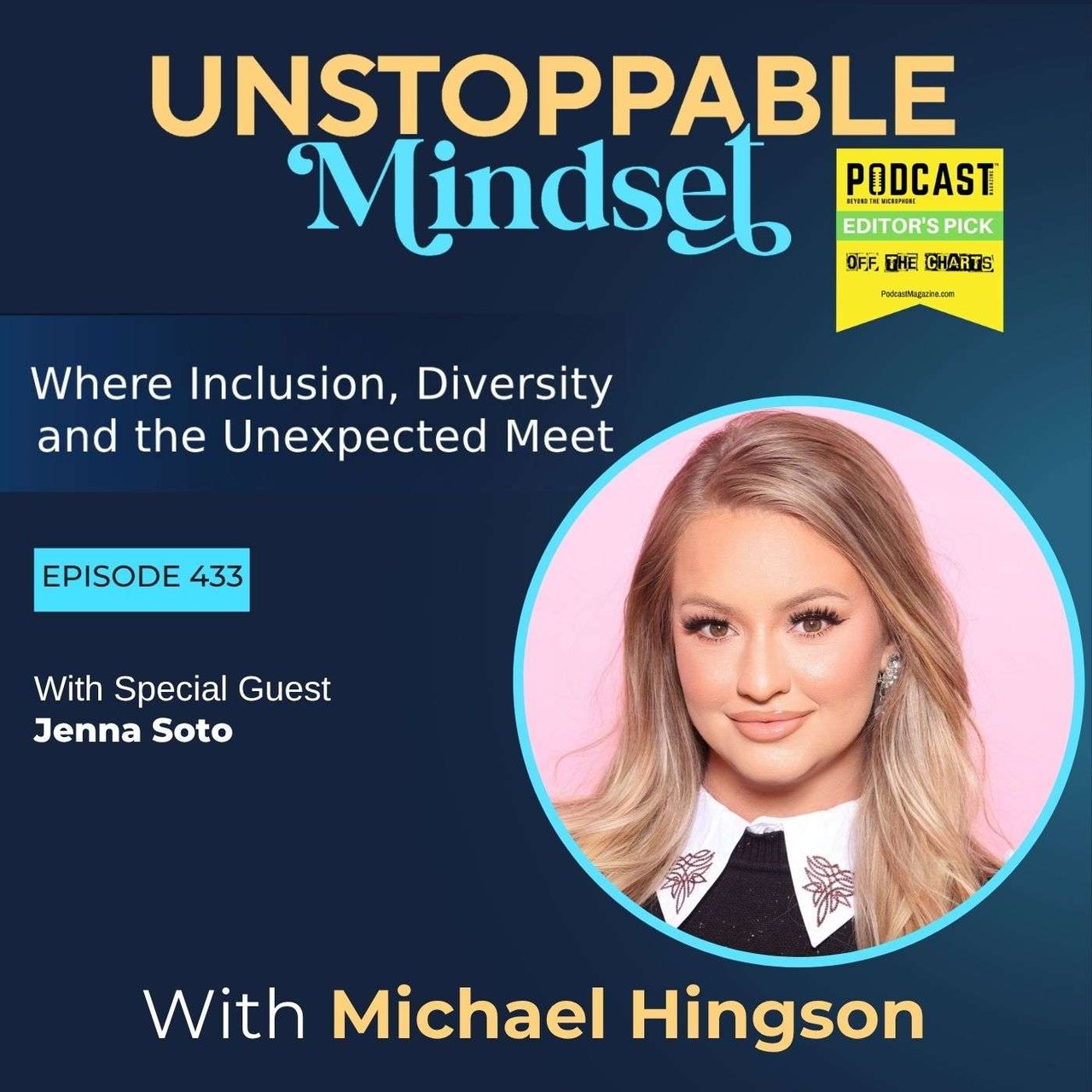
Episode 433 – The Truth About Identity, Failure, and Becoming Unstoppable with Jenna Rene Soto
What happens when your identity gets stripped away and you have to rebuild from scratch?
I sit down with Jenna Rene Soto, a professional barrel racer, military intelligence analyst, author, and real estate investor who has lived through that exact challenge. You will hear how she moved from ranch life to the military, faced failure and financial collapse, and rebuilt her life with a stronger sense of purpose and self-worth. Jenna shares powerful lessons on identity, resilience, mentorship, and why chasing meaning matters more than chasing titles. I believe you will find this conversation both grounding and inspiring as you rethink what truly defines you and how to move forward when life forces a reset.
Highlights:
00:39 – Discover how growing up on a ranch built discipline, work ethic, and a deep connection to horses
15:41 – Learn how making decisions without full information builds confidence under pressure
22:16 – Understand why focusing only on what you can control reduces fear and overwhelm
43:52 – Hear how hitting rock bottom can become the starting point for rebuilding your life
53:41 – Discover why your identity must go beyond your job or title to create real confidence
1:00:52 – Learn how changing your environment and taking small steps can help you break out of feeling stuck
Bottom of Form
About the Guest:
Jenna René Soto is a real estate investor, author of Not Enough, professional barrel racer, and Mrs. Oklahoma City 2026. After serving nine years in the United States Air Force in intelligence, surveillance, and reconnaissance roles, including deployments to Iraq and Afghanistan, she transitioned into entrepreneurship and built a business focused on real estate investment and redevelopment.
Her journey has not been linear. Following her military service, Jenna experienced financial hardship that forced a complete reset. Through real estate, discipline, and personal development, she rebuilt her life and business from the ground up. That experience became the foundation of her work today—helping others understand the connection between identity, decision-making, and long-term success.
In addition to her business pursuits, Jenna has remained deeply connected to the rodeo industry as a competitive barrel racer. The lessons from that world—consistency, resilience, and performance under pressure—continue to shape her approach to both business and life. She is also a strong advocate for coaching and lifelong learning, crediting mentorship as a key factor in accelerating her growth.
As Mrs. Oklahoma City 2026, Jenna uses her platform to speak to students, professionals, and community groups about identity, resilience, and rebuilding after adversity. She believes service is not limited by age or circumstance and is committed to helping others recognize their value and take ownership of their future.
Ways to connect with Jenna:
Website: https://jennarenesoto.com
Instagram: https://www.instagram.com/jennarenesotoYouTube: https://youtube.com/@jennarenesotoFacebook: https://www.facebook.com/jennarenesotoEmail: jennarenesoto@gmail.com
About the Host:
Michael Hingson is a New York Times best-selling author, international lecturer, and Chief Vision Officer for accessiBe. Michael, blind since birth, survived the 9/11 attacks with the help of his guide dog Roselle. This story is the subject of his best-selling book, Thunder Dog.
Michael gives over 100 presentations around the world each year speaking to influential groups such as Exxon Mobile, AT&T, Federal Express, Scripps College, Rutgers University, Children’s Hospital, and the American Red Cross just to name a few. He is Ambassador for the National Braille Literacy Campaign for the National Federation of the Blind and also serves as Ambassador for the American Humane Association’s 2012 Hero Dog Awards.
https://www.facebook.com/michael.hingson.author.speaker/
https://www.youtube.com/user/mhingson
https://www.linkedin.com/in/michaelhingson/
accessiBe Links
https://www.youtube.com/c/accessiBe
https://www.linkedin.com/company/accessibe/mycompany/
https://www.facebook.com/accessibe/
Thanks for listening!
Thanks so much for listening to our podcast! If you enjoyed this episode and think that others could benefit from listening, please share it using the social media buttons on this page. Do you have some feedback or questions about this episode? Leave a comment in the section below!
Subscribe to the podcast
If you would like to get automatic updates of new podcast episodes, you can subscribe to the podcast on Apple Podcasts or Stitcher. You can subscribe in your favorite podcast app. You can also support our podcast through our tip jar https://tips.pinecast.com/jar/unstoppable-mindset .
Leave us an Apple Podcasts review
Ratings and reviews from our listeners are extremely valuable to us and greatly appreciated. They help our podcast rank higher on Apple Podcasts, which exposes our show to more awesome listeners like you. If you have a minute, please leave an honest review on Apple Podcasts.
Transcription Notes:
Michael Hingson 00:04
What if the biggest thing holding you back isn’t what’s in front of you, but rather what you believe Welcome to unstoppable mindset where inclusion, diversity and the unexpected meet. I’m your host. Michael hingson, speaker, author and advocate for inclusion and possibilities. This podcast explores how the beliefs we carry shape the way we live, lead and connect with others. Each week, I talk with people who challenge assumptions, face adversity head on and show what’s possible when we choose curiosity over fear, together, we focus on mindset resilience and the small shifts that lead to meaningful change. Let’s get started. Well, hello, everyone, wherever you happen to be today? Or if I were playing Walter Winchell, I’d say Good evening, Mr. And Mrs. America and all the ships at sea flash. Anybody know who Walter Winchell was? If you don’t know he was a reporter, did a lot of coverage in the world of radio and some on television. If you ever watched the old TV show, The Untouchables, with Eliot Ness, Walter Winchell was the narrator for that. He was a a pretty big reporter back in the day, as they say. But anyway, that’s a different story, and we’re not here to talk about Walter much today, but I want to thank you all for being here. Our guest today is Jenna Rene Soto. And Jenna has, well, she doesn’t have a very exciting life. She’s only been a barrel racer, Mr. Or Mrs. Northam, Mrs. Oklahoma City. She’s been in the military. She’s written a book. So you know, not much anyway. We’re we’re really glad that Jenna consented to be with us here on unstoppable mindset, and I think we’ll have fun for the next hour or so. So, Jenna, welcome to unstoppable mindset. Thanks for joining us.
Jenna Rene Soto 02:09
Thank you so much for having me. It’s such an honor to be on your show, and I’m really excited to chat with you today.
Michael Hingson 02:17
Well, and anything you want to talk about, we can talk about scandal is always a good thing, I’m sure. But anyway, that’s another story too. Well, I’m glad you’re here. Why don’t you tell us a little bit about maybe the early Jenna growing up and some of that stuff.
Speaker 1 02:33
Okay, so I grew up in western South Dakota on a rant that my great granddad homesteaded great great granddad actually in 1909 so my family grew up raising cattle and sheep, and then we ended up getting into the buffalo industry. But my love of horses really began at an early age, because we had horses to work on the ranch in South Dakota, it snows all the time, and the snow gets so deep, a lot of the areas where the cows would go to hide out from the weather you couldn’t even access with a vehicle. So we had horses mainly to work, and my whole family ended up rodeoing, and I really just fell in love with it at an early age, and continued it all the way through college and competed on the equestrian team, and then I joined the military, and kind of got out of the military to pursue rodeo again, and ended up as a professional barrel racer. But horses have been a really big influence on my life and a huge passion of mine since I was just barely old enough to sit up, I’d been on the back of a horse.
Michael Hingson 03:46
Well, what is barrel racing? I’m not familiar with it. I’m not sure if I’ve heard of it or not, but I’m not familiar with it. So what is barrel racing?
Speaker 1 03:55
Well, barrel racing is the only women’s event in the sport of rodeo, and you can think of it basically like a drag race, except instead of with cars, you’ve got horses. There are three barrels, and you can go around them from the left or the right first, but you make a clove release pattern, and the fastest time wins. The only penalty you might have is if you tip over a barrel. Yeah, five seconds. But if you are tipping over a barrel, the competition is so so close these days that we’re down to the 100th of a second, so five second penalty, you’re totally out.
Michael Hingson 04:31
Yeah, so that’s the only women’s sport. So women typically don’t participate in in other sports, or that’s just the only exclusive women’s sport.
Speaker 1 04:43
That’s the only professional level women’s sport in rodeo. There are other organizations where women can actually ride bulls and ride broncs and rope, but in the main rodeo organization, it’s only the barrel racing for the women. And it is exclusive to women as well, so you won’t see any male competitors, but there are other organizations that allow that crossover. Why is that? I think it’s tradition. Honestly, it’s one of the oldest women’s professional organizations in the country, and I think that is probably going to change in the future, because at least from my perspective, if I want to say that I’m the best in the world, I want to be competing against men, women, young and old. So I think they should do away with the age limits, first of all, and also the gender requirements. But I know that’s a little bit controversial, but I think in the future, we’ll see more male competitors trying to get involved with with this level of competition,
Michael Hingson 05:49
but I would think also that women are capable of roping and riding bulls and so on. So I’m wondering why they’re fewer and
Speaker 1 05:58
further between. That’s for sure. Writing is so physically demanding, it is a very, very challenging sport, but there are opportunities for women to compete, but I think the numbers just aren’t there to make it more mainstream. But there, there are organizations where they can, yeah, but I will say I don’t know, but maybe one or two, one or two people that do it, and I, I have tried riding a bull before, not a very aggressive one, and I don’t care to get back up there again, because no matter what you’re coming off, even if you make eight seconds, you’re going to hit the ground. And it’s not near as soft as it looks when you see other people.
Michael Hingson 06:39
Yeah, the ground is not very forgiving,
06:43
is it not well?
Michael Hingson 06:45
And I would rather make friends with an animal than ride it and get it mad at me. So I’m with you, in a sense. I like horses. I’ve petted bulls and cows and try to be friendly to them. And so I’m not, I’m not enamored with going up to one that’s really likely to want a gourmet.
Speaker 1 07:09
Yeah, yeah, I don’t blame you. It is actually funny, though, a lot of the best bucking horses and bulls are really docile and pretty friendly when they’re outside of the arena. And that’s part of pro rodeo is born to buck program. So just like any other animal athlete, they have to instill you want to perform at that level and have the athleticism to be able to even get the cowboy off. So not every bull is even capable of doing that. And it is funny too, because if they don’t want to, they won’t, and there’s nothing that you can really make them, you know, try any harder than they want to, but, but the top pro bucking bulls and pro bucking horses, they know their job. They’re very athletic and prompted, and they really turn it on when the lights in the crowd are, you know, are over them.
Michael Hingson 08:00
So they’re smart and they know they’re in a performing environment, as opposed to just always wanting to do it. I’m sure there are some that always want to, but mostly it’s a performing thing, and they’re smart enough to know that.
Speaker 1 08:13
Yep, they are, and it’s so cute. Each horse, at least, all of them that I’ve ever met, have such distinct personalities, yeah, and they’re almost like a dog, if you’re around them enough, you really get to know them and their preferences and their likes and dislikes. And it’s really fun to get, to get that connection with your with your animal,
Michael Hingson 08:32
yeah, and that’s that’s fine. So I didn’t really know that, that it was more of a of a sport where the animals really do know what they’re supposed to do and and they do it when they have to and when they don’t have to, they’re not necessarily feeling empowered to do that. They want to visit with people.
Speaker 1 08:54
Yep, yep. That’s right. That’s cool.
Michael Hingson 08:57
Well, there you go. Well, learn, learn something about that well and barrel racing that that keeps you busy. So how well do you do a barrel racing?
Speaker 1 09:08
Well, I love it so much. I’ve been trying my whole life, honestly, and I I’ve won a lot, and I’ve had several setbacks, but it’s something that I really enjoy, and the progress and the connection that I had with my horse in pursuit of greatness is is what I’m truly addicted to and keep coming back to. And I’ve had a couple of really great horses during my lifetime, but the thing I find the most rewarding is taking a young horse and watching them grow up on my ranch, and then finally, being able to get to ride them when they’re big enough, and to see them learn and grow with you, and know that you know they had that experience because you you taught them and you gave it to them, and to see them be willing and proud of themselves. And that’s pretty cool to me, and that’s what, that’s what I really enjoy. So I’ll always have horses. Whether I’m able to compete or not. I think I’m a lifelong, you know, horse trainer, and just enjoy it so much. It’s definitely something that I want to keep in my life.
Michael Hingson 10:11
Well, it’s also I would think about building a level of trust. And the reason you can be successful with a horse or whatever is that you you create and you develop that level of trust where you both know how to work with each other, you know how each other thinks. And, you know, I find that with every guide dog that I get, it’s the same sort of thing. You’ve got to develop the relationship and make it work.
Speaker 1 10:39
Yep, I can imagine this similar and just asking, you know, that animal to trust you and to, you know, take care of you as well. And something a lot of people don’t think about in the rodeo world is that you’re you’re actually running full speed into an arena that you’re not sure what the ground is going to be like, and there is a lot of responsibility on the horse to be able to find his footing and act quickly. And while I am hoping that we are able to turn the barrel as close as possible, if they’re not able to do that because of the ground, that’s where you’ll see, some horses kind of be a little bit wider or maybe stumble, but a lot of times we’ll just taking care of their rider. And so it is kind of cool how you you can work together and and there’s always seems like there’s more to do, but, but having that initial trust and bond is so important, because you really are asking a lot of them to go just totally full speed into arena lights and music and applause and to take care of you, and they eat it up. Yeah, they do. There are some that like it more than others, honestly. And just like the bucking bulls and the bucking horses, if they don’t actually enjoy it, they’re not going to perform well. And the sport is so competitive that they’ve really got to love it, and you also have to truly love it. And kind of, when you get to the rodeo, if you’re showcasing what you’ve done at home, that’s the fun part. But you’ve got to love the whole entire process, and more of it’s going to be at home working through things than it is, you know, with the fringe flying at the at the arena and the performance,
Michael Hingson 12:19
and again, like anything, it’s a two way trust. So you both have to trust each other and learn to work together, which, which is so important. And I wish more people would recognize that with their pets, that that’s what it’s really about, and it’s about developing a deeper, true trusting relationship than most of us realize.
Speaker 1 12:38
Yep, that is right. And I’ve actually, I’ve actually got a little rodeo dog that I take with me too, and he’s part of the family as much as any of the horses, but I don’t know that I have near the trust in him to run off or to take care of me if he’s awfully so I really admire that the dogs and the work that you do with That’s really incredible.
Michael Hingson 13:03
Well. So you, you went to college, right? Yes, yep. Where did you go and what did you study?
Speaker 1 13:12
I went to South Dakota State, and that was part of the military. When I joined, they would pay tuition anywhere in the state that I wanted to go. So that’s the college that I decided on, and I actually got a partial scholarship for the equestrian program there as well. But I ended up studying political science, and that was part of my military journey as well. I was in intelligence, so I was most interested in foreign policy and and things like that, kind of in that Intel Avenue.
Michael Hingson 13:47
I was wondering what got you into the military, so that that kind of led you into then working and being a part of the military for a while?
Speaker 1 13:57
Yeah, I think the main draw for the military, to me was to get out of the small town that I grew up in and get to see the world. And I didn’t really know what career field I should go in. That was kind of by chance, but it ended up totally changing my life, and it’s been a part of my life since then, and I’m really glad that that happened for me, because I had no idea what Intel meant. And I really didn’t know a fighter yet, from an aircraft carrier, from anything. I just had no clue when I went in. So it was totally eye opening experience, but I ended up being very fortunate in finding a job that I actually do like.
Michael Hingson 14:37
So what attracted you to intelligence and how did, how did you use that? How did it change your life?
Speaker 1 14:45
Well, they had a signing bonus, which was very significant, especially at an at an age of 18, to get college paid for and have that sign on bonuses put you so far ahead of most of your peers. Financially, that that was truly what, what drew me to it, and my as that scores were high enough where I did qualify. And I think that’s one of the reasons why that career field was so scarce, because it is tough to get into. The training is very long, and a lot of people don’t, don’t end up being good at it, even if they do qualify. So they’re always looking for people who are going to be able to progress and stay in the career field a long time. But I ended up, you know, doing nine years in the military as an intel analyst, which is very interesting to me, and then I got out to Rodeo, but ended up coming back to do surveillance and reconnaissance, which is right underneath that Intel umbrella. And then any of the jobs that I would find here, you know, in the US would be right underneath that too. And an Intel is such a huge career field. There’s so many different ways you can go with it. One of the things I’m looking at now is human trafficking in Oklahoma, which I didn’t realize was, you know, such a big problem, or a big department, but the Oklahoma Bureau of Narcotics has several intel analyst positions to just battle the human trafficking that’s happening here, which I thought was very interesting. But so
Michael Hingson 16:14
what makes a person really good at Intel? You said you were good at it. There are a lot of people who may qualify, but they’re not really good. What does that mean?
Speaker 1 16:23
Yeah, well, I think you have to have a natural ability to make decisions without all of the information, to excel in intelligence that and being able to speak in front of you, know, your commander or a unit and talk about what you think and why based on just the information that’s given is a unique thing for a lot of people, especially somebody who’s younger. So I’ve always been comfortable in front of a crowd. I’ve done, you know, pageants, rodeo and things like that. So just the nature of being in front of a crowd isn’t super intimidating to me. But once I learned, you know, the process, I wasn’t afraid to study and once I would study enough, it gave me confidence to get up in front of people and make decisions. And I found it very rewarding once you get to actually see what those decisions mean, as far as the Intel cycle and the whole operation that’s going on overseas. It’s pretty cool to be a part of such a big thing. And and I really did enjoy that, and it keeps it super interesting, because the battlefield is ever changing and that the enemy is ever changing, and no operation is exactly the same. So just super dynamic, clear field well, actually, a lot of pressure and keep you awake.
Michael Hingson 17:44
Yeah, fun. Well, I know we’re all dealing with, of course, now, the whole issue of a war in Iran and all that that must, must be a really intelligence pressured situation, because there’s so much that can happen and go wrong and and go right, but that must be a challenge.
Speaker 1 18:05
Yeah. And it’s funny, I’m not, not really involved anymore in intelligence, so I, I always do wonder, you know, what is the real picture? What are we really doing? What are we preparing for, and what’s going on that the public hasn’t found out about yet, yeah, but it has surprised me some of the things that have come out just because the the world that I grew up in the Internet didn’t quite exist, and I was going through school and we never put anything online press wasn’t, you know, even something we considered or talked about, Just wasn’t, wasn’t part of our world. So to see some of the capabilities that we’re using to, like, find a down pilot, or to go in and knock out communications and electricity, that’s crazy to me that they’re able to talk about that on an unclassified network. But I think it also serves a purpose, just in, you know, a show of force. And there’s always more to the story than is ever, you know, put on the news. So there’s, there’s actually a lot of analysis that everybody needs to do, just as far as where they get their news, and trying to determine what is actually the point, and what are we doing really, and what are some of the outcomes? It’s just a very dynamic and uncertain world to dive into,
Michael Hingson 19:24
yeah, because I’m sure all of that is true, and there’s a lot that we don’t know. And to put it this way, it’d be nice to be a fly on the wall and know some of those things, but at the same time, I also know why not everything is put out, and then that’s fine there. There are things that that really shouldn’t necessarily be disclosed. The other side of it is though, that people want to disclose, or they want everybody everything to be disclosed, and that just doesn’t work all the time. Sometimes we really need to learn to respect silence. There’s value in that.
Speaker 1 20:01
Yeah, Yep, absolutely. And you can’t give away all of your capabilities, or it changes the battlefield entirely. Just so not, yeah, you know, the rest of the world will be prepared to deal with deal with us, and I think should have an upper hand and keep our hearts kind of close to our chest. But at the end of the day, those decisions are so far out of my hands. And it’s funny, even when I was, you know, actively working in a combat zone, they would usually only tell us just enough where you can succeed in your role. You didn’t necessarily know the full picture or get to see outside of, you know, your little tunnel vision, but the people in charge, you know, you really had to have faith and trust in them, and what you’re doing greater good and serves a purpose that we believe in and and it’s interesting to think things back now on. You know, my earlier days in Intel, you just you have no idea what’s going on truly, and how many different working pieces there are, and you’re just doing your best to get this briefing out, but it’s such a big, you know, wheelhouse, and there’s so many parts, and it’s a little overwhelming. Actually, they think they put 18 year olds out into that, and yeah, and expect them to thrive. Well, the other
Michael Hingson 21:19
part of it is that just focusing on what you are are supposed to do probably makes a lot of sense, because you don’t need to worry about everything so you so you were I didn’t get the last of what you were saying.
Speaker 1 21:36
I was saying that, you know, in your in your career field, you try to do the very best of the things that you can control, and you have to have a lot of faith in your team, the guy sitting next next to you, that they’re going to also do their best. And you know, at the end of the day, you can’t worry about the factors that you can’t control, and that’s something that’s very challenging and in Intel to realize and to sit with, because there are so many dynamic moving pieces that it it will make you crazy if you try to read every single thing or know every single thing, and that kind of goes with rodeo too. You try to be as prepared as you can, but there’s a lot you can’t control. The more comfortable you can be in that the the better operator that you would be. Well, one of
Michael Hingson 22:24
the mantras that I have lived by, especially since September 11, and have talked about on this podcast some, is that whole concept, don’t worry about what you can’t control. Focus on what you can. And one of the reasons that that’s so important is especially for people who don’t really know how to do this, well, if you just worry about everything in you, what if everything to death? You’re going to create so much fear in your life, you won’t really be able to cope with anything. And we all ought to learn to just focus on the things over which we really have control. That doesn’t mean that we shouldn’t be aware of other things, but we need to learn not to worry about them and only worry about the things over which we have control, because those are the things that will really be able to help you deal with any fear that you may have, and also deal with being able to control fear and not focus on stuff that doesn’t make sense.
Speaker 1 23:20
Yeah, I like that a lot, and it is sometimes easier said than done, but it is,
Michael Hingson 23:29
well, it is, it is something that one can learn, however, how to do? You can learn to control, sir, you can learn to deal with just the things over which you have control and learn not to what if or not to what ifs in an emotional way, the things that you can’t. I gave a speech a couple of years ago to the business continuity Institute, and business continuity as they just as the people who are in it describe it, they’re the what if people. They’re the ones that are always looking to analyze and consider what could happen to their business, or the business they work for that could cause it to crash or not succeed or or have a problem. And they’re the ones that have to put in place the things that will allow a business to continue. So like with the wars over in in the Middle East and so on, businesses over there have to deal with finding ways to have business continuity, whether it’s backing up computer data, other forms of communications, or whatever, and they’ve got business continuity people to help them do that. But the reality is that those business continuity people have been thinking about that for a while. The difference is they don’t get emotionally involved, and they don’t let it worry them, because all they can do is deal with what they can deal with, and they recognize that, and it’s and it’s really so important to focus on the things over which you really do have control, and the rest even, although you may be aware. But you need to learn to filter it out and not let it worry you, because that’s just going to drive you crazy. And the reality is, like over 95% of the things we worry about will never happen, and there are things that we don’t have any control over anyway.
Speaker 1 25:15
That is very true. Yep, that is very true.
Michael Hingson 25:20
So you, you eventually did get kind of out of the military, but you’ve built a lot of different life. You’ve been in the rodeo, military, real estate, involvement and author. What connects all of that?
Speaker 1 25:37
Well, I think that, you know, I’m, I’m always interested in progressing and working towards something so if I feel like one avenue isn’t isn’t serving me anymore, I’m not afraid to pivot and try something new. And I think I just have the personality type where I want to, you know, live a meaningful life and create impact. And whether it’s rodeo or real estate, I’ve always enjoyed giving back and sharing with you know people who are like me or people who are on a similar journey, some of the lessons that I had learned along the way to help them kind of skip through some steps with this class at all possible, but I know when I really made the most progress. It was because of the thing, what I had around me, or a coach or a mentor, or some type of educational content that I got a hold of that really catapulted me, or at least got me into the state where I could find the answers. You know myself, but just having a an environment where it encourages you to do more, be more. That’s something that you know, that you’re called to, getting around the right people can make a huge difference. Then I think it’s it’s fun to pursue different things that we’re interested in, whether it’s career related or just something because you love it, like rodeo. I don’t know that I’ll ever be just a full time cowgirl again, but I love it so much that I’ve found a way to make it part of my life. And I think that’s important for people to know too, because a lot of people their passion isn’t, maybe going to make them money, and they may not be able to pay the bills doing this, but that doesn’t mean that you can’t, you know, fill your life with things that you enjoy. And so it’s been a difficult, you know, balance, to try to figure out how it’s all going to work together, but, but I really do enjoy different different facets in different areas, and I feel like if I had more time, I would pick up even more hobbies, but really maxed out with what we’ve got going on currently.
Michael Hingson 27:39
How did Mrs. Oklahoma come into it?
Speaker 1 27:43
Well, I grew up doing rodeo Queen pageant, and it was actually one of the things I wrote about in my book, because it was the first time I really faced, you know, loss and judgment and the feeling of you just aren’t good enough, and there are no other options, was to compete at Miss Troy to America and to not win. And I had set my sights and my goals on that since I was just a little girl. And it’s unique in the rodeo world, because you only get to try one time, and there’s no other organizations. There’s no other options, actually. So it’s just heartbreaking to realize that that dream is, you know, that dream is put to bed, and to figure out what’s next ended up led it led to, you know, other pageant systems and other ways to give back and make a difference. And having been Miss Rodeo, you know, I know that with the crown and with that visibility is a huge avenue to make a difference. It gets you in a lot of the right rooms. It gives you credibility, and it it allows you, you know, the connection and the support to do whatever it is that you are passionate about, and more so in the pageant world than the rodeo world, because the rodeo world, your job is to represent Professional Rodeo for for that sport and to advocate for that organization. But in the pageant world, you can pick, you can actually go after whatever platform means the most to you, and the year is yours to do with it what you will. And so with my book coming out, it just seemed like an easy no brainer to kind of combine the two, and it’s allowed me to go to different schools and speak, to get on different podcasts, and it’s been a really great combo. So the book that I’ve written will be, you know, further than just this year, but Mrs. Oklahoma City is a year long title, and I’ll get to get go compete for Mrs. Oklahoma here in about two months.
Michael Hingson 29:40
Wow. Well, that’ll be, that’ll be kind of fun. Do you? Obviously, you enjoy the pageant world some
Speaker 1 29:48
I do. And actually, even if you don’t end up winning the ultimate title, it’s so fun to be around like minded women that are, you know, similar in age, or also live in your. State, because those are the people that I really enjoy collaborating with, connecting with, and end up being lifelong friends with. I remember, you know, when I was Miss Rodeo, I was like 2013 I want to say so it’s been several years ago, but the girls that I served with that year are actually some of my best friends this day, and I don’t know that we ever would have crossed paths otherwise, but to get in a room with other high achievers that have similar interests, that is actually that is worth it, in my eyes, even if you don’t take home the actual crown. So it’s fun, and I love it, and it just seems like a really good fit, and I’m glad that they don’t put age limits on it across the board, because I’m married now, I’m I’m definitely older than, you know, winning as a teenager or even early 20s. So it’s fun to get to do it at this stage. And I actually think it’s more beneficial, because they have a lot more to say now and have a lot more lessons and that I’ve learned a little bit more perspective and just a an overall better package, I think,
Michael Hingson 31:03
is there a lot of politics in those contests or or do you there is?
Speaker 1 31:09
Yeah, yes, there definitely is. And it just depends, you know, what system and honestly, what year, and that’s what drew me to barrel racing, because it’s no one’s opinion. It is against the clock. There’s, there’s not a lot of room for excuses. You’re either the fastest that day or you’re not. So I do love bear racing for that reason, but I also love what pageants bring. So I’m still active in both, but there are definite pros and cons.
Michael Hingson 31:41
Do they measure the time in barrel racing? And she did us down to hundredths of a second with with all the movements of the animals. How do they measure the time so accurately?
Speaker 1 31:52
Well, there’s an electric eye that senses when the horse’s nose crosses it, so that starts to clock digitally. So there is no room for error. So it used to be a flag, and a judge would stand at the line and try to accurately throw the flag down, and then the timer would stop by a secretary holding a clock in their hand. But the competition has just gotten so close that even to do that would be so inaccurate. So the electric eye is is awesome, and they’ve got so much technology now that they can even overlay your run with with the winner and see where they were faster. Maybe it’s around the first world, maybe it’s around second, and segment it down so you can break up, you know, your time to first, or your time to second, and see, you know, really, where you where you need to make improvements, or where you got beat, and it’s ever so polite, I mean, just a little hesitation and you’re out.
Michael Hingson 32:47
Yeah, fascinating. It’s, it’s interesting. And I’ve never attended a rodeo. I know it’s a lot more visual than probably typically I am used to, but it would be fun to, you know, to do it one of these days, so we’ll have to come and watch you in Oklahoma.
Speaker 1 33:04
Yeah, absolutely. And a lot of times the announcers do such a good job at explaining it, because they never know exactly what the crowd is. So they always do a good job of explaining exactly what’s going on in the arena and like, what the penalties might be, or who this cowgirl is. That is enjoyable to listen to as well, cool.
Michael Hingson 33:24
Well, so you, you are married. We, you talked a little bit about that, and your husband and you met in Afghanistan. Tell me about that. We did
Speaker 1 33:34
romantic city of Bagram. There you are. Yeah, we, we both did the same job as contractors, but my husband was actually one of the guys who would be on the ground doing more of the hands on part of the operation, so it was cool to get to fly with him eventually, because he had, he had a lot to teach me, and I definitely became a student of his, and asked a lot of questions, and we really connected in in the sky, and with the platform that I was on, we would be up there for several hours, and that environment is secure, so you can’t have you know your phone or music or movies or things like that, so you really just have your crew to talk to, and it was just him and I Really and we got to know each other for, you know, several months with no distractions of the civilian world, no, you know, makeup or horses or social media. So I just felt like our connection was so raw and honest that, you know, we just it was pretty simple. And the day that we met, we pretty much became best friends and inseparable system. So it’s fun for him to get to come to Oklahoma and see a lot more about my background once we got out of Afghanistan. Jimmy definitely come from different different upbringings. He grew up in the city, and hadn’t really been on a horse or even around horses until he met me, but. But now he, you know, he’s got some booths and drop there. It’s funny to see the the change. But yeah, we, we both bring different things to the table, but found a lot of similarities and ended up both really enjoying real estate. And now what we do full time is flip and renovate houses here in Oklahoma. So that’s just very busy.
Michael Hingson 35:22
How long have you been married?
Speaker 1 35:24
We’ve been married for three years, and we’ve been flipping full time for one year. And I will say that if you are ever trying to test your marriage, just go ahead and buy a house together and see if you can renovate it, because it is a lot of collaboration and uncertainty and problem solving honestly at the end of the day, and a lot of hard work, but it’s ended up bringing us a whole lot closer, because we’ve been able to see some of the fruits of our labor and make some really great deals happen. And we love it, just in that we can kind of control our schedule and get to be home all the time. So we’re we’re definitely going to keep going on the real estate path.
Michael Hingson 36:06
My wife and I were married for 40 years before she passed in November of 2022 and we bought over our lifetime, several houses. We were pretty we were pretty aligned on all of that. And one of the things about Karen is that she was in a wheelchair her whole life, so a lot of what we did was based around either finding a house that we could modify to be accessible for her, or what we liked better was when we could find property and build a house. Because if you build a house, oh, okay, and you make the house accessible as you’re building it. It doesn’t cost anything to do that. You design in lower counters, you design wider doors, you design level entryways and so on. Whereas, if you buy a house and then you modify it, it costs hundreds of 1000s of dollars. But we had a couple of times where we knew we were going to be in an area where we couldn’t find property to build a home, and when it came down to looking with real estate agents to find a home that we could modify, the problem is with some of them, if they just didn’t get it, they took us to a house and we said, this is why this won’t work. This is why that won’t work. And then the next house they took us to was the same thing. And they said, Well, this is different. Well, no, it’s not. It’s the same thing. And so yeah, it does get to be a challenge come
Speaker 1 37:34
by honestly, and it’s such a big market, everybody’s real to these days or knows somebody, but it is definitely a skill to to have a good realtor on your side and and we’ve definitely learned that through selling, selling different houses, because, yeah, lots of different ones, and definitely know how to appreciate a good one,
Michael Hingson 37:54
yeah, and we were, you know, sometimes it took a little effort, but we were able to find good Realtors eventually, that we could, that we could work with. And then, you’re right, they’re such a blessing, we had to go through some bad one, not bad ones, but just lack of perceptive I won’t say they’re bad, because they probably did all right, but they they didn’t get what we needed. But we learned a lot and and had a lot of fun. So we were pretty aligned on what we we needed in a house, because a lot of it was based on accessibility for Karen, because for me, it’s not as magical kind of thing. But by the same token, we we learned a lot, and it worked well. But when we could build a house like this home I’m in now, we built in 2016 we moved down to Southern California in 2014 and lived in an apartment for almost two and a half years, and we were it wasn’t overly accessible, but it was accessible enough for Karen to be able to do most things in it, but we were waiting to get a construction loan, and then we got it. And by June or July of 2016 they started building or working on the house. Maybe it was like May of 2016 and I remember one day, I think it was in July, we came over from the apartment, and we’re watching as they put the big trusses up on the where the roof, for the roof, all the big beams and all that. We just kind of watched that for a while, but they did make it accessible, and that’s what we needed, which was cool.
Speaker 1 39:37
Well, good, yeah, that’s such a feat to do all of that, and I’ve definitely gained some appreciation for contractors and people who work in the houses and on the houses, because it is such a fun experience for every homeowner, but to be new in it, there’s just so much to learn. Yeah, it’s a huge, huge world and a huge undertaking. Earn to build, for sure, but even to own a home and and it is fun and very rewarding when we get to, you know, make somebody’s dream homes come to life, or to be able to do the deal with them and help them along their journey. And I think even if you’re not, you know, innately interested in real estate, it is something that everybody should consider, because you do have to have some somewhere to live for your whole life. So to learn about it and to make a proactive decision, rather than kind of reactive, is is fun. And I like sharing our real estate journey with people from like rodeo world or the military world, because, you know, they end up, you know, thinking maybe this is something I’d like to do or learn more about, when initially they just probably thought, you know, I’ll just rent and see how it goes. But there’s a lot of value in buying early. And especially in the military, there’s some cool programs that can really help, help the service members out and get into a house.
Michael Hingson 40:56
Yeah, well, for you, being in the rodeo world, and I would think in the military and intelligence and so on, you have had a lot of issues dealing with pressure and identity and resilience and so on. What have you learned from these different kinds of environments that you’ve been in that really helps you do better at coping with pressure and being more resilient?
Speaker 1 41:22
Well, the military is definitely a great teacher for a lot of those things. And that was kind of the first time that I had to ask myself, you know, who are you? Who are you without the military? And for a long time, I thought that was a barrel racer, until that was taken and then I was forced to look a little bit deeper and figure out, you know, what makes me happy, what makes me sick? What do I want with my life? Where would I like to live? Things like that? And I realized that a lot of it wasn’t tangible. It’s not necessarily the things that you have, but more than things you’re surrounded with, and how you feel on a daily basis. And for me, it always ended up being with horses and connecting with animals and being out in nature and having a little bit of land and kind of getting away from the hustle and bustle of the city. But it took, you know, it took several years to learn that about myself and and I had to, you know, really see the world and try out a lot of different roles before I I kind of feel like I figured I figured myself out. I got to know myself a little bit better, but pivoting and getting that identity taken away from you that you you really just resonate with, like I’m a military member or I’m a professional cowgirl, to take that away can be life changing, and it can be very shocking for people emotionally, and lead to a lot of depression or questions and and the thing that the military, you know, teaches us all the time, and I didn’t realize that without some reflection, but is is to shift flexibility. Is that the key to air power and something doesn’t work out. That doesn’t mean that you failed, and it doesn’t mean that you need to quit. You just got to readjust, re attack, get a better plan and continue on. So I know the military teaches that without people realizing it, but it that is a lifelong skill, and it’s a skill for people who aren’t even in the military to take off on and to and to practice, because you can use it so many times throughout your life, and it’s in different scenarios too, but, but for me, the the craziest thing ever was to think that I’m no longer in the military, or I’m no longer a barrel racer, and to ask just who are you? Who are you really? What makes you happy? Have you
Michael Hingson 43:41
ever had a time where you kind of really hit rock bottom and what did, how did that all go?
Speaker 1 43:46
Yeah, yes, I definitely have, and I go into a lot of detail about it in my first book, but it was, you know, when I ended up quitting the military or getting out to pursue pro radio I thought that was my fairy tale ending. I thought that was my Cinderella story. I thought that, you know, this was the time that I was going to make it, but instead, I ended up spending all of my money over leveraging my assets and totally going broke, and my horse ended up getting hurt. So it was, to me, it was devastating in a lot of ways, and I felt like I didn’t have any options. And you know, when that state is so hard to see past this year or this hurdle or this, you know, difficulty, but what I did was to go back to Afghanistan, to go back to the work that I know that I was good at, that actually does pay and give it all up. I basically had to strip away everything that I loved about my life and kind of start over. And the the main thing that helped me was that stability of a long term job where, you know, in the military, they. Take a lot of care of you. They give you a bed, they give you food, they give you a job and a paycheck. And it might not be the most glamorous or most fun thing, and there’s, you know, there’s definitely some sacrifice that goes into deploying long term. I think I was there initially for about a year, and that was really hard for me to do, but it gave me that stability and the time and the space to just start over and think about what, what exactly I wanted to do with my life and where we could go from here. And I felt like I truly, you know, was at my lost bottom. I felt like I didn’t have a purpose anymore or or anything to strive for. But that wasn’t the case at all. And so it was a good experience looking back. What do you want to go through again? And I would hope you know, others can pick themselves up quicker than I was able to. But yeah, that’s a definite lesson that I wanted to share with others. And I know a lot of people feel that to some degree when they go through major life changes, and that’s a lot of about what my book is based on, and definitely the first one that is titled not enough, or just that feeling that you failed and that you’re not good enough, when maybe you know your whole world is is crumbling, but, but there is a way forward. There is a path, and there’s different tools you can use and you can get back up again,
Michael Hingson 46:25
but you talk about not enough a lot. Where did that belief first show up in your life?
Speaker 1 46:32
Well, I think it was ingrained, honestly, at an early age, and maybe people don’t realize it, but the feelings of lack and obscurity, you know, you pick up throughout your lifetime. And for me, it just be, got became too heavy to even hold, and I just completely broke down. But I think that you know, whether it’s a teacher that tells you, you know you’re not, you’re not a smart kid. You know, spelling isn’t your thing, math isn’t your thing. They kind of plant these little seeds of doubt along our lives. And maybe it’s a parent, or maybe it’s a friend or, you know, a lot of people go through a lot of trauma when they break up with a loved one or a partner, especially for the first time, and they start to maybe believe those things that they’re being told, or they let the doubt get louder than their self confidence and their self worth and and for me, it it just slowly chipped away little by little until it just was all that I knew, and I ended up just totally believing that, yeah, I don’t. I don’t deserve to be out rodeoing. I I don’t have any worth. There’s nothing that I bring to the table, you know, I just completely shut down and felt just totally not enough and and that’s not the case. And even if you feel like that, you know, there, the sun will shine again if you allow it. And it’s a mental cage that I think we build for ourselves, but just kind of facing that and realizing, well, you’re not alone in those thoughts, and that even some of the great, even some of the best athletes you’ll ever follow, or some of the people on social media will just look like they have it all together, that their life is perfect. You know, we all have our ups and downs, and we all have battles and struggles, and not everybody shows that, and that’s kind of the thing I didn’t realize when I had first gotten to that place, is that I thought maybe I was alone or my story was somehow the worst. And that’s totally not the case. And there’s different things you can do to kind of pull yourself out of that mental state, but but definitely being open to learning from others, and collaborating and honestly giving back. And those are some of the things that I that I talk about in my book, that that helped me, but I maybe didn’t realize it at the time, but looking back now, I can definitely say point to a couple of different things, but that definitely
Michael Hingson 48:58
helped to turn it around. Yep, yeah. So you said your first book. Have you written other books since
Speaker 1 49:07
I have. I’ve actually written four, and part of the reason I wrote four was because I was writing for several years. I think it was seven years ago that I had the concept for the book, and I wanted it to be a four part book, but it just got so big that it turned into four different books. So the first one is not enough. Had enough, am enough, and then never enough was the last one. And they all kind of talk about different different things, but the central theme is similar throughout all of them. So you can definitely enjoy each book individually, but it is more fun, I think, to read the series, and I really do think they get better as I go. I’m excited for the first one, but I’m the most excited for the last one, and they are all written, and I plan to release them one month. In between. So I just want to get it out into the world and get it off my desk, because it’s been here for seven years.
Michael Hingson 50:06
So not enough is released.
Speaker 1 50:09
It will be released April 23 and then a month after that will be the second, and then a month, and then another month, and then they’ll all be out. Wow.
Michael Hingson 50:18
Well, congratulations. Are you self publishing, or are you self publishing? Or do you have a publisher?
Speaker 1 50:25
I’m doing a hybrid publish, okay? And I looked at a couple different options. I wasn’t sure which way to go, and it’s certainly overwhelming as the first time author, but I thought, you know, I definitely could use some help as far as the admin side goes, or future, everything’s set up correctly, but I know I do have an audience that wants to hear my story and maybe wonders where I went, as far as Pro rodeoing, or what happened to my horse, really, when he got hurt. And hopefully picked up a few new listeners too that haven’t been with me as long. But yeah, think that that it’ll be a good combo to just do a hybrid model.
Michael Hingson 51:06
So how is your horse?
Speaker 1 51:09
Well, I still have him. That was one of the things that I refused to do, was basically sell out, even though, you know, I had, I had trained him. He was worth a lot at the height of his career, and I turned down a lot of money for him just because I feel like I owe him my my life, my career, and a lot of my happiness. So he will always have a place in my pasture, but he will never probably be sound enough to run consistently again. He had a what’s called navicular and easiest way to describe that is basically the really small bone in his foot. Kind of looks like Swiss cheese. And on the edges of the bone, it kind of sticks out, and the more that he uses it, it kind of severs a really important tendon in his leg, so as he runs more or strains himself too hard to get sore, and so he’s just gonna stay at my house and ease around, eat a lot of hay, keep the others alive.
Michael Hingson 52:10
Do you ride him every so often?
Speaker 1 52:12
I don’t, just because I don’t want to put any pressure. Yeah. Pressure on his foot. Yeah? But I do what’s called Liberty with him. So it’s where he doesn’t have any halter or saddle or anything on, and I’m also on the ground, and we just work together. You take a walk around, and as fast as he would want to go, yep, take a walk. Yeah. Injury is kind of in his front feet. He likes to come up off the ground. So I’m working on teaching him to rare up.
Michael Hingson 52:45
Well, there you go. That’s that’s cool. How many horses do you have?
52:50
I have five with one on the way.
Michael Hingson 52:53
Well, there you go. Now, is your husband in the rodeo circuit as well?
Speaker 1 52:58
Anywhere? Definitely not okay to ride, if he can help it, but he is really handy, and can do everything that I would need to take care of him, but he prefers to be inside a car with a lot more horsepower.
Michael Hingson 53:17
Um, well, maybe you’ll still convert convert him at some point to be a little bit more horse oriented. Yeah. Well, you see, you say that most people tend to operate from the wrong identity. What do you mean by that? And how did you shift out of it, whatever it is?
Speaker 1 53:35
Well, I think growing up, you get this idea of who you are and associate it with a label, and for most people, it’s what their profession is. And so it’s really jarring when you take that away and just operating from a place of tangible assets or a job that you do that actually isn’t who you are, it is what you do, but to look a little bit deeper and figure out what makes you you is kind of the theme of the identity first framework. And I think that you know it becomes evident later on in life if you if you try to figure that out. But I think a lot of people are unhappy, and they realize that maybe in a job that they don’t like and they realize they’ve done it for 20 years. Or, you know, they they wake up with a partner that isn’t serving them, or they’re just unhappy. And I think a lot of it has to do with their identity and realizing that they are enough. You know, in this job without, this job, with this partner or without, and the thing that makes you you actually can’t be taken away only if you let it. And it’s just building that mental you know, resilience and confidence to understand that no matter what setback you’re looking at, you can rise again, because nobody is going to define you by some. Seems silly, like a like a job or even a title beside your name. You’re much more than that, much deeper than that. And the passion the things that make you happy, taste those things and figure out a way to put those in your life consistently and to progress towards those things, is what I’ve found makes me the most fulfilled in my day to day.
Michael Hingson 55:22
You’ve talked about coaching and mentoring, and you clearly value that. Why is trying to do stuff alone not a good idea?
Speaker 1 55:33
Well, you don’t have to spend so much time figuring things out the hard way. You can actually just find somebody who’s been down that path before and take their advice and go where they where they point you. And I think it’s really undervalued, but the people who aren’t quite there yet, but they’re a few steps ahead of where you are, those are the most valuable teachers to me, because they remember that struggle that you’re experiencing, you know right now, they remember what it’s like, and they have that next step, or however they figured it out, they’ve got it in their back pocket now, and it’s not, it’s not really something that that you need to pay for. There’s a lot of mentors that are in your community or in your network, or they should be that you can reach out to. And I think a lot of people you know, when they’re not taught to be a coach, they don’t feel like they should be and but I’ve found so much value in giving back when I’m not the expert yet, but I can tell you how I’ve gotten to where I am, because I just loved it and and those are the people that I want to encourage to reach back and to mentor and to help. And I’ve found it very fulfilling to be able to help somebody else. It’s not too much skin off my back to help you out, because I I know how to do it, but it can make a world of difference for somebody who’s struggling, or somebody who wants to get where you are, and I think we’re oftentimes too humble to think that. You know people do look up to you, even if you haven’t made it yet, even if you’re not entirely where you want to be. There are people who look to you as someone they want to be like and to reach back for them and send the elevator back down. That makes life so much more fulfilling.
Michael Hingson 57:22
Well, so you you do real estate, you flip houses and so on. Do you also coach? Can people hire you as a coach?
Speaker 1 57:30
Well, I’m working on building my coaching leg of my website. I do have some coaching options more in the horse space, but my husband and I have learned so much about real estate that we are always available through, you know, email or DM. We don’t have an official program yet, but we would like to move towards that. But we are absolutely involved in different coaching programs in real estate. If you’re interested at all, we can show you where, where we’ve learned, and you can also just reach out to us for some tips and tricks too. We’d love to connect. We’d love to help, help you. If you’re interested in some of the same things that we are doing.
Michael Hingson 58:07
Me, I’ll be interested when I find out that your husband rides a horse and is in the rodeo business.
Speaker 1 58:14
You made me wait in a while. I don’t know if I know. I know, yeah, funny that the last time you rode a horse, I was busy trying to take a picture of him, and his horse ended up laying down in a lake. I could have seen it coming if I was paying better attention, but I was trying to take his picture so he had a couple boots full of water and a ruined cell phone. So I don’t know if we’re going to get it back on anytime soon, but I promise to pay better attention of the day.
Michael Hingson 58:45
Stay away from the water. It’s one effort. What do you say to people who say, Well, I’m too old to change direction and do things differently?
Speaker 1 58:58
Well, I would say that’s a really poor attitude, because there’s so many examples around us of people who have succeeded when they only started at 45 or, you know, 60. And it just depends what industry you’re in as to who you can can look to to be an example. But even if you don’t have an example, why not you? And I think the biggest key to success is putting the right people and mentors in place to ensure that the path you’re on is correct and kind of help you over some of those hurdles. But no matter what it is you you’re still able to pivot and go in that direction and find a way to make it a part of your life, even if that might have to change just a little bit, like in the rodeo world, you can, you can still have horses. So you’re, you’re super old, like, I think the oldest gal to make it to the finals was 62 or 64 so don’t be intimidated. There’s always somebody a little bit older and a little bit busier. Than you that’s making it happen. So don’t be afraid to think you know, why not you and just go after, go after the dreams. Because if you don’t even try, you’re definitely not going to get there. I think you’ll find along the way that the progress you’re going to make and the friends you make along that journey is actually what you’re after anyway, not necessarily the goal of the buckle or winning the rodeo, but to train a great horse or to meet some people along the way that you’re gonna be lifelong friends with, that’s the that’s the stuff that I’m that I’m chasing. And I definitely have realized that over the last couple years, well,
Michael Hingson 1:00:35
if somebody says to you, I really just feel stuck or I’m behind, what would you advise them to do. It sort of relates to what you just said, but still fair question to ask.
Speaker 1 1:00:46
Yeah, I would say you’ve got to change your state, and that may look different, just depending on the person, but if you can get in an environment where you feel a little bit more empowered, you feel a little more optimistic, then you can start finding the answers for yourself. And it may be to go to a seminar to you know, go to a meetup, get around other high achievers that are doing what you want to do, or it may just be calling a friend who’s uplifting, who asks you the right questions and provokes you to really explore a little bit deeper in your mind as to, what is it that is causing you to shut down, like, what is it truly? What are you afraid of? Is it, you know, judgment by others? Is that why you don’t want to try or or, what are you what are you truly scared of? And to face that head on, and to put a name on it, a lot of times, you realize it’s not so scary and not the end all, be all, and to just kind of work, work through it one day at a time, just don’t, don’t expect to go zero to 100 overnight. There’s a lot to be said for showing up consistently and just making incremental progress over time. A lot of people are so impatient and they want it all right now, or they’re comparing their year one to somebody else’s year 20. But just realizing, you know, in the beginning you’re you’re not going to be very good at whatever it is, and that’s expected, that’s okay, but just showing up every day for several years, you’re going to pass a lot of people, because there’s just so much impatience these days, the way the internet, you know, advertises and hustle culture we’ve got, I think there’s a lot of under appreciation for commitment and hard work and just putting in the time,
Michael Hingson 1:02:41
if people want to reach out to you, how can they do that?
Speaker 1 1:02:46
You can find me on any platform by just clicking my full name, Jenna Renee Soto, and that’s my email as well. Jenna Renee Soto, at Gmail and also my website, just to play safe.
Michael Hingson 1:02:59
Can you spell all that? Jenna Renee
Speaker 1 1:03:00
Soto, sure it’s j, e n, n, a Renee R, E N, E, Soto, s, O, P, O, okay.
Michael Hingson 1:03:11
So Jenna Renee soto@gmail.com or on any of the platforms like LinkedIn and and so on, yep. Well, I want to thank you for being here. This has been a lot of fun. We’ve been doing this for over an hour. Can you believe it?
Speaker 1 1:03:25
Oh, excellent. No. That actually flew by.
Michael Hingson 1:03:28
It did well. I want to thank you, and I want to thank all of you for being out there and listening and watching the podcast. Love to hear from you. Please feel free to email me at speaker at Michael hingson.com, that’s S, P, E, A, K, E, R, at, m, I C, H, A, E, L, H, I N, G, s, O, n.com, love it. If you give us a review, please review the podcast. People who might be interested in checking out the podcast always love to see reviews. And for all of you, Jenna, including you, if you can think of anyone else who ought to be a guest on unstoppable mindset. I’d love it if you’d introduce us. And for all of you, please feel free to do that. We’re always looking for folks, but but Jenna, I want to thank you again. This has been absolutely wonderful. Thank you for being here.
Speaker 1 1:04:15
Thank you, Michael. It was an honor to be on and it’s so fun to get to chat with you. You
Michael Hingson 1:04:23
Steve, thank you for being here with me on unstoppable mindset. I hope today’s conversation left you with a fresh perspective, a new insight, or at least something worth thinking about if you’re ready to go deeper into the ideas that shape how we see ourselves and others, I have a free gift for you. Head over to Michael hingson.com and download my free ebook, blinded by fear. It explores the invisible beliefs that hold us back and shows you how to reframe them so you can move forward with clarity. And confidence, be sure to subscribe to our podcast, leave a review and share this show with someone who can use a reminder that growth starts with mindset. When people think differently, we all move forward together. Thanks again for listening. Keep learning, keep questioning and keep choosing to live with an unstoppable mindset you.