
10 Inspiring Adversity Quotes to Build an Unstoppable Mindset in 2026
What if the darkness you’re facing right now isn’t a dead end, but a necessary catalyst for a version of leadership you haven’t yet mastered? In a 2023 Gallup report, 52% of workers admitted to feeling significant daily stress, a number that continues to climb as we move into 2026. It’s easy to feel overwhelmed when organizational change feels constant and burnout seems inevitable. You likely believe that resilience is a finite resource you’re slowly running out of, but the right adversity quotes can act as a compass when the visibility around you is zero.
I’ve learned that true vision has nothing to do with physical sight. When I navigated the descent of 78 floors in the North Tower on September 11th, my survival didn’t depend on seeing the stairs; it depended on trust, interdependence, and a disciplined mindset. This article promises to combine legendary wisdom with the practical strategies I used to lead my team through the unthinkable. We’ll explore ten mental anchors that will help you maintain focus, boost team morale, and transform your greatest challenges into a distinct competitive advantage for your organization.
Key Takeaways
- Learn how to utilize adversity quotes as linguistic anchors to stabilize your mindset and maintain professional clarity during periods of organizational turbulence.
- Discover how to reframe your greatest challenges into strategic advantages by applying the same principles Michael Hingson used to lead others to safety on 9/11.
- Gain actionable insights into the “Interdependence” model, shifting your focus from individual survival to collective team resilience and trust.
- Explore how the wisdom of legendary historical figures can be combined with modern leadership strategies to cultivate a truly unstoppable mindset.
The Power of Words: Why Adversity Quotes Matter for Resilient Leaders
Words are much more than ink on a page or sounds in the air. For a leader facing a crisis, adversity quotes serve as linguistic anchors. They stabilize the mind when organizational turbulence threatens to knock you off course. I learned this firsthand on September 11, 2001. While descending 78 flights of stairs in the North Tower with my guide dog, Roselle, it wasn’t just physical steps that moved us. It was a mindset built on trust and preparation. You don’t need to be in a collapsing building to feel the weight of the world; you just need to be a leader in a fast-paced environment.
The real benefit of these quotes lies in the psychological process of reframing. When you lean on the wisdom of those who survived before you, you shift your perspective from victimhood to agency. This practice is a core component of building psychological resilience, allowing you to view a crisis as a manageable challenge rather than an insurmountable wall. My concept of Living with No Limits is built on this foundation. It’s about seeing beyond your current circumstances to find the opportunity hidden within the struggle. You can explore more about this approach in my guide to overcoming adversity.
Key Takeaways for Navigating Challenges
- Adversity is a characteristic of the journey, not the end of the road. It’s a signal to adapt, not to stop.
- Resilience isn’t about “toughing it out” in isolation. It’s built through preparation and interdependence.
- The right mindset allows a leader to see opportunities where others only see obstacles. Vision isn’t about eyesight; it’s about insight.
Why This Matters for Organizations
A leader’s response to pressure sets the emotional tone for the entire corporate culture. If you remain calm and focused, your team will follow suit. There’s a clear ROI to this kind of resilience. Organizations that prioritize an unstoppable mindset see higher employee retention and can recover from disruptions 30% faster than their less-prepared peers. When you work with a resilience keynote speaker, you’re investing in your team’s ability to manage crises with grace. Internalizing adversity quotes helps create a culture where fear is replaced by trust.
If you’re looking for a speaker who can help your team navigate uncertainty and build trust, Michael Hingson brings a perspective that few others can offer. You can contact our team to discuss your next event.
10 Inspiring Adversity Quotes to Build an Unstoppable Mindset
Words possess a unique power to recalibrate our internal compass when the world around us feels chaotic. These adversity quotes serve as more than just decoration for a wall; they are tactical reminders that our response to a crisis defines our future. When I was on the 78th floor of Tower One on September 11, 2001, I didn’t have the luxury of sight, but I had the clarity of vision. These quotes reflect the same principles that guided Roselle and me down those 1,463 steps.
Quotes on Courage and Facing the Unknown
- “You gain strength, courage and confidence by every experience in which you really stop to look fear in the face.” – Eleanor Roosevelt.
Michael’s Mindset Insight: On 9/11, looking fear in the face meant trusting Roselle’s calm body language. We didn’t ignore the danger; we processed it and chose to move anyway. - “I learned that courage was not the absence of fear, but the triumph over it.” – Nelson Mandela.
Michael’s Mindset Insight: Fear is a natural signal, not a stop sign. Triumph comes from prioritizing your objective over your heartbeat. - “Success is not final, failure is not fatal: it is the courage to continue that counts.” – Winston Churchill.
Michael’s Mindset Insight: Each floor we passed was a small success, but the mission wasn’t over until we reached the street. - “Our greatest glory is not in never falling, but in rising every time we fall.” – Confucius.
Michael’s Mindset Insight: Resilience is the art of the rebound. It’s about how quickly you can find your footing after a shock. - “Character cannot be developed in ease and quiet. Only through experience of trial and suffering can the soul be strengthened.” – Helen Keller.
Michael’s Mindset Insight: Helen Keller knew that “seeing beyond the surface” requires a depth of character that only challenges can forge.
Quotes on Perseverance and Vision
- “When we are no longer able to change a situation, we are challenged to change ourselves.” – Viktor Frankl.
Michael’s Mindset Insight: This internal shift is the foundation of Post-Traumatic Growth. We couldn’t change the events in the sky, but we could change our mindset in the stairwell. - “You may encounter many defeats, but you must not be defeated.” – Maya Angelou.
Michael’s Mindset Insight: Blindness is a characteristic, not a handicap. It’s a defeat only if you allow it to limit your vision for what’s possible. - “In the midst of winter, I found there was, within me, an invincible summer.” – Albert Camus.
Michael’s Mindset Insight: Your internal environment must be stronger than the external conditions you face. - “The only way out is through.” – Robert Frost.
Michael’s Mindset Insight: There were no shortcuts out of the North Tower. We had to embrace the process, one step at a time. - “The impediment to action advances action. What stands in the way becomes the way.” – Marcus Aurelius.
Michael’s Mindset Insight: Every obstacle is an opportunity to practice a new level of trust and interdependence.
If you’re interested in how these philosophies manifest in real life, you can explore more resilience stories that highlight the transition from struggle to strength. If your organization is navigating a period of significant change, bringing in a keynote speaker to share these lessons firsthand can help your team build the trust necessary to face any unknown.
Beyond the Words: Applying Adversity Lessons to Your Team
Reading adversity quotes provides a necessary spark, but leadership requires turning that temporary inspiration into a flame of collective action. In a corporate environment, the Unstoppable Mindset isn’t a solo endeavor; it’s built on a foundation of interdependence. This model proves we cannot succeed in isolation. When I navigated the 78-floor descent of the North Tower on September 11, 2001, my survival wasn’t a solitary feat. It was the result of a deep, mutual reliance between myself, my colleagues, and my guide dog, Roselle. True success in business mirrors this experience. You cannot navigate a massive market pivot or a departmental crisis without a culture that values the strength of the collective over the individual.
Effective leadership and trust are the primary tools for navigating these corporate pivots. When the path ahead is obscured, your team relies on your clarity and your confidence in their abilities. To dive deeper into these strategies, I invite you to explore more through the Unstoppable Mindset Podcast, where we discuss how to turn challenges into catalysts for growth.
Moving from Victimhood to Vision
The difference between reacting to a crisis and responding with a strategic “No Limits” mindset is the difference between victimhood and vision. Leaders must move beyond the “why is this happening to us” mentality to find powerful ways to overcome adversity. Use this checklist to audit your team’s current resilience levels:
- Language Check: Does the team use “can’t” and “if only,” or do they focus on “how might we”?
- Accountability: Are setbacks met with finger-pointing or with a collective analysis of the next step?
- Preparation: Is there a documented plan for the next expected market shift?
Creating a Culture of Trust
Trust is the bedrock of psychological safety. When you share authentic stories of how you’ve used adversity quotes and personal experiences to climb out of difficult situations, you give your team permission to be vulnerable. Teamwork is the synchronized harmony of individual strengths where, much like the relationship between a blind traveler and a guide dog, one partner provides the ultimate destination while the other ensures the safe, tactical execution of every step through absolute reliability. This level of trust allows a team to move fast even when they cannot see the entire road ahead.
If you’re looking for a keynote speaker who can help your team navigate uncertainty, build trust, and lead through change, I bring a perspective that few others can offer. Let’s work together to build a team that is truly unstoppable. You can learn more about my programs on my keynote speaking page.
Mastering the Unstoppable Mindset for 2026 and Beyond
Words shift our perspective, but true growth happens when we move from reading to action. These adversity quotes are more than just text on a screen; they’re tools to help you navigate the 78 flights of stairs in your own professional life. Resilience doesn’t mean standing alone. It means building strategic trust, much like the bond Michael Hingson shared with his guide dog, Roselle, during their descent from the North Tower on September 11, 2001. You can foster this same unstoppable mindset within your organization by choosing to see challenges as opportunities for innovation. By integrating these lessons, your team can transform uncertainty into a clear path forward. If you’re looking for a keynote speaker who can help your team navigate uncertainty, build trust, and lead through change, Michael Hingson brings a perspective that few others can offer. As a New York Times Bestselling Author of Thunder Dog and expert in strategic trust, he teaches audiences to see beyond their current boundaries. Your potential is limited only by the vision you choose to adopt today.
Frequently Asked Questions
How can adversity quotes actually help in a professional setting?
Adversity quotes serve as a psychological anchor that helps professionals reframe high-pressure situations into manageable growth opportunities. In 2023, reports showed that 71 percent of workers felt overwhelmed by workplace changes. By using these quotes, leaders provide a vocabulary for resilience that replaces panic with purpose. It’s about shifting the narrative from a crisis to a challenge that the team is equipped to handle together.
What is the best way to share these quotes with a struggling team?
You should share adversity quotes during team meetings or through digital platforms like Slack to create a consistent culture of encouragement. Don’t treat them as isolated slogans. Instead, pair a quote with a specific example of a team win or a lesson learned from a recent setback. This approach makes the wisdom practical. It mirrors how Michael Hingson uses his 2001 experience to teach teams about the power of interdependence.
How does Michael Hingson define the difference between a handicap and a characteristic?
Michael Hingson defines a characteristic as a personal attribute, whereas a handicap is a limitation created by an unsupportive environment. He describes his blindness as a characteristic, similar to the color of his hair. It doesn’t stop him from leading. A handicap only exists if he’s denied the tools, like his guide dog or computer software, needed to succeed. This shift in language removes the stigma often associated with disability.
Can an Unstoppable Mindset be learned, or is it something you are born with?
An Unstoppable Mindset is a skill you learn through practice, not a trait you’re born with. Data from 2022 suggests that 90 percent of top-tier executives actively train their mental resilience to handle market volatility. It’s a discipline of choosing trust over fear in every situation. You build this mindset by facing small challenges daily, which prepares you for the major hurdles that will inevitably arise in your career.
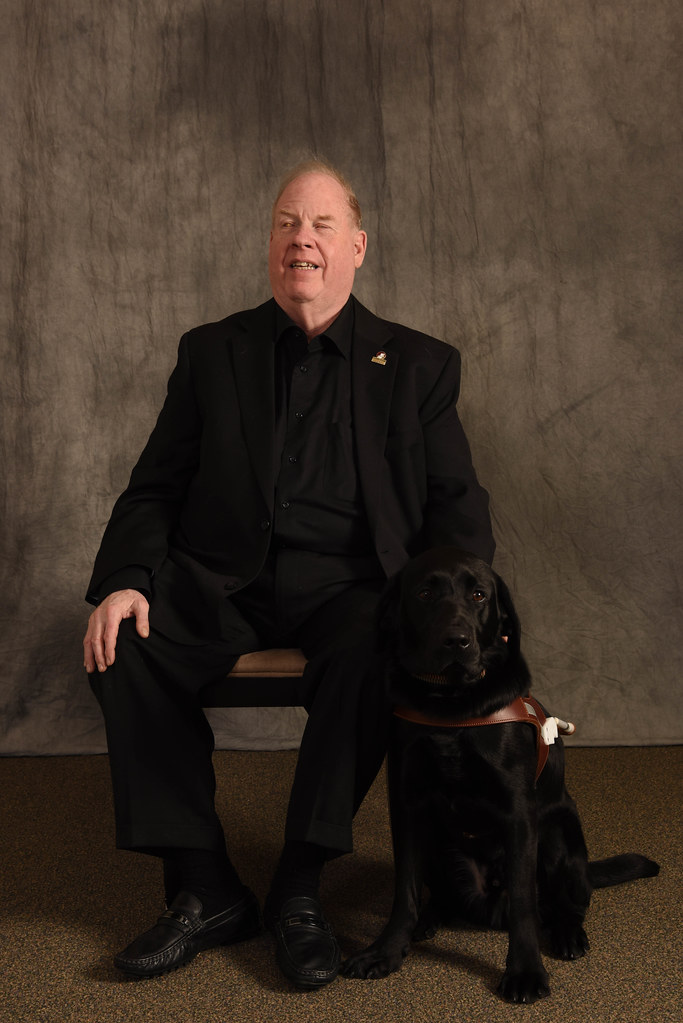
Article by
Michael Hingson
Michael Hingson is a keynote speaker, bestselling author of Thunder Dog, and a survivor of the September 11 World Trade Center attacks. Blind since birth, he brings a powerful and unique perspective on leadership, trust, and resilience in times of uncertainty.
He has spoken to organizations around the world, helping leaders and teams navigate change, build trust, and perform under pressure. His message combines real-world experience with practical insight that audiences remember long after the event ends.
👉 Book Michael Hingson for your next event.