
Diversity and Inclusion in the Workplace: Seeing Beyond the Surface in 2026
What if the most critical element of a thriving team is actually invisible? For years, leadership teams have focused only on what they can see, yet a 2024 Gallup study found that 68% of employees feel disconnected from their company culture despite active DEI initiatives. You likely feel the weight of this gap. You want to build a space where everyone belongs, but the fear of saying the wrong thing or the frustration of inaccessible digital tools keeps your team in silos. True diversity and inclusion in the workplace isn’t about hitting a quota by 2026; it’s about building an Unstoppable Mindset rooted in interdependence. Just as I relied on my guide dog, Roselle, to navigate the 1,463 steps of the North Tower, your team must rely on a bond that goes deeper than visual markers.
Discover how to transform your corporate culture from a checklist of diversity to a powerhouse of high-trust interdependence. I’ll show you how to foster a culture of safety where every voice matters and every digital tool is accessible to all. We’re going to explore the tactical shifts needed to turn your workplace into a high-performing team that sees far beyond the surface.
Key Takeaways
- Learn to move beyond superficial checklists and redefine diversity and inclusion in the workplace as a culture of empowerment that values unique perspectives.
- Discover why disability is the ultimate test of inclusion and how shifting from the “handicap” label to “adaptive living” unlocks untapped potential in your team.
- Understand the power of interdependence over the “rugged individual” myth by examining the profound lessons of trust learned during a life-changing descent from the North Tower.
- Identify actionable strategies to audit your physical and digital accessibility and implement leadership training that dismantles unconscious bias.
- Explore how Michael Hingson’s “Living with No Limits” philosophy can transform your workforce into a powerhouse of resilience and visionary leadership.
What is Diversity and Inclusion in the Workplace?
Diversity is a collection of unique perspectives. Inclusion is the culture that empowers them. Most leaders stop at the first part. They look for a variety of faces but forget to listen to the voices attached to them. I’ve spent my career teaching people that sight is a physical process, but vision is a leadership quality. Real diversity and inclusion in the workplace happens when we stop looking at what someone lacks and start seeing what they contribute. This is what I call Visionary Inclusion. It’s a shift where physical sight is no longer the metric for value. It’s a commitment to seeing the individual potential that lies beneath the surface.
To understand the depth of these terms, we can look at the foundational principles of Diversity, equity, and inclusion which define how modern organizations build their teams. Practicing active inclusion means moving beyond the visual checkmark. It requires a deliberate effort to create a space where every person feels they belong. When I was in the North Tower on September 11, 2001, my survival depended on trust and interdependence. My guide dog, Roselle, and my colleague, David, didn’t focus on my blindness. They focused on our shared goal. That’s the essence of an inclusive environment. It’s a place where your unique traits are seen as assets, not obstacles.
The Difference Between Diversity and Inclusion
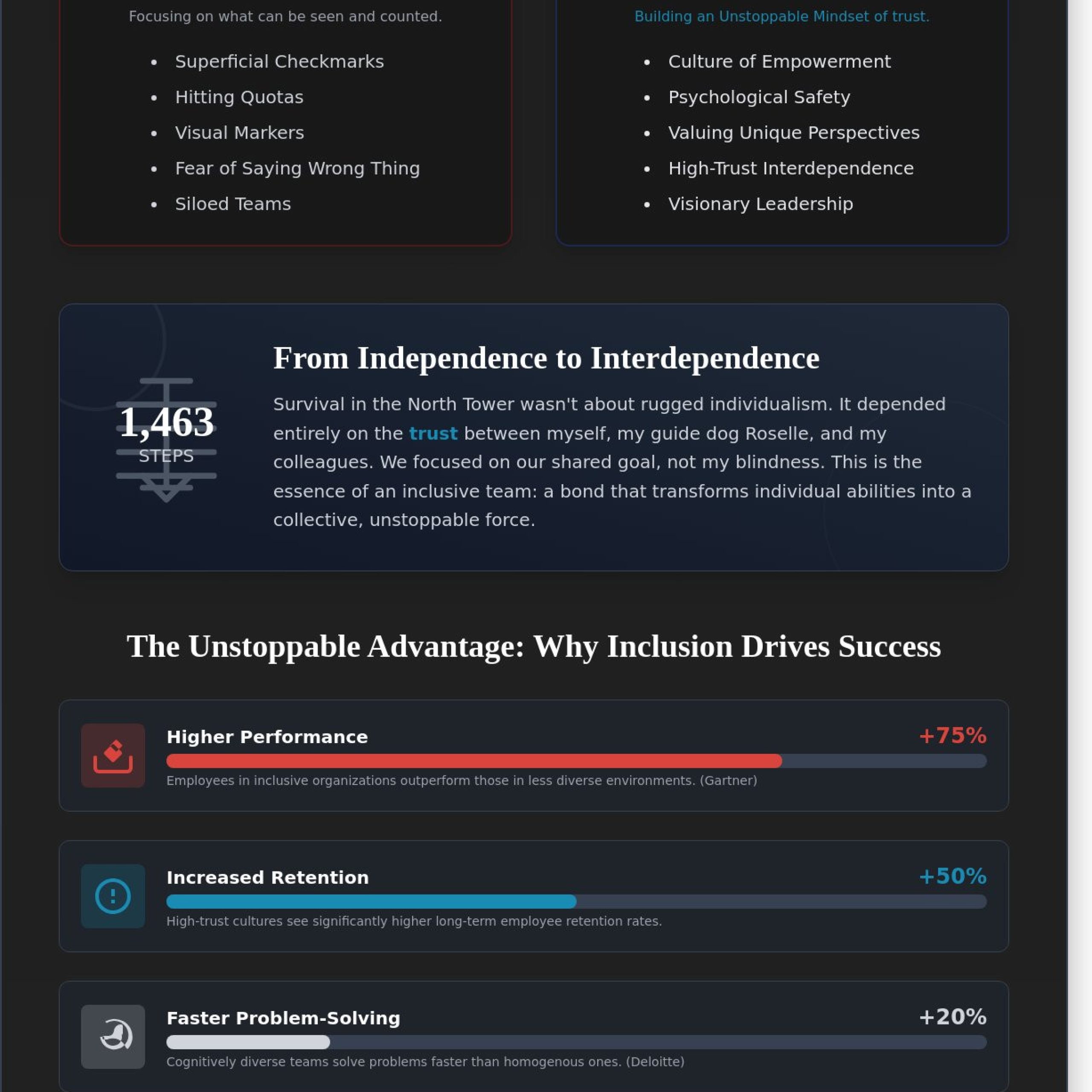
Verna Myers famously said that diversity is being invited to the party, while inclusion is being asked to dance. It’s a simple truth that many corporations still struggle to grasp. You can hire a diverse workforce, but if those employees don’t have the authority to make decisions, they’ll leave. Representation without power is a recipe for employee burnout. A 2023 study by Gartner found that 75% of employees in organizations with high levels of diversity and inclusion in the workplace outperform those in less diverse environments. This success is built on psychological safety. When people feel safe to speak up without fear of judgment, they innovate. They don’t just show up; they contribute their best work because they know their perspective matters.
The Economic Case for Inclusive Cultures in 2026
By 2026, the demand for high-trust cultures will be the primary driver of talent acquisition. The numbers tell a compelling story. Research from Deloitte indicates that cognitively diverse teams solve problems 20% faster than homogenous ones. This isn’t just a social goal; it’s a competitive necessity. High-trust cultures also see a 50% higher rate of long-term employee retention compared to low-trust competitors. This is where the Unstoppable Mindset becomes a business advantage. It’s about turning perceived limitations into strengths through adaptive living. Companies that embrace this mindset don’t just survive market shifts. They lead them. They understand that a team’s resilience is directly tied to how well they leverage the unique strengths of every member. Trust is the lead line that keeps the organization moving forward, even when the path ahead is unclear.
The Missing Pillar: Why Disability Inclusion is the Ultimate Test of DEI
Disability is the only diversity category that doesn’t care about your background, your bank account, or your current status. It’s a group anyone can join at any second. According to the World Health Organization, over 1.3 billion people live with some form of disability. That’s roughly 16% of the global population. Despite these staggering numbers, many organizations treat this pillar as a mere footnote in their corporate strategy. They focus on visible metrics while ignoring the fundamental shifts needed for true diversity and inclusion in the workplace. We need to retire the “handicap” label once and for all. That word carries the heavy weight of limitation and charity. Instead, I advocate for the term “adaptive living.” It’s a phrase that reflects the resilience, creativity, and constant innovation required to navigate a world that wasn’t always designed with us in mind.
When leadership teams fail to prioritize accessibility, they create a “Blind Spot” that goes far beyond physical ramps or elevators. This gap exists in the digital tools we use, the way we conduct meetings, and the very culture of the office. Understanding the Difference Between Diversity and Inclusion is vital for closing this gap. Diversity is simply making sure we have a seat at the table. Inclusion is ensuring the table is at a height we can reach and the conversation is one we can fully participate in. When we design for disability, we accidentally create a better experience for everyone. This is known as universal design. Think of the “curb cut effect.” Sidewalk ramps were made for wheelchairs, but they benefit parents with strollers, travelers with luggage, and delivery workers. When you build an inclusive workplace, you elevate the experience for every single employee.
Moving Beyond ADA Compliance
The Americans with Disabilities Act of 1990 is a vital piece of legislation, but it’s the floor, not the ceiling. Compliance is about avoiding legal trouble. Inclusion is about valuing human potential. Many businesses wait for a “reasonable accommodation” request before they even think about making changes. This reactive stance creates friction and can make employees feel like a burden rather than a teammate. Leaders should be proactive. Disability is a characteristic of diversity rather than a limitation. When we adopt this view, we stop seeing accessibility as a cost and start seeing it as a standard of excellence. It’s about shifting from “What do we have to do?” to “How can we make this better for everyone?”
The Power of Adaptive Technology
Technology is the great equalizer in the modern office. For a blind professional, software like JAWS (Job Access With Speech) turns a silent screen into a rich landscape of information. These screen readers allow us to process data and communicate at speeds that rival any sighted peer. However, this technology only works if the digital environment is built correctly. A 2023 study by WebAIM showed that 96.3% of the top one million websites had detectable accessibility failures. This is a massive failure in diversity and inclusion in the workplace. Every organization needs a website accessibility checklist for both internal and external tools to ensure no one is locked out. When we embrace digital accessibility, we practice the “Seeing Beyond Blindness” philosophy. We look past the physical trait to the capability underneath. If you want to build a team that can weather any storm, you need to foster an unstoppable mindset that values every perspective.
From Independence to Interdependence: Lessons in Trust from Tower One
On September 11, 2001, at 8:46 AM, I was working on the 78th floor of the North Tower. When the first plane struck, the building swayed twenty feet in one direction before slowly righting itself. I didn’t see the smoke or the debris, but I felt the gravity of the moment. My guide dog, Roselle, nudged my hand with a calm that defied the chaos. We began a 75-minute descent, walking down 1,463 steps alongside hundreds of others. That morning, my survival didn’t depend on my own solo strength. It depended on a deep, unwavering trust in my partner.
Western culture often celebrates the “rugged individual.” We’re taught that needing help is a flaw and that the strongest person is the one who stands alone. This mindset is a barrier to true diversity and inclusion in the workplace. In those stairwells, the myth of the lone hero evaporated. Success wasn’t about who could run the fastest. It was about how we moved together. Trust is the currency of an inclusive environment. Without it, your diversity initiatives are just empty numbers on a spreadsheet. When you trust your team’s diverse skills, you stop seeing differences as obstacles and start seeing them as assets.
Skeptics frequently argue that interdependence equals weakness. They worry that if they rely on others, they lose their professional edge. I’ve learned the opposite is true. Interdependence is the highest level of human maturity. It’s the recognition that we’re better together than we could ever be alone. On 9/11, Roselle relied on my leadership to stay focused, and I relied on her physical guidance to navigate the smoke. We were two different species with two different sets of skills, yet we were perfectly synchronized. That’s the power of an inclusive mindset.
The Interdependence Framework
Interdependence is the mutual reliance between diverse team members. It’s the engine of the Unstoppable Mindset. My bond with Roselle serves as a metaphor for corporate teamwork. We didn’t compete; we complemented. To build this trust, leaders must be vulnerable. A 2023 report from Great Place to Work shows that companies with high levels of trust see 50 percent higher productivity. This starts by valuing every voice.
Leading Through Crisis with an Inclusive Mindset
Crisis reveals the strength of a team’s foundation. During the descent from Tower One, calm communication saved lives. Inclusive teams are naturally more resilient because they’ve already practiced the art of listening to diverse perspectives. A leader shouldn’t strive to be the hero who has all the answers. Instead, act as a guide. When market shifts happen, a guide empowers the team to move forward as one unit.
Building diversity and inclusion in the workplace isn’t about charity. It’s about preparation. By the time we reached the ground on 9/11, I realized that our interdependence was our greatest strength. We didn’t just survive; we navigated a catastrophe with grace. Your organization can do the same if you trade the myth of independence for the reality of a trusted, diverse team.
How to Foster an Inclusive Culture: 5 Practical Strategies
Creating a culture where everyone belongs requires more than just a policy manual. It demands a fundamental shift in how we perceive capability and potential. When I navigated the descent of the North Tower with my guide dog, Roselle, our success depended on a foundation of trust and meticulous preparation. Your organization can build that same foundation for diversity and inclusion in the workplace by moving from passive acceptance to active engagement. It’s about recognizing that blindness or any other disability is merely a characteristic, not a limitation on what a person can achieve.
- Audit your digital and physical environment: Don’t wait for a complaint to fix your accessibility. The 2023 WebAIM Million report found that 96.3 percent of the top one million homepages had detectable WCAG 2 failures. Ensure your office layout and your internal software work for everyone from day one.
- Implement Visionary Leadership training: Leaders must learn to see beyond physical traits. This training specifically challenges the unconscious biases that suggest a blind employee is less capable or more expensive to accommodate. It shifts the leadership focus toward results, innovation, and interdependence.
- Foster mentorship programs: Pair your diverse talent with executive leadership. A 2023 study by Cornell University highlighted that mentorship programs can increase minority representation at the management level by 9 percent to 24 percent. This provides diverse employees with a clear path to the C-suite.
- Standardize adaptive technology training: Make screen readers like JAWS and voice-to-text tools part of the standard onboarding process for all employees. This normalizes the tools people use to succeed. It removes the “otherness” often felt by new hires who use assistive technology.
- Host keynote speakers with lived experience: Real stories break down barriers. Bringing in experts who have navigated high-stakes environments provides a roadmap for your team. It allows them to build their own resilience by learning from those who have mastered the art of adaptive living.
Audit and Action
Start with a “screen-through” of your internal systems. If a blind employee can’t access your payroll portal or training videos, you’ve created a barrier to their success. These hidden obstacles prevent 1.3 billion people worldwide from fully participating in the global economy. To identify these gaps, consider professional Disability Inclusion Consulting Services to ensure your company culture is truly open to all talent.
Sustaining the Momentum
Success isn’t found in a simple headcount. It’s found in the retention and promotion of diverse talent. You must measure how often disabled employees move into leadership roles. Create a safe feedback loop where people can report exclusion without fear. This consistent reinforcement builds an Unstoppable Mindset across the entire company. When people feel safe, they perform at their peak. It’s about shifting the focus from perceived handicaps to unique problem-solving skills. True diversity and inclusion in the workplace is a journey of constant refinement and growth.
Ready to transform your corporate culture through the power of trust and vision? Book Michael Hingson for your next event and learn to see beyond the limits.
Building an Unstoppable Workforce with Michael Hingson
Michael Hingson doesn’t just talk about change; he embodies the very essence of adaptive leadership. His life story gained international attention on September 11, 2001, when he and his guide dog, Roselle, navigated the descent of 1,463 stairs to escape the North Tower. That experience didn’t define him as a victim. Instead, it solidified his role as a guide for others. His signature keynote, “Diversity and Inclusion: Seeing Beyond the Blindness,” serves as a masterclass in perspective for modern organizations. He challenges leaders to stop viewing blindness or any disability as a “handicap” and start seeing it as a characteristic that demands creative, innovative solutions.
Statistics from the 2023 Bureau of Labor Statistics report show that only 22.5 percent of people with a disability were employed in the United States. This gap represents a massive loss of talent and resilience. Michael addresses diversity and inclusion in the workplace by stripping away the fear of the unknown. He teaches teams that trust isn’t a luxury; it’s a survival skill. By sharing the lessons he learned while working as a high-level sales executive and a national advocate, he provides a roadmap for managers to build teams that don’t just survive challenges but thrive because of them. He moves the conversation from “how do we accommodate” to “how do we empower.”
The “No Limits” Philosophy
The “No Limits” approach requires a fundamental shift in how managers perceive talent. When teams stop focusing on what a person cannot do and start focusing on how they solve problems, the entire corporate culture shifts. Michael’s message resonates globally because it’s grounded in universal truths about interdependence and resilience. He teaches that blindness is simply another way of seeing the world, often with more clarity than those who rely solely on their eyes. True inclusion is the master key that unlocks the infinite human potential often hidden behind the veil of our own biases.
Take the Next Step Toward True Inclusion
Moving from awareness to action is the most critical hurdle for any organization. Education is the first step, but execution is where the transformation happens. Michael provides the tools necessary to bridge this gap, ensuring that diversity and inclusion in the workplace becomes a lived reality rather than a policy in a handbook. For leaders who want to keep the conversation going, the “Unstoppable Mindset Podcast” offers a wealth of ongoing learning, featuring guests who have mastered the art of turning obstacles into opportunities. It’s a resource designed to keep your team’s momentum high long after the initial keynote ends.
If you’re ready to redefine what’s possible for your organization, the time to act is now. You can book Michael Hingson for your next corporate event to start building a culture of trust, resilience, and true belonging. Whether you’re looking for a virtual consultation or a powerful in-person keynote, Michael’s insights will leave your workforce feeling empowered and unstoppable. Don’t let your team be limited by old ways of thinking. Invite a speaker who has lived the intersection of leadership and disability to show you the way forward.
Mastering the Vision of an Unstoppable Workforce
True leadership in 2026 requires more than a policy manual; it demands a fundamental shift from independence to interdependence. You’ve seen how Michael Hingson and his guide dog Roselle navigated 78 flights of stairs on September 11, 2001, by relying on mutual trust. This same level of connection is what makes diversity and inclusion in the workplace actually function. By prioritizing disability inclusion and implementing the 5 practical strategies discussed, your organization moves beyond surface-level compliance. You’re not just hiring employees; you’re building a resilient culture where adaptive technology and human potential meet.
Michael Hingson, the New York Times Bestselling Author of Thunder Dog, has spent decades as a global keynote speaker teaching teams to see through the eyes of trust. As an expert in corporate accessibility and a 9/11 survivor, he provides the clarity needed to transform your corporate environment. Don’t let your team operate with limited vision. It’s time to embrace a mindset that turns every challenge into an opportunity for growth.
Book Michael Hingson to transform your team’s perspective on inclusion
The path to an unstoppable mindset starts with a single step toward genuine connection.
Frequently Asked Questions
What is the most common mistake companies make with diversity and inclusion?
The most common mistake is treating diversity and inclusion in the workplace as a checklist or a quota rather than a culture of interdependence. Many leaders focus on hitting a 10% hiring target without building the trust necessary to retain that talent. True inclusion requires seeing beyond physical characteristics to the heart of human potential. It’s about shifting your internal vision to value every person’s unique contribution.
How can we improve disability inclusion without a massive budget?
You can improve disability inclusion by focusing on low cost adjustments that foster an Unstoppable Mindset. Data from the Job Accommodation Network in 2023 shows that 59% of workplace accommodations cost exactly $0 to implement. Simple changes like providing flexible schedules or digital screen readers create a culture of resilience. These small steps prove that team success depends on preparation and trust rather than expensive equipment.
Why should we focus on disability inclusion if we don’t have any disabled employees?
You should prioritize disability inclusion because 27% of American adults live with a disability, and many of these conditions are invisible. If your team appears entirely able bodied, you likely have employees who don’t feel safe disclosing their needs. Building an inclusive culture today ensures you won’t lose talent tomorrow. It’s about creating a landscape where everyone can thrive, regardless of their physical sight or mobility.
How does digital accessibility impact workplace inclusion?
Digital accessibility ensures every team member can navigate your company’s software with the same confidence I had walking down the North Tower. When 96.3% of top websites fail basic accessibility tests, fixing your internal tools becomes a competitive advantage. It’s not just about compliance; it’s about removing the barriers that prevent 1 in 4 people from doing their best work. Accessibility is the light that reveals hidden potential.
What is the difference between equity and equality in the workplace?
Equality means giving everyone a standard laptop, while equity means providing the specific software a blind employee needs to excel. Equality assumes everyone starts from the same place, but equity acknowledges our different journeys. When I navigated 78 floors with my guide dog Roselle, we didn’t need equal treatment; we needed the equitable trust of our teammates. Equity provides the right tools for individual success.
How can a keynote speaker help change company culture?
A keynote speaker serves as a guide who helps your team see challenges through a lens of optimism and resilience. By sharing the story of my descent from the World Trade Center on September 11, 2001, I help audiences redefine their own perceived boundaries. A powerful presentation can shift a company’s culture in 60 minutes. It moves the conversation from why we can’t to how we will through shared trust.
What are the benefits of hiring a disability inclusion consultant?
A disability inclusion consultant identifies the blind spots in your corporate strategy that you might not see. These experts help you tap into a market of 1.3 billion people globally who live with disabilities. According to a 2023 Accenture study, companies that embrace disability inclusion see 28% higher revenue. Hiring a consultant is an investment in your company’s future growth and its moral foundation.
Can an inclusive culture really improve our bottom line?
An inclusive culture significantly boosts your bottom line by driving innovation and employee retention. Research from 2023 shows that inclusive companies enjoy 30% higher profit margins than their less diverse peers. When you embrace diversity and inclusion in the workplace, you’re not just doing the right thing; you’re building a more resilient business. Success comes when every person feels empowered to contribute their full vision to the team.
Article by
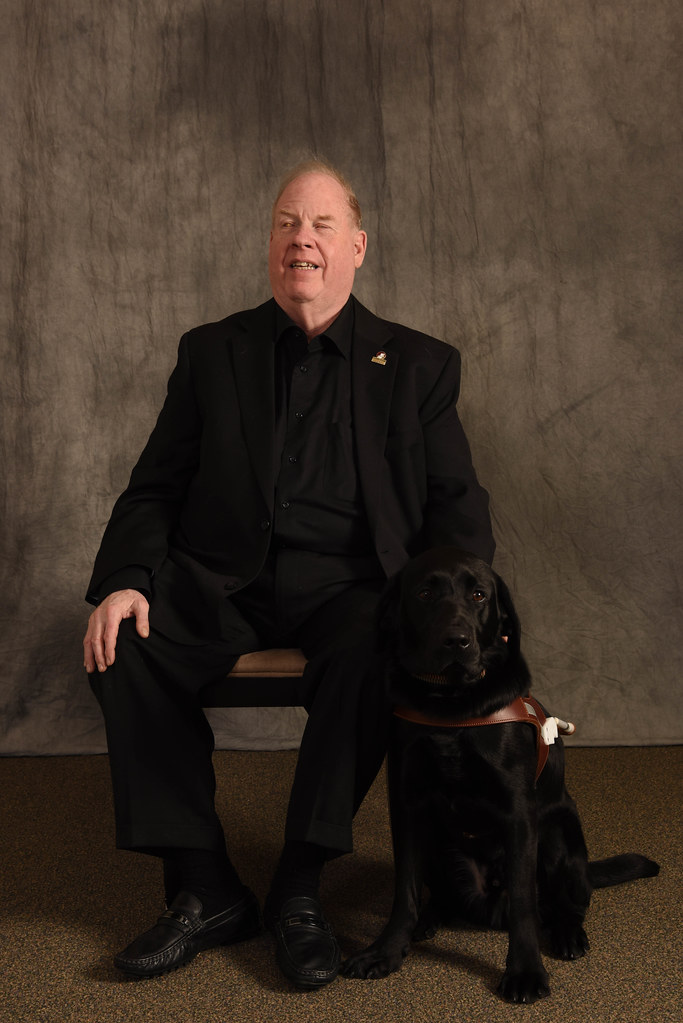
Michael Hingson
Michael Hingson is a keynote speaker, bestselling author of Thunder Dog, and a survivor of the September 11 World Trade Center attacks. Blind since birth, he brings a powerful and unique perspective on leadership, trust, and resilience in times of uncertainty.
He has spoken to organizations around the world, helping leaders and teams navigate change, build trust, and perform under pressure. His message combines real-world experience with practical insight that audiences remember long after the event ends.
👉 Book Michael Hingson for your next event.





[…] a group to “see” around corners that a homogeneous group might miss. By prioritizing Diversity and Inclusion in the Workplace, you’re effectively building a sonar system for your business. You’re ensuring that no […]