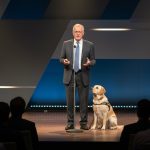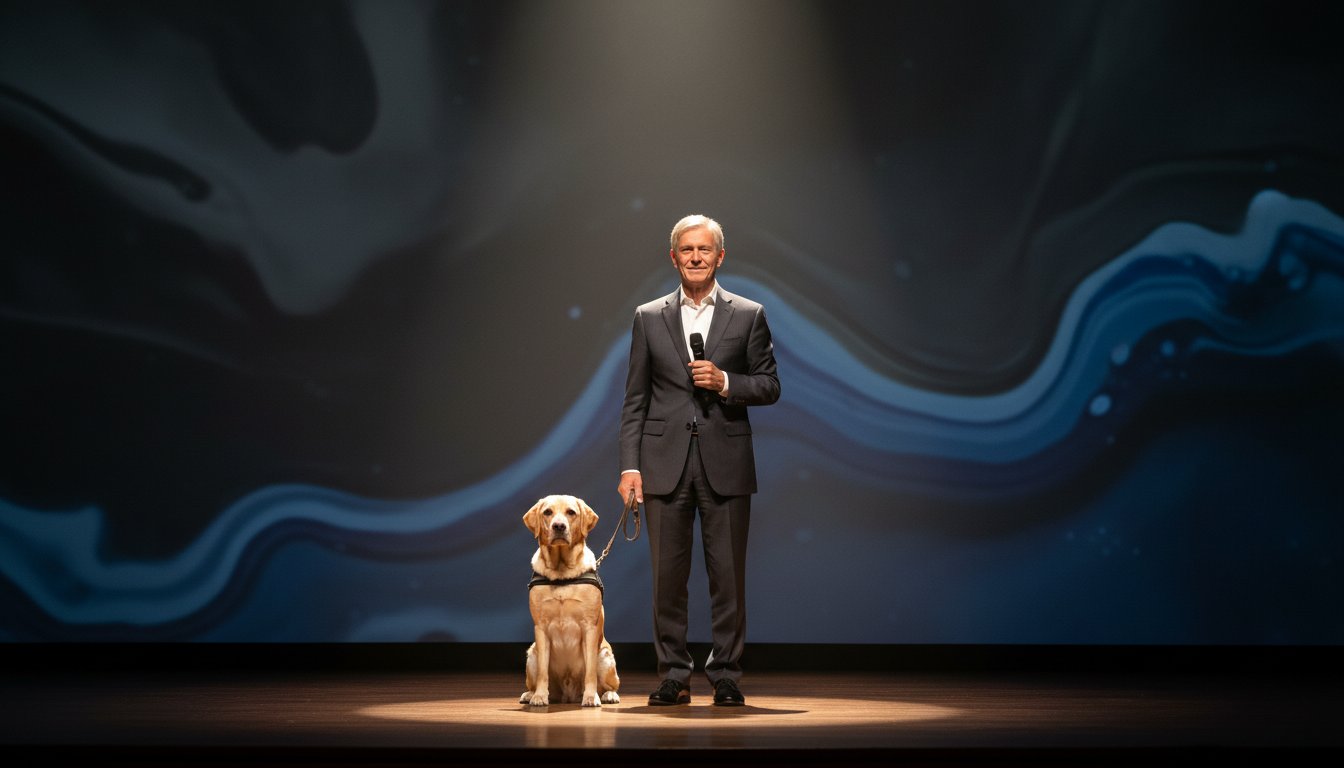
9/11 Survivor Keynote Speaker: Leading Through Trust and Resilience
At 8:46 AM on September 11, 2001, Michael Hingson sat in his office on the 78th floor of the North Tower. He didn’t see the first plane strike, but he felt the building sway 20 feet before it slowly righted itself. In the sudden silence that followed, he turned to his guide dog, Roselle, and leaned into a lifetime of preparation. Finding a 9/11 survivor keynote speaker who can bridge the gap between a historical tragedy and modern business strategy is a challenge for many event organizers. You need a message that offers more than just a moving story; you need tools that work in the boardroom.
You likely agree that true leadership is built on a foundation of trust that must be established long before a crisis hits. By reading on, you’ll discover how the descent down 1,463 stairs became a global blueprint for leadership, teamwork, and an unstoppable mindset. We’ll explore actionable strategies for trust-based leadership and show you how to create a culture where inclusion is a core strength rather than a checklist item. It’s time to see your team’s potential through a new lens of resilience.
Key Takeaways
- Learn how to transform historical lessons of survival into a modern framework for corporate resilience and steady leadership in volatile environments.
- Discover why a 9/11 survivor keynote speaker provides a masterclass in radical trust and the shift from individual independence to team interdependence.
- Redefine your approach to diversity by viewing blindness as a unique characteristic that fosters innovation rather than a limitation to be managed.
- Identify the specific criteria needed to select a speaker who can tailor high-stakes lessons of inclusion and teamwork to your organization’s unique needs.
- Explore the “Unstoppable Mindset” to understand how preparation and partnership allow leaders to navigate any crisis with calm confidence.
The Impact of a 9/11 Survivor Keynote Speaker on Corporate Culture
Choosing a 9/11 survivor keynote speaker is about more than revisiting a historical moment; it’s about extracting timeless principles of leadership from a period of absolute chaos. Most corporate audiences don’t need a history lesson. They need a roadmap for the volatility of the 21st-century. While many speakers recount the events of September 11, 2001, as a narrative of tragedy, a strategic keynote transforms those memories into actionable leadership frameworks. This shift from historical narrative to modern application allows executives to see their own challenges through a lens of refined resilience. It’s the difference between looking back at what happened and looking forward at what’s possible.
The September 11 attacks changed the global perspective on security and leadership overnight, yet the lessons learned in the stairwells of the World Trade Center offer more than just survival tactics. They provide a blueprint for trust. For Michael Hingson, his perspective as a blind professional adds a layer of depth that sighted speakers cannot replicate. He didn’t see the fire or the smoke; he felt the vibration of the building and heard the calm breathing of his guide dog, Roselle. This sensory-based approach to crisis forces a rethink of how we perceive information. It challenges the “seeing is believing” mantra and replaces it with a focus on interdependence and internal vision.
Strategic keynote speaking differs from simple motivational storytelling by providing a clear ROI for the organization. It isn’t just about feeling inspired for an hour. It’s about changing how a team functions on Monday morning. A 9/11 survivor keynote speaker who focuses on strategy helps employees identify their own “stairwells”—those high-pressure environments where clear communication and trust are the only way out.
Transforming Tragedy into Teamwork
Companies seek survivor stories because they act as a social glue, building empathy and unity across diverse departments. On September 11, Michael Hingson was a Regional Sales Manager for Quantum, managing complex corporate goals until the moment the plane hit. The shift from “surviving” the descent to “thriving” in his subsequent career as an author and advocate shows that disruption doesn’t have to be a dead end. Teams learn that unity isn’t just a buzzword; it’s a survival mechanism. The Unstoppable Mindset is the disciplined practice of leveraging interdependence and proactive preparation to transform sudden disruption into a catalyst for collective growth.
The Value of First-Hand Experience in Crisis Management
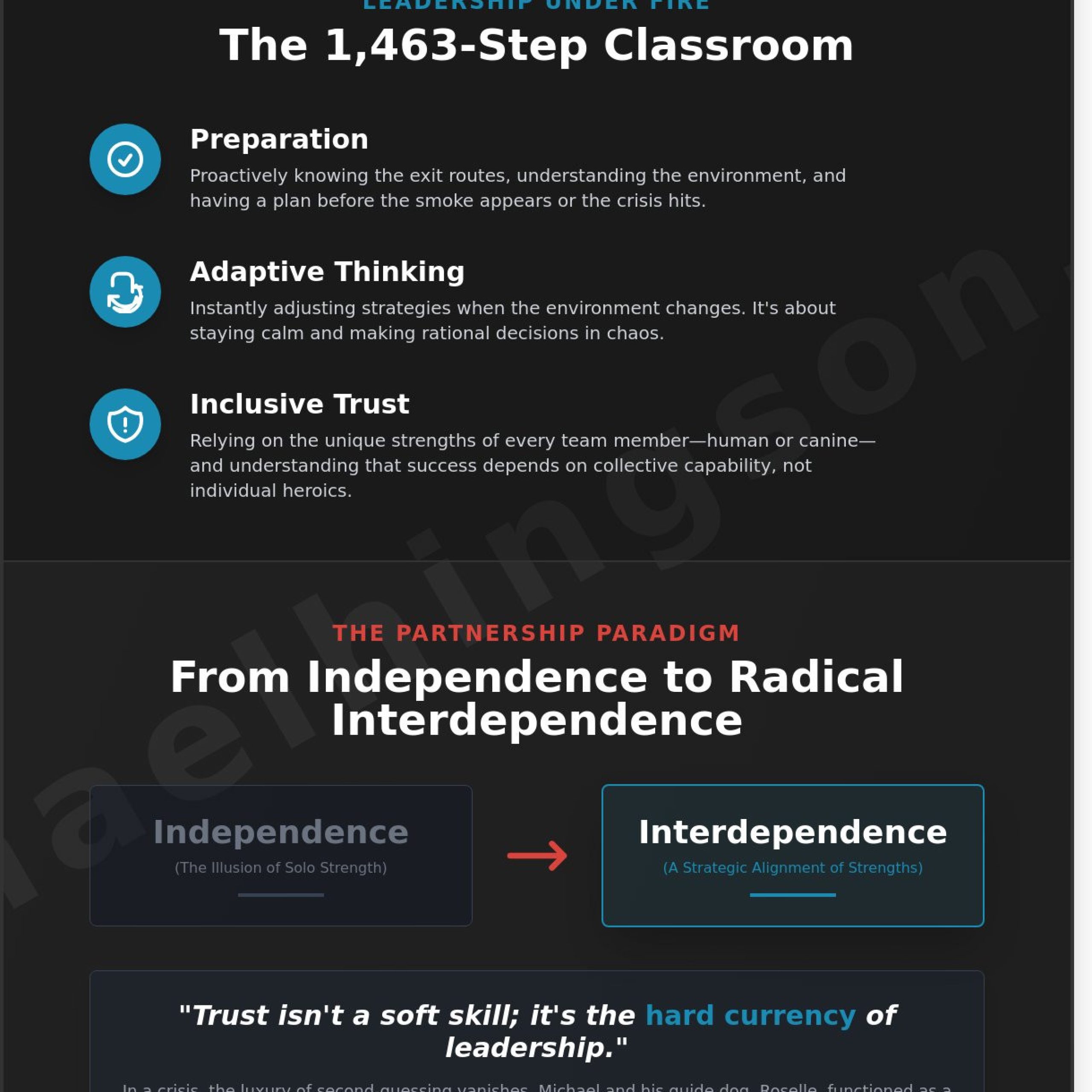
The 78 floors of the North Tower served as a 1,463-step classroom for leadership under fire. Michael and Roselle spent approximately 50 minutes navigating those stairs, a feat that required absolute calm authority. When the unknown becomes the only certainty, leaders must rely on more than just visual data. Michael’s unique position allows him to teach sensory-based decision making, where intuition and trust in one’s partners—whether human or canine—outweigh the panic of the moment. This brand of leadership emphasizes:
- Preparation: Knowing the exit routes before the smoke appears.
- Adaptive Thinking: Adjusting strategies when the environment changes instantly.
- Inclusive Trust: Relying on the strengths of every team member, regardless of their perceived limitations.
By focusing on these practical applications, Michael ensures his audience leaves with more than a story; they leave with a strategy for their own professional climbs.
Trust and Interdependence: Lessons from Tower One
On the morning of September 11, 2001, the world changed in an instant. For those of us inside the North Tower, the shift wasn’t just physical; it was a total recalibration of how we viewed the people and the animals beside us. My guide dog, Roselle, and I were on the 78th floor when the first plane hit. In that moment, the concept of independence vanished. It was replaced by a radical, life-saving interdependence. This wasn’t a choice made out of weakness, but a strategic alignment of strengths. It’s the same shift every high-performing corporate team must make to survive market volatility or internal crises.
Trust isn’t a soft skill; it’s the hard currency of leadership. When the building shook, I didn’t have the luxury of second-guessing Roselle’s instincts. She didn’t have the luxury of ignoring my commands. We functioned as a single unit. This “No Limits” philosophy allowed us to focus on the descent of 1,463 steps rather than the disaster unfolding around us. The resiliency of Americans on that day was built on thousands of these micro-partnerships. As a 9/11 survivor keynote speaker, I’ve seen how organizations that prioritize this level of trust outperform their competitors by 20% or more in long-term retention and productivity.
The Bond Between Leader and Guide
Roselle’s calm response in the stairwell influenced the emotional state of everyone around us. She wasn’t just guiding me; she was anchoring an entire group. This is the essence of emotional intelligence. Leaders often think they need to have all the answers, but true leadership is about providing a steady presence. In a corporate setting, this translates to mentorship. A mentor isn’t a crutch; they’re a guide who helps you see the path when the environment is clouded by uncertainty. We don’t just work next to each other; we work for each other. Using non-verbal cues, Roselle communicated safety to the crowd, proving that how you carry yourself matters as much as what you say.
Navigating Chaos with Clarity
Clarity comes from preparation. I knew the layout of the North Tower because I made it my business to study it long before the crisis. In 1999, I participated in rigorous fire drills that mapped out every exit. When external signals become overwhelming, your internal map must be precise. To build a “trust map” for your organization, start by identifying the critical dependencies between departments. Ask yourself: who do you rely on when the lights go out? If you’d like to explore how to empower your team through trust, start by auditing your communication flow during high-stress periods. This is the core message of a 9/11 survivor keynote speaker: trust is built in the quiet moments so it can be deployed in the chaotic ones. By focusing on the 1,463 steps directly in front of us, we avoided the paralysis of the larger tragedy.
Diversity and Inclusion: Seeing Beyond the Blindness
Most people view blindness through a lens of deficit. I’ve spent my life proving that blindness is merely a characteristic, not a limitation that defines a person’s worth or potential. It’s a different way of gathering information, much like using a different operating system on a computer. When I stand before an audience as a 9/11 survivor keynote speaker, I don’t focus on what I can’t do. I focus on the unique perspectives that adaptive living brings to the corporate table. Labels like “handicapped” belong on jars and parking spaces, not on human beings who possess untapped talents.
On September 11, 2001, inclusion wasn’t just a corporate policy. It was a life-saving necessity. The trust I shared with my guide dog, Roselle, and the way my colleagues at Quantum looked past my lack of sight allowed us to navigate 1,463 steps to safety. We can’t ignore the hard lessons from 9/11 regarding how we support one another during extreme stress. True resilience requires every team member to be seen as a vital asset regardless of their physical characteristics. If my coworkers hadn’t practiced inclusion long before the planes hit, our descent might have ended very differently.
This experience formed the foundation of my ‘Art of Living with No Limits’ framework. It’s a strategy for DEI that focuses on interdependence rather than the myth of total independence. Many executives fear that disability inclusion is a costly burden or a drain on productivity. The data suggests the exact opposite. A 2018 study by Accenture revealed that companies leading in disability inclusion saw 28% higher revenue and double the net income of their industry peers. Inclusion is a competitive advantage that drives innovation through diverse problem-solving methods.
Redefining Vision in the Workplace
Sight is a physical function of the eyes, but vision is a leadership quality of the mind. You don’t need eyes to see the path forward for a complex project or a global team. I use JAWS (Job Access With Speech) screen-reading technology to process data and communications at speeds that often surprise my sighted colleagues. My 27 years of experience as a high-level sales manager informs my DEI consulting by proving that success is about meeting objectives, not the specific physical method used to reach them.
Building an Accessible Corporate Future
Accessibility starts with a fundamental mindset shift within leadership. When a crisis hits, your team needs to know that every individual is equipped and empowered to contribute. As a 9/11 survivor keynote speaker, I help organizations move from simple legal compliance to a culture of genuine belonging. This involves three practical steps: auditing digital tools for screen-reader compatibility, fostering a culture of high-trust interdependence, and training managers to focus on results rather than traditional work styles. If you’re ready to transform your team, explore my Disability Inclusion Consulting Services. We can build a future where every characteristic is recognized as a potential strength.
How to Choose the Right 9/11 Speaker for Your Event
Selecting a 9/11 survivor keynote speaker involves more than just booking a witness to history. It’s an investment in your team’s collective mindset. You need a professional who can distill the chaos of 2001 into a clear strategy for the challenges your organization faces today. Start by defining your core theme. If your goal is resilience, look for a narrative that emphasizes preparation over panic. If inclusion is your focus, seek a speaker who understands how diverse perspectives and adaptive techniques save lives during a crisis. The story is the hook, but the application is the value.
Customization is where a speaker proves their professional authority. Your industry has unique pressures that require specific insights. A financial firm facing market volatility needs a different application of trust than a medical team dealing with systemic burnout. Your speaker should study your corporate culture and specific pain points before they ever step onto the stage. They must balance the emotional weight of their story with rigorous intellectual engagement. Pure inspiration is often fleeting; actionable frameworks endure. You want your attendees to leave with a practical toolkit for leadership, not just a temporary emotional high.
Logistics matter just as much as the message itself. Whether your event is virtual or in-person, accessibility is a non-negotiable requirement. A speaker who truly lives the message of inclusion will ensure their presentation materials are compatible with screen readers and that the stage setup is inclusive. This attention to detail reflects a deep commitment to the entire audience. It ensures that 100 percent of your attendees feel seen and valued. When a speaker prioritizes these details, they mirror the very trust and interdependence they advocate for in their speech.
Criteria for a High-Impact Keynote
Look for a roadmap that leads the audience from the 78th floor of the North Tower to their own personal breakthroughs. Social proof is a vital metric for quality. Has the speaker been vetted by global media? Michael Hingson appeared on Larry King Live on September 13, 2001, to provide a voice of calm and clarity. His book, Thunder Dog, became a #1 New York Times Bestseller in 2011. These milestones demonstrate a message that carries weight across decades. Always verify that the speaker understands ADA compliance, as 26 percent of adults in the U.S. live with a disability.
Questions to Ask During the Booking Process
Ask how the speaker handles the delicate nature of Q&A sessions. A seasoned 9/11 survivor keynote speaker manages sensitive historical questions with grace, turning potentially heavy moments into universal teaching opportunities. Inquire if they provide auxiliary materials, like signed books or digital guides, to extend the learning journey after the event ends. Finally, ask how their message supports your specific 12-month goals. If your organization aims to build a culture of interdependence, the speaker’s story of descending 1,463 steps with a guide dog should serve as the ultimate proof of concept.
Are you ready to bring a message of trust and an Unstoppable Mindset to your next corporate gathering? Book Michael Hingson for your event today and transform how your team sees the world.
Book Michael Hingson: The Art of Living with No Limits
Michael Hingson offers more than a story of survival; he provides a rigorous blueprint for high-stakes leadership. Since 2001, he has traveled to over 20 countries to share how trust and preparation saved lives on the 78th floor of the North Tower. He stands out as a 9/11 survivor keynote speaker because he translates a historical tragedy into actionable corporate strategies that resonate with modern executives and front-line employees alike.
His keynotes focus on three pillars: Trust, Teamwork, and Inclusion. In the “Trust” session, Michael explores the 50/50 partnership he shared with his guide dog, Roselle. This wasn’t a master-servant dynamic; it was a model of interdependence. When the building shook on September 11, Michael didn’t panic because he trusted the training and the bond he had built over years of daily practice. He teaches organizations that trust isn’t a soft skill. It’s a hard asset that determines how fast a team can pivot during a crisis.
The “Thunder Dog” story remains his most requested narrative, detailing the 1,463-step descent through smoke and chaos. This story isn’t about a solitary hero. It’s about a team that functioned perfectly under pressure. It proves that when leadership is distributed and trust is absolute, even the most daunting obstacles become manageable. Michael uses this experience to help companies eliminate silos and build a culture where every voice is heard and every person is valued.
A Global Presence with a Personal Touch
Michael has addressed audiences at Fortune 500 companies and international conferences for over 22 years. His message doesn’t end when he leaves the stage. Through the “Unstoppable Mindset” podcast, which features over 150 episodes with global thought leaders, he continues to challenge how we perceive ability and resilience. The “No Limits” keynote serves as a definitive catalyst for organizational change by dismantling the perceived boundaries of disability and replacing them with a framework of universal capability.
Take the Next Step Toward Resilience
Bringing a 9/11 survivor keynote speaker to your event is an investment in your team’s long-term psychological safety and operational strength. Beyond the stage, Michael provides specialized consulting on adaptive technology and inclusive workplace design. He helps leaders understand that accessibility isn’t just a compliance checklist; it’s a competitive advantage that taps into a wider pool of talent and innovation.
To begin the process, you can Book Michael Hingson for Your Keynote by requesting a speaking fee quote and checking his current calendar availability. His team typically responds to inquiries within 24 hours to ensure your event planning stays on schedule. Whether you’re hosting a small executive retreat or a large-scale convention, Michael’s insights on the “Unstoppable Mindset” will leave your audience with the tools to lead through any storm.
- Customized Keynotes: Tailored to your specific industry challenges.
- Interactive Q&A: Deep dives into the mechanics of trust and resilience.
- Consulting Services: Expert guidance on adaptive technology and inclusion.
- Global Reach: Available for in-person events or high-quality virtual presentations.
Build a Future Defined by Resilience and Trust
True leadership isn’t about individual heroics; it’s about the deep interdependence shared between a team. On September 11, 2001, I navigated 1,463 steps down 78 floors of the North Tower by trusting my guide dog, Roselle. This experience proves that when we move beyond the limits of physical sight, we unlock a more inclusive, adaptive culture. A 9/11 survivor keynote speaker does more than share a story of survival. They provide a blueprint for corporate resilience. By focusing on trust and the Unstoppable Mindset, your organization can learn to view challenges as opportunities for growth rather than insurmountable barriers.
As the New York Times Bestselling Author of Thunder Dog and a guest featured 5 times on the Larry King Show, I’ve spent decades teaching global audiences how to lead with clarity. My journey as an international hero has always been about partnership. You don’t have to face the unknown alone when you have the right tools to guide your team through the descent. Bring the Unstoppable Mindset to your next event; book Michael Hingson today. Your team possesses the strength to overcome any obstacle when they learn to trust the path forward together.
Frequently Asked Questions
What makes Michael Hingson different from other 9/11 survivor speakers?
Michael Hingson distinguishes himself from any other 9/11 survivor keynote speaker by focusing on the profound interdependence between himself and his guide dog, Roselle. While others may focus on the tragedy, Michael highlights the 1,463 stairs they descended together from the 78th floor of the North Tower. This narrative shifts the focus from victimhood to a masterclass in trust. He uses his lived experience to teach teams how to navigate uncertainty with a calm, focused mindset.
Can Michael Hingson speak on topics other than September 11th?
Michael offers several presentations that extend far beyond the events of September 11th. He draws on 30 years of experience in high-level sales and corporate management to discuss leadership and team dynamics. His Unstoppable Mindset framework provides four core pillars for overcoming personal and professional obstacles. These sessions help organizations build resilience by teaching employees how to redefine their perceived limitations and embrace change as a catalyst for growth.
Is Michael Hingson’s presentation suitable for a virtual corporate event?
Michael has delivered over 250 virtual keynote presentations since March 2020, making him a seasoned expert in digital engagement. He uses high-quality audio and video equipment to ensure his message remains impactful across platforms like Zoom, WebEx, or Microsoft Teams. Each session includes interactive Q&A segments to keep the 100 or 1,000 remote attendees fully engaged. His storytelling naturally translates to the screen, creating an intimate atmosphere that resonates with global teams.
How does Michael Hingson incorporate disability inclusion into his leadership talks?
Michael incorporates disability inclusion by reframing blindness as a mere characteristic rather than a limiting handicap. He points out that 26 percent of adults in the United States live with a disability, yet these individuals are often overlooked in leadership pipelines. By sharing his journey as a blind executive, he teaches leaders how to build inclusive environments where everyone contributes. He advocates for a culture of interdependence where diverse perspectives are recognized as a primary competitive advantage.
What is the “Art of Living with No Limits” keynote about?
The Art of Living with No Limits keynote focuses on the psychological tools needed to move past fear and self-imposed boundaries. Michael shares five specific strategies for developing an Unstoppable Mindset, grounded in his experience of thriving in a world not designed for him. He challenges audiences to stop seeing blind spots as failures and instead view them as opportunities for collaboration. This presentation empowers individuals to take 100 percent responsibility for their reactions to external challenges.
How can I buy Michael Hingson’s book, Thunder Dog, for my team?
You can purchase bulk copies of the New York Times Bestseller, Thunder Dog, through Michael’s official website or major book retailers. This book has been translated into 15 languages and serves as an excellent foundational text for corporate book clubs or leadership retreats. Many organizations order 50 or more copies to distribute before a keynote to deepen the impact of his message. For personalized signed copies or special team discounts, contact his management team directly through the site.
Does Michael Hingson offer consulting services for corporate accessibility?
Michael provides specialized consulting services to help corporations improve their digital and physical accessibility. He works with leadership teams to ensure their workplace culture exceeds standard ADA compliance by fostering true belonging. His 360 degree audits identify barriers in recruitment, technology, and physical infrastructure that may hinder talent. By partnering with Michael, companies can implement a strategy that welcomes the 1.3 billion people globally who live with some form of disability.
What are the technical requirements for hosting a blind keynote speaker?
Hosting Michael requires a standard AV setup including one wireless lavalier microphone and a stable connection for any digital media. The most important requirement is a clear, unobstructed path to the stage and a small table for his guide dog’s water bowl. He doesn’t use a teleprompter or printed notes, as his 60 minute presentations are delivered from memory and professional experience. Organizers should ensure the stage lighting is consistent for the benefit of the sighted audience and recording quality.
Article by
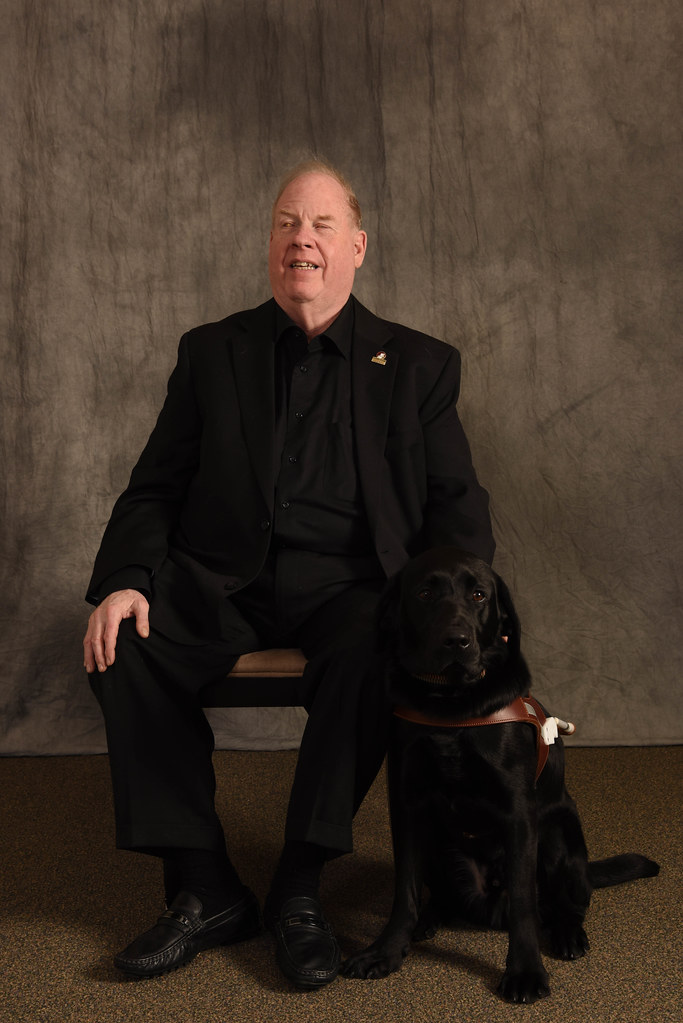
Michael Hingson
Michael Hingson is a keynote speaker, bestselling author of Thunder Dog, and a survivor of the September 11 World Trade Center attacks. Blind since birth, he brings a powerful and unique perspective on leadership, trust, and resilience in times of uncertainty.
He has spoken to organizations around the world, helping leaders and teams navigate change, build trust, and perform under pressure. His message combines real-world experience with practical insight that audiences remember long after the event ends.
👉 Book Michael Hingson for your next event.