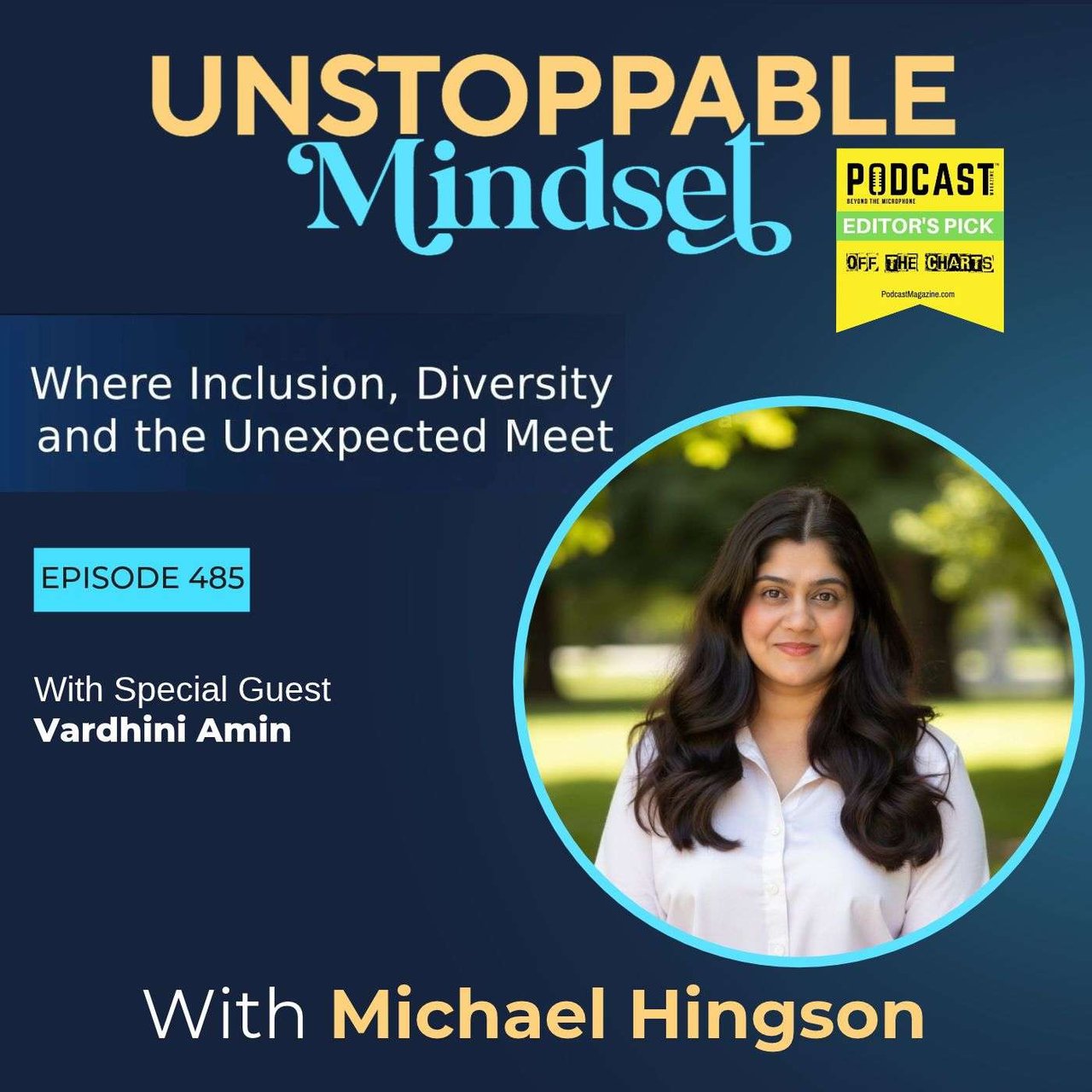
Episode 485 – Reconnecting Kids with Nature Through Unstoppable Storytelling with Vardhini Amin
What happens when children lose their connection with nature, and how can storytelling help bring it back? Vardhini Amin, a children’s book author and professional photographer from India, joins me to explore the power of imagination, creativity, and reconnecting with the natural world. Drawing from her childhood, her love of gardening, and her experiences as a mother, Vardhini shares the inspiration behind her fantasy book Forest Borns, where trees have souls and nature comes alive. We discuss how screen time, structured schedules, and changing family habits affect children’s creativity and their connection with the outdoors. Vardhini also explains why storytelling can teach empathy and environmental awareness more effectively than lectures. Our conversation reminds us that nature is not separate from us, that children need the freedom to explore, and that even one person can make a meaningful difference. I believe you’ll enjoy Vardhini’s perspective on helping children and adults rediscover the wonder of the world around them.
Highlights:
01:30 – How Vardhini’s childhood inspired her creative career.
20:32 – Why children are losing their connection with nature.
29:00 – How storytelling helps children develop empathy for nature.
35:53 – Why unstructured play builds creativity and imagination.
40:33 – How gardening inspired her children’s book Forest Borns.
44:58 – How one person can make a difference in protecting nature.
About the Guest:
Vardhini Amin is the award-winning author of The Forestborns, a fantasy novel for children published by Hachette India in 2024. The Forestborns tells a story of courage, healing, and the invisible ties that bind all living things. Set in a hidden realm where the souls of trees and plants slip from their rooted bodies after sunset, it follows Siah, a young sandalwood tree soul forced onto a dangerous quest to protect her kind. Nearby, a girl named Avni, who finds comfort in the forest while grappling with her own grief, begins to sense a growing threat to the woods she loves. As their journeys quietly converge, ancient magic stirs and a fragile bridge forms between two worlds, leading to a miracle the forest will never forget.
A portrait photographer with over a decade of experience, storytelling has always been Vardhini’s true calling. She grew up on a steady diet of fables and fantasy, and that early love for imaginative worlds continues to shape her writing today. Her stories often explore the quiet magic hidden in everyday life- trees that speak, forests that remember, and unexpected friendships that change the way characters see the world.
As a writer, she is drawn to the emotional worlds of children and young readers. Her work blends imagination with emotional realism, exploring themes of fear, belonging, resilience, and hope. Through her stories, she hopes to create spaces where young readers feel seen and inspired to look at the world around them with curiosity and empathy.
Through The Forestborns, she hopes to rekindle a sense of wonder about nature and encourage young readers to see forests, plants, and wildlife as living companions in the shared story of our planet.
When she isn’t writing or behind the camera, she finds calm among her indoor plants—a peaceful counterpoint to the joyful chaos of life with her two sons and their two adopted cats.
Ways to connect with Vardhini**:**
Website: www.vardhiniamin.comInstagram: https://www.instagram.com/vardhiniamin
About the Host:
Michael Hingson is a New York Times best-selling author, international lecturer, and Chief Vision Officer for accessiBe. Michael, blind since birth, survived the 9/11 attacks with the help of his guide dog Roselle. This story is the subject of his best-selling book, Thunder Dog.
Michael gives over 100 presentations around the world each year speaking to influential groups such as Exxon Mobile, AT&T, Federal Express, Scripps College, Rutgers University, Children’s Hospital, and the American Red Cross just to name a few. He is Ambassador for the National Braille Literacy Campaign for the National Federation of the Blind and also serves as Ambassador for the American Humane Association’s 2012 Hero Dog Awards.
https://www.facebook.com/michael.hingson.author.speaker/
https://www.youtube.com/user/mhingson
https://www.linkedin.com/in/michaelhingson/
Thanks for listening!
Thanks so much for listening to our podcast! If you enjoyed this episode and think that others could benefit from listening, please share it using the social media buttons on this page. Do you have some feedback or questions about this episode? Leave a comment in the section below!
Subscribe to the podcast
If you would like to get automatic updates of new podcast episodes, you can subscribe to the podcast on Apple Podcasts or Stitcher. You can subscribe in your favorite podcast app. You can also support our podcast through our tip jar https://tips.pinecast.com/jar/unstoppable-mindset .
Leave us an Apple Podcasts review
Ratings and reviews from our listeners are extremely valuable to us and greatly appreciated. They help our podcast rank higher on Apple Podcasts, which exposes our show to more awesome listeners like you. If you have a minute, please leave an honest review on Apple Podcasts.
Transcription Notes:
Michael Hingson 00:04
What if the biggest thing holding you back isn’t what’s in front of you, but rather what you believe? Welcome to Unstoppable Mindset, where inclusion, diversity, and the unexpected meet. I’m your host, Michael Hingson, speaker, author, and advocate for inclusion and possibilities. This podcast explores how the beliefs we carry shape the way we live, lead, and connect with others. Each week, I talk with people who challenge assumptions, face adversity head-on, and show what’s possible when we choose curiosity over fear. Together, we focus on mindset, resilience, and the small shifts that lead to meaningful change. Let’s get started. Hello, everyone. Wherever you happen to be today. I’m glad you’re with us. I am your host, Michael Hingson, and you are listening to and or watching Unstoppable Mindset, which is our podcast. We’re really glad that you’re with us today, and we’re talking to someone who’s quite a distance away from us today. We’re talking to Vardhini Amin, and Vardhini is in India, and I’m in Southern California. Boy, it’s amazing what technology allows us to do. But we get to do it and and have a lot of fun at it. Vardhini is a professional photographer. She is also an author. She has written a book for children and is writing another book for children, we’re going to talk a lot about that. I’m really interested to to hear her perspectives and so on. So we’ll get to all that. But for right now, Vardhini, I want to thank you and welcome you to Unstoppable Mindset. We’re glad you’re here.
Vardhini Amin 01:55
Thank you so much for inviting me, Michael. This is Unreal, and I’m so glad to be here.
Michael Hingson 02:01
Well, we’re glad you’re you’re here as well, and looking forward to today. Why don’t we start? I love to start this way. Most everybody’s probably familiar with what I’m going to ask you. I’d love to learn kind of maybe about the early Vardhini growing up and so on. Tell us about that.
Vardhini Amin 02:16
So I’ve been very fortunate, I can say, because I’ve had a very happy childhood. I have I was born in Nagpur, which is part of like the central India, and I grew up with my mom and dad and a huge extended family of you know brothers and sisters around me, and my cousins were my best friends growing up. I have a younger sister who’s now actually living in the U.S. And I grew up, and my childhood feels like a blur, and it feels like a big box of happy memories because it was like that. You know, I think my parents put a lot of work towards us having a great childhood. So those years were very, very lovely for me. And I used to always love, you know, my imagination has always been very strong. So I still love watching, you know, your animated movies. You know, drawing characters and trying to learn how animation is made-that was a lot of my focus growing up. And then I did get into animation. Actually, I studied animation, and I worked in that for a while. Then my son was born, so we’ve traveled a lot in time. My son was born, and I had to take a break from work. So then I started exploring photography, and I got into photographing children and families. So, and then slowly the journey took me. You know, I always wanted to write. I had a lot of stories inside me, so eventually that happened too, and now I’m also an author.
Michael Hingson 04:09
So, why did your sister move to Laramie, Wyoming? You had mentioned that earlier. Laramie’s a good Laramie’s a good Western town. A lot of history there. But anyway, go ahead.
Vardhini Amin 04:23
Yes, yes, yes. So I’ve heard. So she got married. My brother-in-law works here, so they are currently living in Laramie, and I’ve heard it’s a beautiful, beautiful town.
Michael Hingson 04:37
You haven’t been yet, huh?
Vardhini Amin 04:39
I really, really hope to come, maybe in the next year or so.
Michael Hingson 04:45
It’s worth doing. It’s worth going there. Laramie’s a nice city, and there’s a lot to photograph around Wyoming. It’s a nice open country, and definitely, I hope that you get a chance to come over and and see it.
Vardhini Amin 05:00
Yes, yes, I really, I really can’t wait to come. I’ve heard so many beautiful things from my sister, and she actually visited there quite, quite for a longer time now, and her experience was running into an eight feet elk on her first walk in the woods. So that is awesome. Like I love animals, and I would love to experience that as well.
Michael Hingson 05:26
I don’t know whether the elk was really excited about her, but obviously they they must have got along because she’s still with
Vardhini Amin 05:34
us. Yes, they walked backwards slowly without spooking him, and then you know, just bolted from there. Yeah,
Michael Hingson 05:46
yeah. But still, now bears would be different. I I wouldn’t want to really get too involved with a bear because they tend to not be overly friendly. But that’s okay.
Vardhini Amin 05:59
Right, right. Thank you. I heard. I heard for the first time that there’s a bear spray, and I had no idea that there’s thing called a bear spray.
Michael Hingson 06:10
There’s a bear spray which is supposed to help protect you if you run into a bear and need to use it. You can you can spray them, and that will make them make them leave you alone. So there is that, but there are so many different kinds of animals. There there are a lot of animals and a lot of fun things. So I hope you get a chance to come over and and experience some of it. Yeah,
Vardhini Amin 06:36
I I really hope so.
Michael Hingson 06:39
You can come over and ride a horse.
Vardhini Amin 06:42
I would love that. I would love anything to do with animals. Yes, I’m in.
Michael Hingson 06:49
Well, so did you go to college?
Vardhini Amin 06:52
I did. Or university? Yes, I did. I studied something that I do not use now. I was bachelor’s in commerce, and then I did not use that as a background. I completely dove into the creative fields somehow because that’s where my interest lie. But I did have a formal education where I went through school and high school and university, you know, high school, college, university, all those things I’ve done that, but I did not advance more into that. There was a time where I wanted to become a CA, a chartered accountant, but I’m glad I didn’t go that route, and I quickly diverted to what I love doing.
Michael Hingson 07:38
Yeah, unfortunately, the creative accountants are usually not the honest ones, so I’m glad you didn’t go that way.
Vardhini Amin 07:44
I have a family, a lot of chartered accountants in my family, so I can’t say that. But this was the path for me, and I’m so lucky to be one of those people who can follow their passion and really love what the field that they are working in. It’s something I really love doing. So not everyone can say that, and I feel very fortunate.
Michael Hingson 08:10
So what what is your day job? What do you do for work? Because I’m sure that book sales don’t totally support you by any means.
Vardhini Amin 08:19
No, they sadly don’t, and so I am a photographer. I have been doing it for the last 12 years, and I photograph children. Anything to do with children, like from newborn babies to you know older children, families, you know, portraits and lifestyle mainly, and then I also do some events related to children. You know, the kind of events that we have in India, also the birthdays, and then there are some other traditional events that happen around children. So we cover that, and pretty much I am I work alone. I hire a team when I need to, but usually I’m working alone the entire time.
Michael Hingson 09:08
What kind of people hire you to take photographs?
Vardhini Amin 09:12
So I think many people have this love because you know nowadays it’s very easy to you. You have your iPhones and phones have started taking very good pictures, but I think there’s still a love for you know the professional. I don’t know. I can’t say professional photography, but somehow I I can’t prove it to you, but it’s better because it also comes with a skill to photograph. It’s not just pointing something and thinking. So, and it’s a whole process where you arrange. You have the perfect lighting. You have some props going on, or you are at a location. You’re dressed to the you know to fit the. Location and to fit the character, the themes or the setting, and then there’s a lot of post processing that goes through it, where you know you make them as beautiful as possible. And I think I don’t know about the future, but till now, I don’t think phones can match that yet.
Michael Hingson 10:18
So
Vardhini Amin 10:19
and people also love, yeah. People love, you know, being photographed and those memories, and then we create albums of it, and you know, prints and frames to go on the walls. And I think people still love doing that. So I’m hired by basically families and people who love photography, who love to be, you know to love to have those memories to look back to, so anybody basically you know whoever wants to be photographed.
Michael Hingson 10:48
Have you done any photography or work for like magazines and so on? Done any professional work to get pictures for for some of those places?
Vardhini Amin 10:59
No, not for a magazine or a newspaper or that kind of thing, but I’ve done professional shoots like you know designers and boutique who make kids’ clothing or apparel, and we have those kind of photo shoots where you have child models and then they come in and you have to you know follow a schedule. There are changes, and it’s a whole production. So I’ve done those kind of shows.
Michael Hingson 11:26
Well, I know that you focus on on children, but some of us who are classified as adults are children at heart. Do we count?
Vardhini Amin 11:34
Absolutely. Oh, I would. So when I come to the U.S. I’ll come and find you, and I’ll take your pictures.
Michael Hingson 11:42
Oh, and and I’ll have my dog and my cat here. So
Vardhini Amin 11:47
absolutely, I want to give a shout out to your dog Roselle, and I’ve been reading about her and such a beautiful dog. I mean, I’ve saw I’ve seen her pictures, and I had a dog like her, who passed away three years ago, and he was such a such a beautiful, beautiful addition to our lives. You know, we miss him every day. And let me tell you a small funny thing about him: when he was a puppy, he had this habit of sitting in our laps. Me and my sister, I’m talking about, and then he grew up to be this giant dog, and he still would do that when we visited. So he lived with my parents, and we used to visit, and he would come and sit in our laps, you know, this giant dog, and we were tiny in front of him after a while, so I really miss that about him. We used to laugh, and my current my
Michael Hingson 12:47
current my current guide dog does that. He still likes to sit in laps, and he’s almost 10 years old. One of my favorite stories about him, though, was once soon after I got him, we were on an airplane flight going from Ontario, California to Dallas, Texas, and we’re actually going further. But this flight was going from Ontario to Dallas. And one of the things I like to do is to, if I am able to to get on early enough, take the dog up to the cockpit and let the dog visit with the pilots because they they love to get a dog fix. Well, we had the chance to do that on this particular flight, and so we went up to the cockpit, and the pilots didn’t even notice us. They were busy doing their pre-flight checks and so on. And my dog this and my dog decided that this was not acceptable. He literally jumped in the pilot’s lap, and and the and the pilot just loved it. And we actually and he said, “I’ve got to get a selfie of this. And so he did. He got a picture. I have the the picture. It’s really cute. But yeah, my my dog Alamo loves to sit in laughs.
Vardhini Amin 14:02
Oh, that’s so sweet. I think this is the only kind of hijack that’s allowed. I guess.
Michael Hingson 14:07
Yeah. Well, yeah. That that works. Now, Roselle, Roselle was interesting. Roselle figured out what cameras were all about, and she loved to get her picture taken, she always-if if somebody had a camera, she would sit down and she would stare right at the camera. And there were other times that we had other experiences relating to to cameras and television shows and so on. And she was always ready to perform or do things for the camera.
Speaker 1 14:38
Oh my gosh,
Michael Hingson 14:38
she was funny.
Vardhini Amin 14:41
Dogs are such a joy. I mean, you know, every day is like you just watch them. I actually have two cats right now, but I mean, I love them to death. But dogs are something else. I mean, the an energy that they have is something else.
Michael Hingson 15:00
Yeah, they’re different. I like cats too. I have a cat. We rescued her 11 years ago when my wife was still alive, and my wife passed away. But Stitch, our cat, is still here, and I think it’s going to be here for a long time. We we all get together very well, and at night she sleeps right up against me, which is which is fine, and
Vardhini Amin 15:24
that’s so comfy.
Michael Hingson 15:25
I have the door closed now, though, because she’ll probably be getting hungry in a little bit. And one of the things about Stitches, she likes to get petted while she eats. And if the door isn’t closed, she’s going to come in and bother me until I go in and pet her. And I can’t very well do that while we’re doing a podcast, so the door’s closed.
Vardhini Amin 15:43
That is what I have done, Abell, because I have locked them out. Otherwise, they would be roaming all
Michael Hingson 15:48
around. Yeah, that’s kind of funny, but you know that that’s great. So, so photography has been working for you, which is which is great, and I’m I’m glad that you know that you have been a been able to make all of that to make all that work, but you know you you do you have any notion why you really decided to go into the creative world, both photography and authors and and so on. What what made you decide that you wanted to do that?
Vardhini Amin 16:27
I I never decided actually, Michael. I I just was inclined to, you know, do stuff. So from as a child, I’ve I’ve done. I still love doing art all the time, I have learned, you know, some classical singing. I used to do that for a while. I used to love dancing and anything creative is what got my attention. You know, any kind of art in in in India, we have this powdered, colored powder, which is called rangoli. I don’t know if you know that. And when there are festivals, we generally use that and create art forms in front of the door. It’s considered auspicious. So I used to make those, you know, rangolis and anything art. You know, I used to love reading books. I used to write stories. My English teachers had, you know, it happened to me twice or thrice, but they had crossed out the essays on my, you know, exam paper and written too long, and they wouldn’t grade it. So I used to always pick, you know, you know, things that could tell a story. So I think I never decided. I never sat and decided it. My parents knew as well. So when I eventually thought, and you know, what was the really a point which was like a catalyst for me was watching the movie The Lion King, which I love, and I just wanted to tell stories or be able to make animation, something related to making those kind of you know stories. I wanted to be part of that, so I got into that’s why I got into animation. But then I soon realized it was a you know corporate machine where I was stuck in one department, and I couldn’t contribute to the actual pre-production of the story making. So I I started pushing myself in that direction more and more. Photography was again my dad, you know, had that camera when we were young, you know, he used to he used to love taking pictures. So we used to take his camera. We had those reels back then, right? The film roll, and we used to get to click the last five pictures of our choice. Me and my sister. So we used to do all creative stuff, you know, with that. So it was never a conscious decision where I decided, okay, I want to go the creative route. It was how I am programmed, I guess. So it had to be that. It had to be that. Yeah.
Michael Hingson 19:14
Yeah. Well, that’s there’s nothing wrong with that. As long as you’re able to live out your passion. That is that is really great, and and you’re you’re continuing to take pictures and and so on. Does your sister work? Does she do anything?
Vardhini Amin 19:31
She has just taken a break because she had to move to the U.S. and the visa thing now thing is a thing, but she has been a corporate girly, so she is. She has worked for corporate companies. She’s in HR, but she has that creative gene in her as well. She she takes amazing pictures, and she’s good at art, and she has the creative side. She’s just. Not surrendered herself to it yet. Right. I hope you know. I don’t know if she’ll do it, but she has that bone in her body.
Michael Hingson 20:09
Has she taken any pictures over there in Wyoming and sent them to you, showing some of the country and all that?
Vardhini Amin 20:15
Every day, every okay.
Michael Hingson 20:19
But but she didn’t get a she didn’t get a picture of the big elk, huh?
Vardhini Amin 20:23
She didn’t, but I I did get pictures of like a really really active baby moose, you know, dancing on a lake when they visited the. Yeah, they did visit the. I think it was Mount Rushmore and then Yellowstone National Park. Yeah, yeah, that was breathtaking. I mean, I’ve seen those pictures, and it was. I can’t wait to go there.
Michael Hingson 20:49
Yeah, well, I’m I’m sure you’ll you’ll enjoy it. Well, in writing your book, and and some of the things that you talk about relating to being an author and so on. You talk about the fact that there’s a disconnect between children and the natural world. What made you start to think about that? And tell me a little bit more about what that’s all about.
Vardhini Amin 21:13
So you know, as children, we used to play, you know, a lot outside when screens did not exist. When you know, so me as a parent can compare it to me as a child and how I grew up. Of course, it’s never going to be the same. But you know, nature used to be such a part of our childhood, and now I feel like it started to become something like a background for the children of today. I don’t know how how it is in the U.S. but I’m talking specifically about children. My own children. I have two two sons, and you know my son was two, and I took him out, and he I made him remove his shoes and step into the grass, and it’s he said it’s pointy. I do not want to get on the grass, and you know it makes you think. It makes you think that you know children today experience nature almost like it’s a background in their lives. You know they see you know trees and parks or forests, and they don’t always feel connected. We are more and more in a box, we have boxed ourselves. Not just children, even you know adults. I’m talking about everyone. Yeah. So you know, when I was thinking about writing stories for children, I kept wondering, you know, what would happen if, you know, how do I not make nature as just a backdrop, you know, how do I make it a character? How do I, you know, try to bridge the gap between, you know, the slow disconnect that is happening between nature and humans? So that became the idea of my first book that I wrote, and that’s how I, you know, it was just me observing around me how there’s a growing disconnect, and I thought I had to, you know, write something about it, you know, do my little bit to see if I could bridge the gap.
Michael Hingson 23:21
Why do you think that there’s a growing disconnect? What do you think is causing that?
Vardhini Amin 23:26
I think it’s more mainly the urban life that’s contributing. There’s a lot of technology screens, and also as a parent, I feel like children have very structured childhoods now than we had when we were younger, so it’s very structured. Where you have your school, your classes, your this, your that, and you know this is your TV time, this is your gaming time, this is your screen time, and this is your. So it it is kind of like that where I am around right now. I see my friends, their children, other people around me, and it’s too structured. There’s no free play. There’s no, you know, doing what you want. So childhood has simply changed, and you know, many children grow up in cities. They spend more and more time indoors. So I think that is why I felt the need to, you know. Do
Michael Hingson 24:24
you have a
Vardhini Amin 24:25
think like that? Do
Michael Hingson 24:26
you have an idea of why that is happening, though? Why is it that people are spending less time outside? Why is it that life is so much more structured, especially for children? Do you have any thoughts about why that
Vardhini Amin 24:42
is? This is a very hard question, but I think it’s it’s the fear is more now. You know, if it was my mom who would let me out, you know, to go and play outside, she wouldn’t worry about me unless it’s dark. Did not have a phone with me, but the same thing me as a mother. When my sons go out to play, I’m constantly worrying about where they are, and you know they have their, you know they have a phone with them. My older son has a phone with them, so I’ll make sure I’ll keep calling them at intervals, and you know, so I think I think technology does play a part where it’s the sense of community has declined, where we have each one has their own preferences going on in their own screens. You don’t have you don’t even watch TV as a you know as a family. You each have your own preferences going around, so I think technological advancement is one of the reason, and also we’ve grown very. The sense of community has reduced as well. I feel like we are more nuclear, we are more separated into families rather than you know the whole community being. I’m sure it’s not like that everywhere. But where I come from, this is what I observe on a daily
Michael Hingson 26:08
basis. Well, you know, it used to be when when I was growing up, which is a long time ago now. Although we had more than one television in the house, most of the time we watched television together. That was part of community because we didn’t have several televisions that could pick up all the channels and so on. So we watched television together. Now it’s so easy for everyone to have their own TV. It’s so easy for everyone to have their own devices that it tends to be an issue where people just are off doing their thing, and and I think you’re right. There is a lot less community than there used to be. I don’t know now with a lot of families whether even dinner time is is a family event. Maybe it is. I don’t know, but but I know that a lot of people tend to just like to go off in their own direction, and it does it does create challenges for for everyone. I think,
Vardhini Amin 27:14
and also the technology. You know, even if you’re eating as a family, the TV is playing in the background. So half of us, you know, we still have our phones beside us. So I think that is playing a huge part where entertainment is personalized to each person and each their own. And also, there’s a growing culture. I don’t know if I’ll sound, you know, I don’t know, controversial for the English, but people are promoting a lot of, uh, you know, be content in yourself, be, you know, find your, you know, love within yourself. But you know, growing up used to be such a family thing where you rely on other people, and you need other humans. You need that bond. You need that structure. But I don’t know. I’ve seen a lot of people promoting, you know, being okay to be alone and being okay being, you know, by yourself and being content with that. That kind of a culture is also on the rise. If
Speaker 2 28:23
you enjoy Unstoppable Mindset and would like to help us continue bringing these conversations to you each week, we’ve created a way for you to support the show. Your contribution helps us cover production costs and continue sharing stories, insights, and ideas that inspire people to live with purpose and possibility. If supporting the podcast feels right for you, you’ll find the link in the show notes. Thank you for being part of the Unstoppable Mindset Community.
Michael Hingson 28:57
Yeah, I I hear you. I know that for me, I’m the only one in this house, but I do like it when other people are around. I I am capable of doing things alone, and I think that’s important to be able to do. But I also value very much the whole concept of community, and I think that it it is an art that somewhat we’re losing. People are just not forming communities like they used to, and I think that that is creating more of a challenge for a lot of people.
Vardhini Amin 29:32
Yeah, and also it’s not about living alone. I live alone as well. I’m just saying to just to have some, you know, have our people to have people that we could call when we need them to have the sense of community. They may not be around you all the time, but just to have people that you love and trust and depend on-that is very important.
Michael Hingson 29:59
So why did. Do you feel that it was important to write a story about connecting and and rekindling connection
Vardhini Amin 30:08
for the same reasons? Because you know, I just kept noticing how when I was thinking about you know writing for children, I kept wondering what would happen? You know, I could create empathy. So my whole idea was to create empathy. And how do you create empathy? Is you care about something that you love. You care about things that you feel empathy for. So, if I am able to make nature or trees as characters that you know have their own voice, have something to say about their situation and lives, I thought you know it could create the tension that is needed, and it would create empathy. It would create some kind of connect that would make people feel, you know, that they need to protect or they need to care about the the nature around us. So that was the whole idea, you know, to create empathy via storytelling, to give them a to give nature a voice to give to make them like characters that you would care about you know to for them to have you know I know it’s not scientific and they do not have feelings but there’s more and more research about plants doing amazing and wonderful you know things they are capable of. So, you know, I just went one step above and added feelings for plants as well. So people could see people, especially children who are, you know, growing up. If they grow up with the sense of empathy towards nature, they would care more. So that was the whole objective behind writing this.
Michael Hingson 32:02
Do you feel that that writing this as a story is a lot better than just presenting facts and having children listen to lectures and so on?
Vardhini Amin 32:13
Oh, definitely. I think you know if you think back, who who were your most favorite professors or teachers, the ones who you know told stories. They did not just pass on the information. I think storytelling is in everything that you hear. You know, you pick up a nonfiction book, which is like telling you, you know, how to live your life and all. They will also include stories. You know, humans are hardwired to respond to stories, and I don’t think anything is not storytelling. If you want people to listen, it is in the form of storytelling. So whatever you you know, whatever way you’re presenting the information, it has to be in a form of a story. So storytelling is the greatest weapon. It’s the greatest tool to have get people’s attention. I feel
Michael Hingson 33:09
well, and I I think there’s a lot of evidence to support that. I think that storytelling and hearing stories is so important because when you’re telling a story, you’re you’re making it personal. If you’re if you’re doing a good job with the story, you’re drawing people in, and you’re you’re talking about it in a way that nothing else can equal. I know for me as a keynote speaker, on on one side, people want to hear my story. Although there’s more that a lot of corporations and organizations want to hear, which is also okay. But I know that when I’m telling the story, I usually hear afterward people say, “We were with you in the World Trade Center, we followed you with every breath that you took, with everything that you said. We followed you, and we we were there for every moment. We forgot where we were. We were with you, and I think that is so important. Yeah,
Vardhini Amin 34:21
and that feeling stays also. It stays with them for so much longer. They cannot forget, you know, when you tell it like a story. So any kind of, and you know, it it stays with the children. It stays with the people if you present it in a form of story.
Michael Hingson 34:43
I think the important thing is that when you’re telling it as a story, or however you’re doing it, that you’re telling something that’s real, that’s personal. You’re not just making up something to try to convince somebody of something. It has to be a real, true story because people can sense when you’re. When you’re real and when you’re not, and children especially can sense when you’re real and when you’re not.
Vardhini Amin 35:06
Absolutely, I agree with you. Even when I write fantasy, fantasy is something. It’s just not true, but you always start at a place which is believable, and then you build on that. So it’s never that you you start with a fantasy. You have to begin with a real thing, and then you build a fantasy on top of that. That’s when it becomes believable. Otherwise, it is not going to connect with people.
Michael Hingson 35:33
Yeah, it’s really important to to do that, and I think there’s so much value in telling stories. I was before I became a speaker when I was living in New Jersey and before that in California and selling. I learned that having stories to tell about what I was doing and and the products that I was selling and relating customer experiences and doing it as stories was so much more substantive and was so much more real to people because they could picture themselves in those same situations. It’s it’s not the same as you’re just giving people a bunch of facts because they’re not gonna they’re not gonna pay attention to that. They want, they want to know how they relate.
Vardhini Amin 36:24
Absolutely, I agree 100%
Michael Hingson 36:28
Yeah, so I think it’s really important to be able to do that. Well, one of the things that you and you talked about it a little bit earlier. You talked about children, and I and I would say I think adults too. But you talked about spending time outdoors unstructured, without an agenda. Why is that important as opposed to just being a little bit more structured?
Vardhini Amin 36:53
I wouldn’t say that it’s important or less important or more important. I feel like it takes away the pressure. It takes away the, you know, because if you have a structured, even us, you know, as adults, if we have a meeting later today, it’s gonna always be on our minds, even though we are doing something else right now. So when we put that on children, you might you a structure is needed, a routine is needed for children, but I cannot make it very rigid. You know, making it rigid it really affects their brain. So if you let them be free, you know, I think it grows Their imagination, it would you the brain would have its free time to you know think about things, imagine things, come up with new ideas, and you know I think that would really help their personality grow, their their imagination grow, their world grow a little more. So if you put them in a you know tight schedule and too structured, I’m I’m not against you know completely unstructured. I mean not against complete structure, but you know there has to be free play. There has to be unstructured time where they really can grow into their personality, they can grow their imagination and so on. So yeah, that’s why I feel it’s important.
Michael Hingson 38:30
Well, there is there’s a lot to be said for having time to play and pretend, and having the the freedom to be able to do that. As as you point out, it’s all about being able to use your imagination, and if everything is structured, you don’t get to do that. Yeah, which is which is too unfortunate. Well, so oh, go ahead.
Vardhini Amin 38:53
No, I just wanted to add a small point to that. Where I think books do that more than TVs and screens do that because when you watch something on TV, it might be the greatest film of all time or the greatest show, but it is telling you what to think. It is telling you to see what they are showing you, as opposed to when you read a book, when you read a story, you are free to imagine. You know, there’s no limit to. So I think that is kind of a really cool thing where children who read books
Michael Hingson 39:30
can have a more developed sense of imagination. Yeah. No, and I think there’s there’s a lot of truth to that. I just think there’s a lot of room for imagination. That’s that’s all one can say, and so I’m I’m glad that you’re really promoting imagination with what you do. So important to do. Thank you. So, tell me about yeah your your childhood and how that. Helped in and how that was involved in writing forest borns.
Vardhini Amin 40:05
So the forest borns is a book about tree souls. So there’s a concept like we all are familiar with, where every living being has a soul inside of them, and the book has these souls because their bodies are the tree, the tree and plant bodies are rooted to the earth. The souls have evolved to be free beings. So, when the tree sleeps at night, the souls, you know, emerge from their rooted bodies, and you know. So this concept came from, you know, my own love of gardening, and I’ve grown up with my grandmother and my aunts and my mom being amazing gardeners. They their love for plants and that was passed on to me. And I’ve always seen them caring for plants, talking to plants. There was so much, you know, love overall for plants and garden and having your own, you know, little garden in a balcony or in a yard. So I think I I just took it forward and I did, you know, there was a time when I had hundreds of plant in a very tiny balcony in my apartment. So you know, I used to talk to them, you know, and and from there the idea came where you know animals can move and emot and talk, and animals, including humans, as humans are animals too. And then why can’t you know why did plants evolve like that? So maybe their souls are free to experience life the way we do, so that’s where the idea came from.
Michael Hingson 41:47
Well, when did the book actually get published?
Vardhini Amin 41:51
So the book came out late 2024, so it’s been around for a year, year and a half now.
Michael Hingson 41:57
Okay,
Vardhini Amin 41:58
and I found an amazing agent in the U.S. as well, so she is also working with me to hopefully find a publisher for it in the U.S. as well. It’s been around for a while, though.
Michael Hingson 42:14
So it isn’t actually published in the U.S. yet. It’s in India, but not in the U.S.
Vardhini Amin 42:19
Not in the U.S.
Michael Hingson 42:20
Okay. Well, hopefully it will be. We’re putting the book cover up in in our show notes, so people will be aware of
Vardhini Amin 42:29
it. But thank you so much.
Michael Hingson 42:30
That that is definitely you know interesting. You you talk about some some challenges in the book. You talk about things like forest fires, Environment issues and so on. How did you bring that in and not make it a preachy, teachy kind of thing? But how did you how did you bring those kinds of elements into it in just a way to naturally add to the book? I
Vardhini Amin 42:58
think it goes back to what we were discussing before is if children are very quick to you know sense when they are being lectured or you know just tore back. So I think we have the the the challenge for writing for children is definitely stop being preachy and stop turning it into a moral, you know, a lesson or something like that. So instead of focusing on those messages, I I usually focused on the characters and the emotions. And when the readers care, you know, the children or any, you know, my book has been read by all ages. So when they care about the characters. They naturally begin to see the message behind it and care about the world that those characters live in, which is our world, which is you know nature around us. So yeah, so being preachy it doesn’t get us anywhere. So if we focus on the emotions, I think it is where the message is easily, and then people and children are smart enough to see the message behind it by themselves.
Michael Hingson 44:09
I think that’s a really good point. They are smart enough to see the message behind it without you having to force it on on people. Do you do you hear often that people relate to the characters in the book.
Vardhini Amin 44:23
I did, I did. So there is a there is a character. So there’s a few things I wanted to tell, and one of the things that I really believe in is one person can make a big difference. You know, you cannot say that you know I am one person and I cannot do anything. Or what would I, you know, accomplish by making a change? So that was a huge point that I wanted to focus on. So the protagonist, although is a tree soul, the. There is a very important second protagonist, which is a 12-year-old girl, who you know, despite of it seemingly looking impossible, where she cannot bring a change to whatever situation she’s facing, which is actually, you know, relating to deforestations. There’s going to be a huge part of the force cut down, and you always see it as a 12-year-old girl not being able to do anything. But she does it anyway. She does it anyway, and that was a one of the messages that I wanted to give through this book as well. He, you know, one person can make a difference. You have to try, and you never know what wonders might come around.
Michael Hingson 45:48
I think that’s a very important message that that in reality, one person can make a difference. When you’re dealing with something that’s right, when you feel very strongly, and you can get other people to relate to it. I think it’s very important that people realize that one person can make a big difference.
Vardhini Amin 46:06
Yeah, and unknowingly, because it’s a human character, the reader or the child who’s reading it automatically relates to this character, and you know, I think it. I hope it. You know, puts that sense of you know bravery in them that you know I can accomplish anything that I put my mind to.
Michael Hingson 46:30
Yeah, which is which is a good thing. What what do you think happens when children grow up and and don’t have a strong relationship or involvement with nature, you know, which is what we’ve been talking about-the fact that that that doesn’t happen. But what do you think happens to to children when that then that occurs?
Vardhini Amin 46:54
I think so. When you know, I went to these book festivals promoting my book and talking about my book. So I I got the I had the privilege of signing a few books, and I used to write on them that you know you have to love nature because your nature and nature is you. So it is not something separate from us anyway. We are part of it, so I think if we do have a disconnect, I think we lose something. We lose the sense of belonging. You know that I also used to tell that when you say home, we talk about our you know four walls, the home that we’ve built, but actually the earth is our little home, and we are all part of, you know, everything is interconnected, and everything is part of each other. So, without that feeling, it becomes easier, you know, to see nature as something separate from us rather than you know something we are a part of. So, I think we are inherently losing a part of ourselves if we grow up without a relationship with nature, is it is it too? Did it sound too preachy? I don’t know. I think I really do. No,
Michael Hingson 48:09
I think I think it’s. I think you raise a very good and very valid point that that I hope people will think about. Well, when children and I’m going to say adults as well read your book. What kind of a relationship with nature do you hope that people will develop? I know you want. I know you want your book to make a difference. What kind of a difference will it make?
Vardhini Amin 48:35
I think you so immediately you start to see nature in a different light, you know, with more curiosity, with more wonder. Since the I have used anthropomorphism for this book, so the cat, the the trees are alive. They have their own voice. They are so automatically, even though if you love the book or hate it or don’t care about it, whatever it is, if you’ve read the book, you will immediately you know look at a tree differently. You’ll see, you you’ll wonder. It it might create a little more curiosity, a little more wonder. Maybe you know you just start noticing a plant or a tree where they pass every day, or maybe they imagine what stories might you know, exist, you know, in a forest after a sunset, or maybe, you know, watched the potted plant in my, you know, living room thinks of me. Anything of that sort, you know, it might just spark, you know, a different way of thinking, you know, that they are looking at us, and what do they think about us? You know. So I hope, I really hope, it makes them look at nature differently. It makes them look at plants and trees differently.
Michael Hingson 49:52
I know that in reality there are studies that are showing that buildings or places where there are a lot. Plants tend to bring out more happiness in people. That when there are a lot of plants, people tend to be happier and a little bit calmer. And I also know that there have been studies that talk about how plants behave when people think positive or not positive thoughts, and so I think there’s a lot more communication capable, and there are a lot more ways that we could be involved with, with nature, with plants, and so on than we tend to really think we we are doing or we can do. It gets back to the whole idea of we tend not to really focus nearly as much on the value of those things that are different than we are and what they bring to the world.
Vardhini Amin 50:50
Troy, we are very right. I think there’s a lot to discover about plants and trees that we don’t know yet, and year after year we we hear a lot of things. They they react to light. They react to vibration. They send out signals. They send out. They care for each other. They are like they live in a you know they they create the the micro environment around them. They help you know weaker trees send out warning signals. There’s so much of scientific studies coming out about plants and trees, I think we are just scratching the surface there.
Michael Hingson 51:28
Yeah, and I think it’s really important that we do more to recognize this. It’s it’s so important, I think, to do, and I hope that people will will do more of it, but you know we’ll see. I hope that your book will make a a difference in the in the minds of people. Yeah,
Vardhini Amin 51:51
I hope so.
Michael Hingson 51:53
Well, if children and adults tend to learn to see the world is more alive, and that we’re all part of of a bigger picture. How might that change the way they treat the world?
Vardhini Amin 52:09
What do you hope will
Michael Hingson 52:11
happen?
Vardhini Amin 52:13
I think we’ll just treat it differently if we if we think they they are more if they’re more of course they are alive. So we’ve just forgotten. We tend to forget they are alive. So if we start, if it is reminded to us, it we we remember when we see them that they are alive. I think we’ll definitely treat them with more respect. We’ll treat them differently. I think empathy, you know, naturally just grows when children feel that connection, or anybody feels that connection. So I think the whole idea is there’ll be more protection laws. There’ll be more, you know, we’ll start caring about it more, and that that is the whole idea.
Michael Hingson 53:00
Yeah. Well, with forest borns to start with that, what if you were to summarize it? What’s one thing that you want people to take away from the book?
Vardhini Amin 53:12
I just I just want them to realize that there’s a world around them which could be brimming, you know, with stories, it might be full of quiet stories, and we are a part of that story too. So that’s a beautiful thing to take away from the book. That you know, it’s not. You know, humans have a lot of main character energy, and we need to look beyond that, and we need to see a bigger picture that we are part of. So, yeah.
Michael Hingson 53:45
So, do you talk to your plants and flowers every day?
Vardhini Amin 53:48
I I do not talk every day, but I do talk to them a lot. I sing to them a lot.
Michael Hingson 53:54
Yeah, I I will say that when I go into a room where where they are, if if I remember or if I reach out and I touch the pots, yeah, I talk with them and I I love to think positive thoughts. I think that’s important to do.
Vardhini Amin 54:09
It’s back and forth. It’s it is going from you to them and then to you.
Michael Hingson 54:14
Yeah, it it does go both ways. So so your your next book you think will be out near the end of the year.
Vardhini Amin 54:22
Yeah, yeah, I hope so.
Michael Hingson 54:23
And what’s what’s its name?
Vardhini Amin 54:26
It doesn’t have a name. We have a working title called “A Friend in the Clouds, but I think that’ll change because it’s still in the
Michael Hingson 54:36
works. What? That’s okay. You’ve got time. That’s the the privilege and the right of being an author-you can wait and make the name at the last minute, but but you’ll get there with it. Are you are you going to write more books?
Vardhini Amin 54:48
Absolutely, I I want to write as many books I can as I can. I just I love writing and and I think it is such a good. It’s like opening a you know. A wall or a tap that has, you know, you let out everything that’s inside you. It’s like a, it’s like you know, putting my imagination out there. So it it is something that gives me a lot of joy. So I will definitely keep writing forever.
Michael Hingson 55:17
Well, you’re writing mostly about children. What about adults? What can what can you do, or what do you think that might be able to be done to help adults also change the way they view all of this?
Vardhini Amin 55:30
So when I so I strongly believe that we shouldn’t dumb things down for children at all. I think we should present because we kind of underestimate the intelligence of children, so I think we should, you know, treat. So when I wrote this book, I did not write it for children. I wrote it with a sense that this is also for children. So there is no age limit to who can read this book. I have had, you know, people my age and people your age read it and say wonderful things about it. So it is something to take away for everyone. So I think anyone who loves nature would love to read this book, and it really doesn’t have a specific age, you know, where I would put it, you know, it’s for everyone, is what I would say. So I tend to write that kind of ideas where I’m not targeting a specific age group. I’m just putting a message or a story up there, and anyone can read it
Michael Hingson 56:36
for everyone. Yeah. So by the way, how old are your sons?
Vardhini Amin 56:40
So my younger one is eight, and my older one is 14.
Michael Hingson 56:44
Now, have they read the book?
Vardhini Amin 56:46
Yeah, my older son has read the book. My younger one, I think he’s it’s for two advances for his reading level. So maybe in another couple of years, he should. Maybe he
Michael Hingson 56:56
will. Well, that’s cool. Well, if people want to reach out to you and and talk with you and learn from you and so on, how can they do that?
Vardhini Amin 57:08
They can always reach out over email. I can share my email, which is my name, Vardhini Amin. Can you spell that email? So it’s V A R D H I N I. i a m i n at rate gmail.com.
Michael Hingson 57:28
So at gmail yes.com okay
Speaker 3 57:34
yes
Michael Hingson 57:35
well I hope people will um will reach out to you and I think that would be a good thing. You have a lot of good messages, and I think that it’s important that people do have the opportunity to consider them, and that they’ll consider them in a positive way. I will also say that if anyone out there would like to reach out to me, I’d love to hear from you. I’m easy to reach at speaker@michaelhingson.com. That’s s p e a k e r at m i c h a e l h i n g s o n.com. And please, wherever you are, write a review for the podcast. We really would love to get your thoughts, and we and I think everyone who watches or listens to the podcast, or might be considering watching or listening to the podcast, love to see reviews that people put out. So we’d appreciate it if you would do it. And for all of you, including you, Vardhini, if you know of anyone else who ought to be a guest on Unstoppable Mindset, we’d love an introduction. I think that would be great. But for now, we’re going to say goodbye, and Vardhini Again, I want to thank you for being here. This has been absolutely wonderful.
Vardhini Amin 58:46
Thank you, thank you so much for having me. I had such a fun time, and it’s an honor really to be talking to you. And you’re doing an amazing and wonderful job with this podcast. And I’ve been listening to the episodes, and it’s it’s a really really great way to connect with people all over the world.
Michael Hingson 59:10
Thank you for being here with me on Unstoppable Mindset. I hope today’s conversation left you with a fresh perspective, a new insight, or at least something worth thinking about. If you’re ready to go deeper into the ideas that shape how we see ourselves and others, I have a free gift for you. Head over to michaelhingson.com and download my free ebook, Blinded by Fear. It explores the invisible beliefs that hold us back, and shows you how to reframe them so you can move forward with clarity and confidence. Be sure to subscribe to our podcast, leave a review, and share this show with someone who can use a reminder that growth starts with mindset. When people. Differently, we all move forward together. Thanks again for listening. Keep learning, keep questioning, and keep choosing to live with an unstoppable mindset.