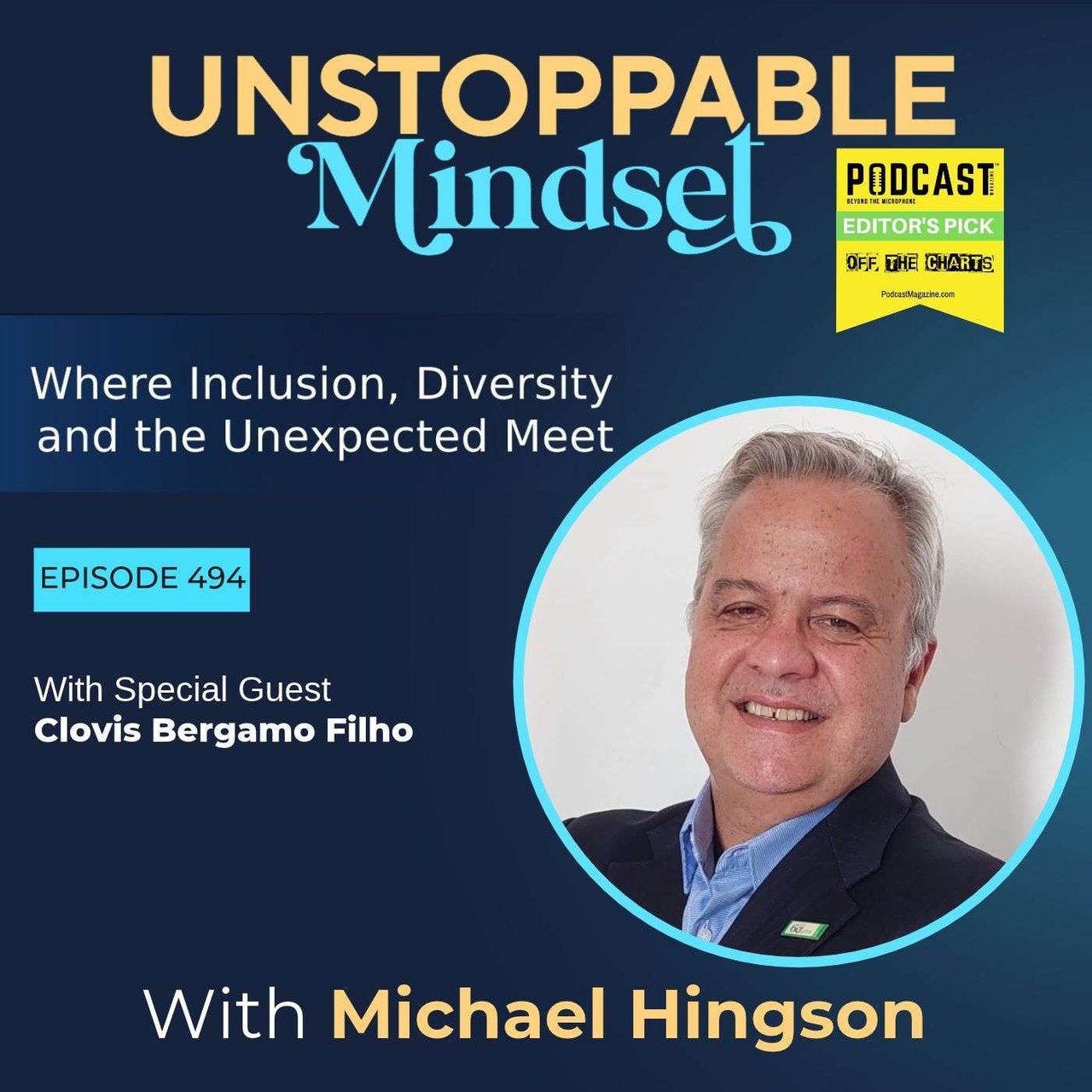
Episode 494 – Lean Six Sigma: The Unstoppable Path to Business Growth with Clovis Bergamo Filho
What does it take to build a successful business where people, processes, and technology work together? Clovis Bergamo Filho, founder and CEO of Six Sigma Brazil, joins Michael Hingson to share his journey from working at Xerox to becoming a leader in business process improvement and operational excellence. Drawing on decades of experience, Clovis explains how Lean Six Sigma, Agile, and Design Thinking help companies improve communication, strengthen employee engagement, and achieve sustainable business results. He also shares why long-term success requires more than quick financial wins and how artificial intelligence is changing the way businesses operate. Through his work, books, and passion for helping professionals grow, Clovis shows how shared goals, strong leadership, and continuous improvement can create lasting success.
Highlights:
3:13 How collaboration at Xerox led to a patented business solution.
12:32 How Lean Six Sigma improves communication across departments.
21:34 Why short-term profits can hurt long-term business growth.
27:58 How employee engagement connects teams through shared goals.
35:24 Combining Lean Six Sigma, Agile, and Design Thinking for innovation.
54:40 How AI and human experience improve business decisions.
About the Guest:
Clovis Bergamo Filho is the CEO and founder of Six Sigma Brasil founded in 2007 (http://www.leansixsigma.com.br), a company with over 17,000 members on its LinkedIn page. He is also the co-author of six books focused on management, published by Brasport Publishing and Board Acabemy the last book:
• “Uma Evolução Silenciosa no Gerenciamento das Empresas com Six Sigma”,
• “Ruptura no modelo tradicional das empresas”,
• “Modelo Híbrido: Evolução na Gestão Empresarial Para Eficiência e Inovação ágil” ,
• “Pulso Mágico: Metodologia simples de gestão… o projeto na mão!”
• “Governança Ágil”
• “DNA dos Conselheiros” launch march/2026
Six Sigma Brasil specializes in generating business opportunities through the implementation of innovation and operational efficiency, employing methodologies such as Lean Six Sigma, Agile, and Design Thinking. These services have delivered exceptional business results for clients, as highlighted by testimonials such as this Client: Accenture, AMBEV, Santos Brasil/CMA CGM
Testimonial Video. (https://www.youtube.com/watch?v=6kXIYLlQsMo&list=PLAPAUh6IGxFQkmRKcCzVCtJWQk0fv7mYZ ) and Clovis is also the organizer of the ”Congresso Internacional Six Sigma Brasil” (https://www.congressosixsigma.com.br/), now heading into its 16th edition. video the best moments ( https://youtu.be/C8qotUEmMBs ) The event brings together over 400 executives across two days, featuring more than 26 lectures and a “Manager of the Year” award ceremony.
The Six Sigma Brasil Academy, a distance learning platform, has hosted 27 lectures by executives and offers training programs such as the EAD White Belt Hybrid Model.
Six Sigma Brasil also partners with EXIN/LSSA to provide international certification for Belts in Brasil. For more details on the company’s impact, check out the customer feedback page.
Professional Experience
• Xerox Brazil: 20 years of experience across multiple areas, including systems support, purchasing, product strategy, and product configuration management. Responsible for product launches and modifications.
• Developed and led four successful Lean Six Sigma projects, obtaining Green Belt certification.
• Created and implemented the B2B Supplier On-Line Site, patented by Xerox Corporation in 2001 (USSN 09/929,376). This solution, developed entirely in Brazil, enabled the Purchasing Department to conduct electronic bids, with over 1,000 companies registered and approximately 1,500 bids conducted annually.
• Extensive knowledge in ERP systems, database administration, technological project management, and e-commerce.
• Skilled in training, developing, and implementing IT projects with customers.
Specialties
• Certified Green Belt.
• Local and international speaker
• Led several strategic projects
• MBA professor PUC-MG and Business Advisor Board Academy
Ways to connect with Clovis**:**
Website: https://thoughtleadersamerica.com
LinkedIn: https://www.linkedin.com/in/dominicforth
Company LinkedIn: https://www.linkedin.com/company/thoughtleadersamerica
Instagram: https://www.instagram.com/thoughtleadersamerica
About the Host:
Michael Hingson is a New York Times best-selling author, international lecturer, and Chief Vision Officer for accessiBe. Michael, blind since birth, survived the 9/11 attacks with the help of his guide dog Roselle. This story is the subject of his best-selling book, Thunder Dog.
Michael gives over 100 presentations around the world each year speaking to influential groups such as Exxon Mobile, AT&T, Federal Express, Scripps College, Rutgers University, Children’s Hospital, and the American Red Cross just to name a few. He is Ambassador for the National Braille Literacy Campaign for the National Federation of the Blind and also serves as Ambassador for the American Humane Association’s 2012 Hero Dog Awards.
https://www.facebook.com/michael.hingson.author.speaker/
https://www.youtube.com/user/mhingson
https://www.linkedin.com/in/michaelhingson/
Thanks for listening!
Thanks so much for listening to our podcast! If you enjoyed this episode and think that others could benefit from listening, please share it using the social media buttons on this page. Do you have some feedback or questions about this episode? Leave a comment in the section below!
Subscribe to the podcast
If you would like to get automatic updates of new podcast episodes, you can subscribe to the podcast on Apple Podcasts or Stitcher. You can subscribe in your favorite podcast app. You can also support our podcast through our tip jar https://tips.pinecast.com/jar/unstoppable-mindset .
Leave us an Apple Podcasts review
Ratings and reviews from our listeners are extremely valuable to us and greatly appreciated. They help our podcast rank higher on Apple Podcasts, which exposes our show to more awesome listeners like you. If you have a minute, please leave an honest review on Apple Podcasts.
Transcription Notes:
Michael Hingson 00:04
What if the biggest thing holding you back isn’t what’s in front of you, but rather what you believe? Welcome to Unstoppable Mindset, where inclusion, diversity, and the unexpected meet. I’m your host, Michael Hingson, speaker, author, and advocate for inclusion and possibilities. This podcast explores how the beliefs we carry shape the way we live, lead, and connect with others. Each week, I talk with people who challenge assumptions, face adversity head-on, and show what’s possible when we choose curiosity over fear. Together, we focus on mindset, resilience, and the small shifts that lead to meaningful change. Let’s get started. Hi again, everyone, and I hope you’re all having a good day wherever you happen to be. I am Michael Hingson, and this is the Unstoppable Mindset Podcast. Today we’re going to be chatting with Clovis Bergamo Filho, and Clovis is the founder and CEO of Six Sigma Brazil, and I’m going to let him talk about all of that as we go forward here. And I know he’s got a lot to talk about. He wants to talk about his career, which I want him to talk about. He wants to talk about his his purpose, his professional career, his career outside of the profession. So there’s a lot to talk about, no doubt about it. Well, Clovis, I want to welcome you to Unstoppable Mindset. We’re really glad you’re here.
Clovis Bergamo Filho 01:43
Well, thank you a lot for the opportunity to share some business information, some professional information. I’d like to, if you understand it’s that way, I’d like to explain about some my career path. It’s okay to to start to this process, or you like to ask some some items. Let me
Michael Hingson 02:09
let me start like I usually do with most people. Tell us kind of about the early Clovis, you growing up, and so on. Let’s start with that. So we got to go way back in time to when when you were much younger, tell us about growing up.
Clovis Bergamo Filho 02:23
I I I start to work in a company like a trainee 000 corporation zero corporation. Yeah.
Michael Hingson 02:38
What What did you do before then? Where did where did you go to school, and you know what what did you major in, and some of the earlier stuff.
Clovis Bergamo Filho 02:45
That’s okay. I I study. I I I did the economic graduation, and after that, I I did the technology post graduation, and you have a lot of understand about the the business information and the the technology information. Okay.
Michael Hingson 03:23
Go ahead.
Clovis Bergamo Filho 03:25
During these two items, it’s very interesting because I like a translator. How the way to using the the technology to achieve the business result, economic business results.
Michael Hingson 03:47
Okay. Well. Okay. So you started out with with Xerox. When did you When did you work for Xerox?
Clovis Bergamo Filho 03:57
I work around 20 years. I started 80s, 80s until 222 1000 in Xerox. I a long time to to working. I I I starting with a training in the Xerox Corporation, and after that I will have a opportunity to to working in some different areas. I I’m work. I starting working purchasing area, but in this this area, I’m I’m I did the this this translation. I have a connection with. Some projects, the tenologous projects, with how the way to generate a business result for procurement, and after that, I will working start to developing like a methodology to transfer information the supply suppliers Xerox, and and one day the engineering director and procurement director launch talking together, and I’m I started to to develop this process in procurement, and you have another professional to develop this process engineering, and the the directors have a business decision to working together. I I will transfer to engineering area and working together with other professional because the supplier needed to to knows the information about the commercial information, the business information, and the engineering information inside the RF key. And
Michael Hingson 06:41
so, so what you what you were doing was you were a part of creating kind of an information exchange to make sure that both engineering and procurement had information, and so you helped them work as a team.
Clovis Bergamo Filho 06:58
Yes. Uh huh. Yeah, and and in bottom line, this process will the team submit the this methodology process in the Xerox Corporate Headquarter and Xerox Corporation headquarters analyze And generate a score, and this methodology will be generate a patent for this methodology process. I am a co-author. This patent and Xerox is responsible. I’m a co-author for this methodology. It’s very, very interesting and hard process, but it’s it’s very nice to to achieve this result. Well, can you can you give us a little bit of an idea of what the process was or or how it worked? In the simple way, when we started this process, the internet it’s very starting. Yeah, it’s pretty new. The word in the word, right? The the the the bottom line is, we we need one example. I I need a request to one supplier. I I I need to inform some commercial or business information for this supplier, and I needed to send the drawings for the parts for the the supplier Analyze and answer this request. We create a portal and generate an infrastructure to to all buyers, send to the suppliers request, and in this process we have a commercial information and engineer information Together, right, and supplier analyze the one example, the draw the the the engineering information, and answer that it’s the name of this platform as supplier. Online, okay. In this,
Michael Hingson 10:04
so the so so the idea was that you were able to interact from the economic side, from the purchasing side, but you you developed this technology with engineers so that you could put all of the information that the supplier would need from you and the and your side and the engineering side together in the portal, and then it could all be sent appropriately to the supplier for them to look at it. With the idea that since it’s all integrated together, then the supplier could come back and give you a price or give you the information that you needed from them to move forward. Is that what you’re saying?
Clovis Bergamo Filho 10:49
Yes, you are correct. And the this journey it’s it’s very interesting because you know, Michael, some companies you have some business division, and sometimes this business division is no, it’s not going to work together. I am engineer, I am a command, different, and it’s very interesting. I am a economist working inside the the engineering area. Yeah, it’s it’s very interesting about the for my career to know because engineering professional have some more detail about some each items, and economic professional have a like macro vision about the the environment, the economic environment. I I don’t explain the the economic is the best. The engineer is the best. I I I I am not explain. You have opportunity to to to working together. Right. One the professional like a Upper view and like another profession to know more detail of the the this process, which is very interesting. If
Speaker 1 12:38
you enjoy Unstoppable Mindset and would like to help us continue bringing these conversations to you each week. We’ve created a way for you to support the show. Your contribution helps us cover production costs and continue sharing stories, insights, and ideas that inspire people to live with purpose and possibility. If supporting the podcast feels right for you. You’ll find the link in the show notes. Thank you for being part of the Unstoppable Mindset Community.
Michael Hingson 13:10
So, you know, I understand what you’re what you’re saying. That is that a lot of times different parts of a company don’t communicate together, and that that can lead to all sorts of problems. Needless to say, what what was so unique or so important about what you developed? Why was it? Why? Why are you? Why are you so excited about it, and what did it? What did it really do? What made it pretty unique in the world?
Clovis Bergamo Filho 13:46
I understand we we have a way to close that gap. I my understand we feel have a methodology like a project management or process management. Right. Accordingly, my understanding the methodology it’s like a international language. One example: if you have a one professional to know detail about the project management methodology, and working with with another profession in a different country or different area, and but every the both professional know the the standards for communication. It’s easier to everybody know the how the way to. Explain the the business results. How the way to achieve the these these results? I had one case in during my professional journey. We have. a professional to marketing professional and product marketing professional. We like to launch one product in Brazil, but it’s very hard to explain the corporation how the how the tales about to launch this project in Brazil, and this professional told me, Claude, could you help me about that that to clear that? I I I ask this profession, the business professional in headquarter. No, the business professional in headquarters have a a graduation for Lean Six Sigma methodology. Oh, thank you, thank you a lot. This information very important, and I I using one tools like the name the tools is swimming line, and put all process during this this this tools And explain to headquarter about this this project, no? And but you you you you know, Michael. These professional have a preview about how this documented the document working each area, each and when the the professional here in Brazil, the product market professional Brazil, explain to to marketing ready quarter, it’s clear because you both of of professional using a methodology to try to to put more clear understanding, more clear and understand how the way this process, how we need to do to clear to no value-added process, how the way to understand to identify the customer value added process and and identify yeah when items very important the business value added process because sometimes we need to do some task, and this task is very important to to guarantee the sustainability of the business.
Michael Hingson 18:32
I I would assume that because you were really working to develop a process to get various parts of the company to communicate, and they probably weren’t used to that. Did you did you find there was much resistance at first to to making the process work or to people accepting the process?
Clovis Bergamo Filho 18:59
Yes, like the the the the first resistance. I I I I have a one vision. the The professional is managing. It’s a different vision of sea level professional. The the the language of sea level sea level. It’s a different dimension management language. The one example, the management language. It’s a productivity. It’s a capability, and sea level, it’s a high payback, and both of these professional Six Sigma working hard to explain. Inform the DNA of of the company. It’s the process. If you have the the process efficient, you you have a business result, and the the the the. the the the barrier at this professional, it’s a sea level and management level understand that because we working to business result, but we need to transform the process to generate a fast and sustainable business results. After you starting a program to using the methodology, and executives understand that and achieve the the some quick results that this professional understand this this way To reduce reduce the opex and generate initiatives to investment in the correct correct capex.
Michael Hingson 21:35
Did you find that the the C level people and management to to a degree, I’m sure, but the sea level people, especially, were much more interested in the return on their investment, the payback, and so on. Were they more interested in that than they were on the engineering side?
Clovis Bergamo Filho 21:55
You you are totally correct.
Michael Hingson 21:58
Yeah,
Clovis Bergamo Filho 21:58
these I don’t know. You you know more. You know the the planning buzz zero. You you looking only only for the the the financial result you don’t analyze the the history you don’t analyze the the marketing and according my understanding in today everybody like a fast and fast result.
Michael Hingson 22:44
Yeah, and all they care about are the numbers.
Clovis Bergamo Filho 22:47
Yes, fast and fast result. But we need to understand. Sometimes we need to do some actions to generate a long-term results. I understand this problem. It’s very critical problem in the companies because the sea level receiving some. Results, financial results according the business results. If you you achieve these items during this year, in final final the items you receive a personal financial result additional, and this this way working it’s the the wrong direction with the long long term process, because if I am a sea level, and if I generate a quick quick business result in this year and end of this year, I will be. Receive a financial items. Right, you get you’ll
Michael Hingson 24:31
get paid more. Yeah,
Clovis Bergamo Filho 24:32
yeah, you are. I I look only for that. I’m not looking for the long term company. I understand the the. global company and the company in general, we need to analyze. That’s okay. You receive financial results, but these financial. We receive after five years sustainable results. Five or defining one time. So what? Oh, go ahead. Because if you working this way, you continue to To looking for quick quick results, it’s one one problem of the the the company problem, and for the sea level. And now sea level, it’s it’s not only to looking inside the company. The C level needed to looking around the the the company and the the the impact and the world impact. We needed to understand how the engagement, how the way the engagement, the professional working in the company and the supply chain, the this company, how the way we put together this professional inside or outside, in the project for the the propose for this company, and I’d like to explain a lot. The first item I like to to explain what your your propose, what the company propose? We need to understand one example. My propose it’s transformation the the professional using through the methodology and and generates results is the is the propose my proposal and the the the Six Sigma propose create anology and explain this knowledge about that and in inside this are using some project management methodology. I using the the process method like Link Six Sigma, Agile, Design Thinking. It’s only the the way.
Michael Hingson 27:37
So one of the the things, as I understand what you’re explaining, is that the methodology that you created was really, in part, trying to make sure that everyone could share the same vision, so that the CEOs, the C level people, could see what what’s occurring, but also understand the vision and understand more about why things might not happen exactly as quickly as they would like. But they’re going to happen a whole lot better than they might have otherwise happened because people are communicating and working together.
Clovis Bergamo Filho 28:23
Yes. Yeah. You are correct. And another item I’d like to to explain to you, Michael. Some professional explain. I have problem in the company because you don’t. I don’t Have the communication clearer?
Michael Hingson 28:45
Well, you don’t have the you don’t have all the knowledge of engineering. You’re you come from a different point of view.
Clovis Bergamo Filho 28:51
But in my my my point of view is engagement. It’s the the the very important.
Michael Hingson 29:04
Your your job is to try to bring everyone together in some common way.
Clovis Bergamo Filho 29:10
Yes, is correct. But how the way to engagement the all different level professional. It’s very difficult, and I understand in my my point of view. If you using the methodologies, you have a possibility to to create a corporation language and all different levels to understanding the how the the the project the proposed for the company the project of the company and we understand how the the way to achieve in this year the. Next years, but it’s very important to to create a sustainable environment to connect all different levels of the the company.
Michael Hingson 30:16
Yeah, again, that’s that’s the whole issue is to try to be able to reduce whatever is occurring with different parts of the operation, you wanted to reduce it so that there is essentially a common language or a common ground that everyone can work with, so that everyone, to a degree, understands what everyone else is doing and why.
Clovis Bergamo Filho 30:47
Yes. Yeah. Correct. And and we now in the past we working hierarchical process in the company. The new today, it’s a net net process. All different professional working together, and some different professional have a different responsibility. But it’s like a net. It’s not a hierarchy process. It’s a very hard to to some professional to understand this networking environment, how the the the way to working, and in in in the EU create Six Sigma and another professional developing Hebrew model, and Hebrew model created this methodology to to connect this net and create like a professional embedded through the professional need to know how the way I reduce clear my process and how the way to innovation my my process and everybody knows about the in different levels. Know knows this objectivity, and using that methodology, this professional understand. Oh, that’s okay. I’m I’m responsible for this this specific area, but in my specific area, I know some items need to to increase the process, and I know some possibility to innovation this process and if you create a sustainability environment, you have a a possibility to working More soft and like the word vukabani. It’s a complex environment. You have a lot of transformation. Have a lot of situations and a lot of a
Michael Hingson 33:38
lot of moving parts.
Clovis Bergamo Filho 33:40
A lot of moving parts, but. if you create this net and this net like working sustainably for way sustainable way and using this, the language of and the language is a methodology. We have a possibility to to to cross all different barriers, all different some economic scenarios, some internal scenarios. It’s you have a possibility to win, win and win, and go to the the the the business results.
Michael Hingson 34:37
I I have a question. You’ve you’ve said this term several times, and I’d like to understand it more. Where does does the term Six Sigma come from? Explain Six Sigma.
Clovis Bergamo Filho 34:50
The the in the past the you have a tomb the the link. As a methodology, and Six Sigma, it’s a methodology,
Michael Hingson 35:05
right? Where did the word Where did the term Six Sigma come from?
Clovis Bergamo Filho 35:09
The the Six Sigma, it’s a a methodology to analyze a variation of the process. You
Michael Hingson 35:21
right
Clovis Bergamo Filho 35:22
you you analyze the capability of the process you measure the the the process and the Six Sigma methodology.
Michael Hingson 35:36
What I’m trying to understand though actually is where the word Six Sigma, what what does that mean? Not not how the process works or anything, but but why why did you coin the phrase? Why did you develop the word Six Sigma?
Clovis Bergamo Filho 35:54
Six Sigma, it’s a a level of a productivity process. The the the four the factors 4 million. You you you you have a two sigma level, three sigma, four sigma, five sigma, six sigma. Six Sigma is the best of the the the art with have only four defects for a million transactions. Is is it a
Michael Hingson 36:34
is it an economics term?
Clovis Bergamo Filho 36:36
No, it’s a statistical terms. It’s a methodology create a long time ago in Motorola, and after GA implement a hard this methodology sigma, and after we link together the link, the lean it’s a clear process, and you have lean to clear the process is Six Sigma to measure the process. You working together Ling Six Sigma, and now Six Sigma Brazil, including Agile and design thinking create a IBDO model because we understand you don’t have a a gold direction methodology. We working together. It’s linked Six Sigma Agile design thinking. Linked Six Sigma explain what do you need to change, how you need to change. The Agile to explain how to adapt the process and create like a step to implementation MVP process and design thinking explain how the provide some tools to to innovation, the professional working with this to innovation, but with you working together, the the Lean Six Sigma Jay Design Thinking, we have the best word because I have the understand the correct items I need to review, I have a process to deliver fast the agile, and I have a process to professional like think about innovation. It’s a way, and Six Sigma Brazil implemented this process in some companies. Some companies have a lot of business results using this methodology.
Michael Hingson 39:22
So, when did you leave Xerox?
Clovis Bergamo Filho 39:25
2000.
Michael Hingson 39:27
Okay. And then, what did you do after that?
Clovis Bergamo Filho 39:33
After that, I I will have some period of transition, and after in 2007,
Michael Hingson 39:45
right?
Clovis Bergamo Filho 39:45
I I I you started Six
Michael Hingson 39:49
Sigma Brazil.
Clovis Bergamo Filho 39:49
Six Sigma Brazil.
Michael Hingson 39:51
So what did you do for seven years?
Clovis Bergamo Filho 39:53
No, because I no, it’s not 2000. I only. Two years. The when 2005 two years. Okay. And but when I I’m I live Xerox. I have I had opportunity to to co-writer one book, One professional culture, the one book, the first book is very interesting. The the proposal of the this book, how the way the the link six sigma impact the the management process, right? I create like a company or a case, and during inside this book we have some situation, some problem situation, and after I explain ah for this situation I needed to use these two these methodologies. It’s very interesting, and after that I have some opportunity to to co-author and another today is the six books. Yeah.
Michael Hingson 41:19
So you um well so you you I think you actually sent us pictures of some of the book covers right yes yeah so we have those in the show notes but you um so you created the first book which which was somewhat about Six Sigma and how you integrated it what what was the next book that you wrote. the The next book is for for the about the. I I I I’d like to. In my mind, I’d like to put inside one book all the
Clovis Bergamo Filho 42:00
information the the sea level needs, and create a book the substation in the traditional business model. In this, the name of the books explain each cap each charter have a one professional and know a lot of blockchain. Another professional know about about strategic. Another chapter about the excellence operational and have a lot of different, more than 10 professions work together with me in this book. It’s very nice because create one example like index one a C level executive to to read this book. Oh, this very important. I I’d like to know more detail. That’s okay. You to go to a specific book book for this item. So one example, one chapter have a the information about blockchain. Oh, that’s okay. You know how the way blockchain it’s it’s working. Ah, I’d like to know more detail. That’s okay. You have some other books too. More information about this item. And in and in bottom line, this book explains macroeconomic blockchain compliance, strategic management, operation excellent project management cost, digital revolution, artificial intelligence, and how the executive some as a TV view of learnings.
Michael Hingson 44:04
So you’re saying that this book was really intended more for the sea level people.
Clovis Bergamo Filho 44:10
It’s not focused in the sea level. It’s like a senior professional.
Michael Hingson 44:15
Okay,
Clovis Bergamo Filho 44:16
it have capability to to to do that, and after that, I I have a possibility to to developing with the this methodology with another two professional Adeli Pereira Liso Rivera. They build a model evolution in business management for efficient and agile innovation, and this methodology we apply in some companies is generate of of hard business result, and after that, this book Ibra do. We have a bill available in Amazon in English.
Michael Hingson 45:04
Okay.
Clovis Bergamo Filho 45:04
And after that,
Michael Hingson 45:07
I want to make sure I understand. Now, which book is it? Is that the one that’s the hybrid model and business
Clovis Bergamo Filho 45:14
hybrid model? It’s available in Amazon. Yeah. In English. English.
Michael Hingson 45:19
Okay, great.
Clovis Bergamo Filho 45:20
That’s okay. And after that, I when I told about, I’d like to know the process and project. I working with one professional about the project management methodology. We develop a book, the project management, the PM book, the PMI body of knowledge, more than 1000 pages, and we working. We develop a easier way to everybody understand the project management methodology, and we work. We develop in this book the magic pulse, simple management methodology, the project in hand, like in. index to understand how details the project management because we focus the the proposal for the books it have a detective process to everybody understand and the case for in this book it’s a building a house because everybody knows a house. Yeah, that’s okay. One example during the project the the building a house in the garden don’t don’t have a barbecue environment. And during the project, we explain. I’d like the the stakeholder explain. I’d like to include the the barbecue environment. Oh, that’s okay. This is a change. This is a change, change management process. Michael, understand? You link the simple things to to link the complex items in the methodology, right? Because if you start a change management process. Some professionals don’t don’t understand clear. But if you link it in the real world for baseline, for the everybody knows. Oh, understand this way, this this situation. Oh, it’s clear for me. It’s the propose for the the the first managed book, and after that, I have a a possibility to call tour another book, the Agile Governance, and I explain the. the TO company model, the self-managed integrated evaluation proposal and results, like you, you, I told you the how the way the professional working the right internet the the. self management and integrate evolution propose and result the the professional the the now we need to know this and after that I close this this this the the this book the DNA of adviser the the the company and this this book will be launched in next month March and the and the the proposal of this book I have a responsibility to write a chapter. I I explain about the how the way to deployment the business strategy. The company have a goal, and the goals you have a strategy. After the strategy, have initiatives and initiatives with after the initiative, the create a project. How the way we link everybody these steps, and it’s very. Very interested. It’s connected. Otherwise, and I explain to you, and using that methodology, we connect the C level and operation management level, because oh, that’s okay. The company have these goals. The company have this strategy. This strategy, it’s we need to understand how the hard initiatives and this initiative you need to to break into some strategic project. You understand with this environment, you have a possibility. Everybody, the top and the down, know the same language. It’s very, very, very interesting. This I have a pleasure to participate. The the this the. this book, the DNA of a advisor, and about the this six books is very interesting experience because we the book it’s very nice. It’s a except it’s a very nice journey in a professional life.
Michael Hingson 51:30
Well, one of the things that seems to come through is that one of the keys to all of these books is the fact that you are really dealing with communications, and that you’re really dealing with trying to make sure that all levels within a company are able to and have the mechanism to communicate with within their communities, but also with each other, and the the communication is important. It sounds like one of the things that you’re doing with all these books is, in one way or another, trying to help emphasize the importance of real communications.
Clovis Bergamo Filho 52:12
Yes, you are correct. The the communication it’s a very very strong and very important, but after years I understand that’s okay. I have communications very hard, but engagement for me it’s the the next the next level of communication. If you engagement, you guarantee the communication. And if you have a way to create engagement like this methodology, we have a robust communication, and if you like to explain the shortly methodology, generate the first step, the propose, and after you have a methodology and methodology and propose generate engagement and these three the proposed methodology and engagement you achieve the the the right communication for everybody in the the company.
Michael Hingson 53:38
Yeah, are you seeing that a number of companies are adopting the the the process of Six Sigma Brazil? Is it do they do it on their own? Do they hire you to do it? How does that work?
Clovis Bergamo Filho 53:54
Today you have some corporation, international corporation companies using the the Six Sigma methodology. You here in Brazil, you have some hires you don’t starting to using some process to analyze some kind of methodology because you have some clear the new new environments like some different areas, but now I understand we have a executive professional in the world, not only in Brazil, started to understand how the powerful of DNA the company it’s the process. How and everybody started to have a clear understanding about that. How the powerful it’s a you have a excellence process, and you have a and the process. It’s a DNA for our company in the world. In the depends of the country, depends of the the situation. The DNA, the process is a DNA. The company.
Michael Hingson 55:33
So, let me ask you this: Given what goes on in the world today, where does AI fit into all of this?
Clovis Bergamo Filho 55:43
It’s very important. Thank you a lot for this question, because our program hybrido model we integration integration the AI will have some steps of the program we using AI to to do this this this action is more faster is more faster and you have some opportunity to receive some some information. Sometimes the professional don’t don’t think about this, and using if you asking the AI and create an environment and explain how the way to to achieve this situation, you have some some answer. You have a worldwide information to to generate this some information, and and now I I explain my the the last the professional will be education about how do the way to answer the the question now the the future today ne and the future, you have a capability how the way to analyze the information and understand this information to achieve and to generate the business result for the company. It’s a very strong process to changing in the mind the how professional because and and the senior process professional you some companies you go call back the senior professional to working again in the company because the senior professional have a lot of knowledge to analyze how the the scenario how the answer it’s correct the the AI we develop drill down, and we need to to have some professional starting the career working together the senior professional. It create a net a power net. The the some professional to start the career know sometimes a lot of technology, but the senior profession professional know a lot of business information, and you work it together. You have a a power a power and excellent team, but if not possible to management the today, if not possible to management the program program of innovation and excellence operational, we we don’t use AI. It’s it’s like mandatory. It’s like a mandatory. It’s one example. It’s like drive a car f1 in 90. It’s a different. You drive a F1 car, and today, today you have a lot of technology involved. You have a lot of information. You have a lot of in in 19s. It’s a different. Yeah, you don’t. That’s okay. It’s a F1. Nights, it’s very fast, but it’s like using revision process, innovation process. Without AI, you is staying in the 90s in f1. Well,
Michael Hingson 1:00:17
and and it’s only going to evolve and and get better. There’s still a lot that needs to be done. You know, the whole concept of an autonomous vehicle is still new enough. We’re on. We’re I I say we’re on the cusp. Is that we’re we’re not ready to totally allow AI to take over driving, but that’s going to happen at some point.
Clovis Bergamo Filho 1:00:45
Correct.
Michael Hingson 1:00:45
Yeah, and and that’s the way it. And and I’ll be glad when it does because I think the way a lot of people drive today, AI needs to take over driving. But that’s another story.
Clovis Bergamo Filho 1:00:56
Michael, like one example in short term. time ago, you don’t have possibility to to do. We need to do now. Sure, you in California. I am Sao Paulo, Brazil. You that’s it. You you you do a very powerful training formation, but in the past I need to get one aircraft or plane to go to the California. It’s yeah the change. It’s we need to understand the change. We need to how the way this technology have a powerful to increase your business results. Sure, I I’d like to explain one one item, one case during my graduation about advisor company, I needed to analyze financial data for one one company human resource information. and I have four days, one week to generate a report about, like how the way with I am an advisor to to to explain for the, it’s a, it’s like a sea level that the company, right? But you didn’t
Michael Hingson 1:02:49
have a lot of time.
Clovis Bergamo Filho 1:02:50
Yes, but I use AI.
Michael Hingson 1:02:53
You used AI. I was. I knew you were going to say that, and of course, I use
Clovis Bergamo Filho 1:02:58
AI, Michael. Yeah, it’s very, very powerful. It is. If you know, if you know what you need to ask, and if you know to analyze the answer, I generate a excellent report. Have a lot of Different items, I I can’t analyze. I can’t thinking about. Oh, this is very. It’s it’s okay. Oh no, this is not okay. I I generate a quick report.
Speaker 2 1:03:41
Yeah,
Clovis Bergamo Filho 1:03:41
and very fast to to to achieve which makes sense the the result. But the the the critical point we need to pre to understand AI, we need to preparing. You needed to know how the way the AI to have business value added for your your business or for your life.
Michael Hingson 1:04:15
Let me let me ask you one final question. Six Sigma Brazil, do you work with companies just in Brazil, or do you work worldwide?
Clovis Bergamo Filho 1:04:29
No, we work in worldwide. Okay, we have some companies. We working have some implement program in Latin America, and we have a capability to to work worldwide, some different countries. If the the the the company like to generate a business result. A sustainable business result. The Six Sigma Brazil have a consulting, have a capability to English and Spanish language. We have a the model. We have a booking in English version, Amazon we our program we deployment in Latin America in Spanish we have some consulting have professors in Spanish it’s very nice because you you we working professional have a lot of background, and this professional, it’s working with me together a team more than 10 years. I have a lot of. The result with this this thing.
Michael Hingson 1:06:04
Well, if people want to reach out to you and explore working with you, how do they do that? How do they contact you?
Clovis Bergamo Filho 1:06:12
My like like try my email. It’s a claviz point bergamo ahoba link six sigma point con point BR my email or LinkedIn close bergamofilio you send a message it’s yeah
Michael Hingson 1:06:36
and I think we have contact information in LinkedIn but or in in the show notes. But to to play safe, if you could send me any contact information so people can reach out to you, I want to make sure that we include all of that in the show notes for the podcast. That would be okay.
Clovis Bergamo Filho 1:06:57
No, that’s okay. I will send my mobile phone and my email to you.
Michael Hingson 1:07:04
That would be great.
Clovis Bergamo Filho 1:07:05
And you including the yeah red light podcast.
Michael Hingson 1:07:11
Oh, cool!
Clovis Bergamo Filho 1:07:11
Thank you, thank you a lot, Michael.
Michael Hingson 1:07:14
Well, I want to thank you for being here, and I want to thank all of you who are out there who have listened to this. I’ve learned a lot, and and takes a little bit of focus, but I’ve learned a lot, and I think everyone here will agree with that, and that they have as well. So, thank you for being here. If you’d like to reach out to me, you’re welcome to email me at speaker@michaelhingson.com, and Michael Hingson is spelled M-I-C-H-A-E-L-H-I-N-G-S-o.com. Love it if you’d give us a really positive review in wherever you’re listening to the podcast. There’s a place to review, so please do it. And if any of you and Clovis, including you, know of anyone who ought to be a guest on our podcast, we’re always looking for people to come on and tell their stories, so I’d appreciate it if you could refer people to us. But Clovis, I just want to thank you again for being here. This has been great. We’ve been going well over an hour now. Time has passed, but I want to thank you for being here. This has been great.
Clovis Bergamo Filho 1:08:18
Thank you a lot, Michael, and your team for the the great opportunity to share some information. I know a lot of with you, and it’s very pleasure to to contribute some professional to analyze the way to increase the career, increase the life. It’s proposed for both of the my and you, Michael. I understand that way.
Michael Hingson 1:08:58
Thank you for being here with me on Unstoppable Mindset. I hope today’s conversation left you with a fresh perspective, a new insight, or at least something worth thinking about. If you’re ready to go deeper into the ideas that shape how we see ourselves and others, I have a free gift for you. Head over to michaelhingson.com and download my free ebook, Blinded by Fear. It explores the invisible beliefs that hold us back and shows you how to reframe them so you can move forward with clarity and confidence. Be sure to subscribe to our podcast, leave a review, and share this show with someone who can use a reminder that growth starts with mindset. When people think differently, we all move forward together. Thanks again for listening. Keep learning, keep questioning, and keep choosing to live with an unstoppable mindset.