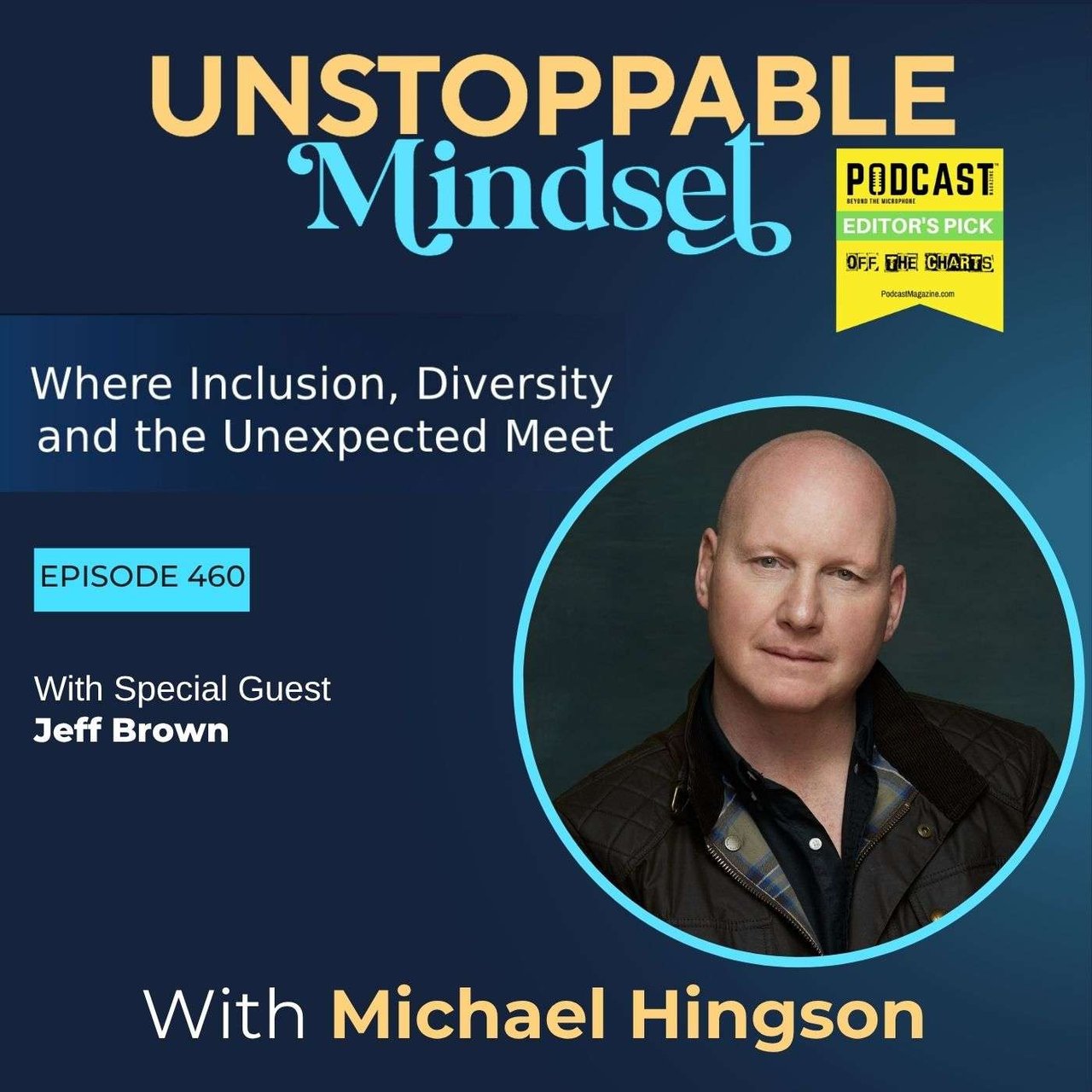
Episode 460 – Creating an Unstoppable Creative Career After Failure with Jeff Brown
Sometimes the hardest setback becomes the start of a far better life. I speak with Jeff Brown, an international photography business mentor whose path began with dyslexia, school struggles, and a fishing fly business at age 16. Jeff shares how military photography, personal branding, and business skills helped him build a successful creative career. He also opens up about losing everything through a failed pub, rebuilding his mental health, and creating a global photography mentoring business. His story shows how persistence, clear goals, strong branding, and the courage to change direction can create an unstoppable life.
Highlights:
00:01:38 – How dyslexia and school struggles shaped Jeff’s drive to work for himself.
00:05:58 – The first sale that showed him entrepreneurship was possible.
00:14:50 – Why passion and effort mattered more than early photography skills.
00:35:49 – How branding and marketing helped grow four photography businesses.
00:39:06 – The business failure that forced Jeff to rebuild his life.
01:01:49 – Why clear goals, strong branding, and steady action create growth.
About the Guest:
Jeff Brown is an International Photography Business Mentor, Best Selling Photography Business Author, Public Speaker and President of The British Institute of Professional Photography. Also working for The International School Photography Conference Team he has delivered sell-out courses and workshops around the world. Jeff works closely with photographers from all niches and photographic backgrounds having a real passion to help them grow their online brand and achieve their goals.
Jeff first dipped his toe into entrepreneurship at the age of 15 while still at school, selling handmade fishing flies to local tackle shops to boost his pocket money. After leaving school at 16 he set up his first full-time venture, a mail-order fishing tackle business. His fishing tackle business came to an end 7 years later, shortly after Jeff enlisted in the Royal Navy where he went on to serve as a military photographer and intelligence analysist.
Following nearly 10 years service he left the armed forces to set up his own photography company, and eighteen months later had a successful six-figure wedding photography company and a commercial photography business, then going on to open a separate school photography business and a Boudoir Makeover studio turning over 1,000 boudoir and model shoots per year.
In 2014 Jeff decided to follow his dreams of owning a country food pub by investing over £120k of his own money into a pub venture, which turned out to be his greatest ever failure, losing his entire investment and racking up £60k of debt in just 12 months while at the same time going through a divorce.
After suffering from depression in 2015, he changed direction again and developed an online photography business mentoring program, making it his mission to help and inspire photographers worldwide to market their businesses better. Part of Jeff’s major focus and teachings are in the areas of Goal Setting, Brand Message, Consistency, and Website Content including the new AI and AEO search on Google, and also his favourite social media platform which is LinkedIn. It’s essential to have a mindset for success and a clear path to follow. No business can truly succeed without goals, direction, a powerful brand and a positive mindset to achieve.
Jeff has written 4 internationally best-selling photography books and recently published his first travel book –
· The Photographers Missing Link-edIn
· The Ambitious Photographer’s Journal
· Help My Photography Website Needs More Customers
· The Photographer’s Gratitude & Mindset Journal
· Plan Your Ultimate Northumberland 250 Road Trip
He writes for several photography magazines and associations and is also a brand ambassador for OM System (Olympus Cameras), The British Photography Awards, Studio Ninja, The Societies of Photographers, and the UK and US Brand Ambassador for The Shutter Studio App.
Jeff lives in the beautiful scenic county of Northumberland, England. He’s a keen traveller having visited over 60 countries so far, as well as being an outdoor enthusiast, motorbiker and loves getting out in nature when ever he can.
Ways to connect with Jeff**:**
Website: www.thephotographersmentor.comFacebook: www.facebook.com/JeffBrownThePhotographersMentorLinkedIn: www.linkedin.com/in/thephotographersmentorAmazon: https://www.amazon.com/stores/Jeff%20Brown/author/B09M76J1XK
About the Host:
Michael Hingson is a New York Times best-selling author, international lecturer, and Chief Vision Officer for accessiBe. Michael, blind since birth, survived the 9/11 attacks with the help of his guide dog Roselle. This story is the subject of his best-selling book, Thunder Dog.
Michael gives over 100 presentations around the world each year speaking to influential groups such as Exxon Mobile, AT&T, Federal Express, Scripps College, Rutgers University, Children’s Hospital, and the American Red Cross just to name a few. He is Ambassador for the National Braille Literacy Campaign for the National Federation of the Blind and also serves as Ambassador for the American Humane Association’s 2012 Hero Dog Awards.
https://www.facebook.com/michael.hingson.author.speaker/
https://www.youtube.com/user/mhingson
https://www.linkedin.com/in/michaelhingson/
Thanks for listening!
Thanks so much for listening to our podcast! If you enjoyed this episode and think that others could benefit from listening, please share it using the social media buttons on this page. Do you have some feedback or questions about this episode? Leave a comment in the section below!
Subscribe to the podcast
If you would like to get automatic updates of new podcast episodes, you can subscribe to the podcast on Apple Podcasts or Stitcher. You can subscribe in your favorite podcast app. You can also support our podcast through our tip jar https://tips.pinecast.com/jar/unstoppable-mindset .
Leave us an Apple Podcasts review
Ratings and reviews from our listeners are extremely valuable to us and greatly appreciated. They help our podcast rank higher on Apple Podcasts, which exposes our show to more awesome listeners like you. If you have a minute, please leave an honest review on Apple Podcasts.
Transcription Notes:
Michael Hingson 00:04
What if the biggest thing holding you back isn’t what’s in front of you, but rather what you believe? Welcome to Unstoppable Mindset, where inclusion, diversity, and the unexpected meet. I’m your host, Michael Hingston, speaker, author, and advocate for inclusion and possibilities. This podcast explores how the beliefs we carry shape the way we live, lead, and connect with others. Each week, I talk with people who challenge assumptions, face adversity head-on, and show what’s possible when we choose curiosity over fear. Together, we focus on mindset, resilience, and the small shifts that lead to meaningful change. Let’s get started. Hi again, everyone. Welcome to another episode of Unstoppable Mindset. You know what’s really fun about this podcast is we get to meet all sorts of people who talk about all sorts of different kinds of things, and today we get to talk to a gentleman from England, Jeff Brown, and Jeff, among other things, is an international photography business mentor, best-selling photography business author, he’s a public speaker and also the president of the British Public Institute of Photography. I think I said that right.
Jeff Brown 01:36
British British Institute of Professional Photography. British
Michael Hingson 01:40
Institute of Professional Photography. Got to say it right, but anyway, and and all sorts of other things. He’s an adventurous kind of person, as you’re going to learn in the course of the day. So, Jeff, I want to welcome you to Unstoppable Mindset, and we’re really glad you’re here.
Jeff Brown 01:55
Thank you. Thanks for having me on.
Michael Hingson 01:57
Well, I’m glad to do it, and I have a visitor in the studio today, my cat Stitch, who is monitoring this, and I’m sure that if she has any opinions, she’s going to voice them. But we’ll see. Stitch is a wonderful kitty. She’s almost 16 years old, and we we love having her around. But anyway, so Jeff, why don’t we start by you telling us kind of maybe about the early Jeff growing up and some of those things, and we’ll go from there.
Jeff Brown 02:25
So growing up, so I grew up in the northeast of England, and I was born in 1970. So I’m 55 now, and back in sort of late 70s, early 80s, the northeast of England was a was a bit of a grim place. It was gray. It was there was a lot of poverty. It was mainly coal mining and shipbuilding, and it was the old sort of mentality of you know you go to school, you study hard, you get a job, you stay in the job for for your life, you retire, and then you’re dead. That’s it. Yeah. So, for some reason, that didn’t really, really appeal to me. And I used to love reading. I read loads of books. I was obsessed with books. Got into books from a very early age. Into sort of fantasy type books, Lord of the Rings, The Hobbit, and stuff like that. But it was only when I got into maybe probably about the the junior schools I’d gone through the infant school I got to about eight or nine year old that I realized there was something the matter with me in the fact that I’m really struggled with with school I wasn’t very good at it years and years later, I found out I was dyslexic, but I couldn’t read out aloud. I had real problems with numbers. Numbers seemed to always look the wrong way around to me, and I got an instant dislike of school and an instant dislike of authority. I had I just I couldn’t wait to get out of it, but I was quite creative when I got into fishing, I was good at making fishing flies. I got into photography, and that sort of gave me more of a creative mindset. Where I thought, well, I don’t want to work for anybody else. I don’t want to be told what to do. I want to try and make my own direction. And I decided that I was going to be self-employed or you know start my own business at the age of 14,
Michael Hingson 04:23
what did your parents think of your your kind of independent mindset or entrepreneurial mindset? Because you must have voiced it along the way.
Jeff Brown 04:31
Well, I did, yeah, and funny enough, you know, I said I had a real dislike of school. I mean, I actually not not overly proud of it, but I was expelled from school at the age of 16, kicked out of school because I got into quite a bit of trouble. I was I was very rebellious. I really disliked it with the passion, and I left school with zero qualifications. So I didn’t I didn’t pass any exams. I filled every exam that I actually bothered to turn up for, but to. It matters worse. My dad was a college lecturer, and my mum was a teacher. So, so obviously it didn’t go down well with with having two parents who were in the education system. But they backed me 100% They were they they could see that I was struggling, but dyslexia wasn’t really a thing that was talked about back. Yeah, and yeah, my my dad put forward at the time one and a half 1000 pound to help me get onto the you know get the equipment I needed and the the office space to start my first business.
Michael Hingson 05:34
So it was pretty supportive,
Jeff Brown 05:36
very supportive. Yeah, yeah, yeah, and and and I think it helped as well that my first business was making fishing flies and tying and exporting fishing flies to fishing businesses around the world. But my dad was keen on fishing as well, so he had he had an attraction to the business.
Michael Hingson 05:54
Okay. Well, I know that my wife had lots of relatives in England. A lot of them were from the Cornwall Mosel area, and a lot of them, of course, were very much into fishing.
Jeff Brown 06:05
Oh yeah, yeah. I know Cornwall. In fact, I spent a year in Cornwall on on Navy search and rescue, and that would have been 1919 98 I think it was then very beautiful place.
Michael Hingson 06:19
I’ve not been. I’d love to go sometime. We’ll have to figure that out.
Jeff Brown 06:23
Yeah, it is. It’s gorgeous. It’s gorgeous.
Michael Hingson 06:26
So you started this business. So you were basically 15 when you started the the business, which I think is kind of interesting. That’s at a young age, and of course, by the time you were 16, as you said, you got expelled from school, which had to not be very very much fun.
Jeff Brown 06:44
Yeah, I mean, well, to be honest, so the the starting of the business, I used to I used to go into the fishing tackle shops at weekend myself and one of my friends who who I used to go fishing with, and he was good at making flies. He was called Phil. Obviously, I’m called Jeff, and we decided we were going to create a business called PJ Flies. And one weekend, we we went into one of the local fish and tackle shops, and we were buying some some bits and bobs to make fish and flies with. And the business owner, the owner of the shop, said, "Look, says, look, if you bring me some flies down next week, if they if they if they’re any good, I’ll buy them off you. So we walked into the shop and took these fishing flies in the following week in a little presentation box. And I remember him individually taking each fly out at a time because he said, "How much how much how much are you going to sell me them for? And I said, "Well, I’ll sell them for 10 pence each. So he was taking them out, and I was counting up in my head. And at the time, my pocket money was, I think, was three or four pounds a week, and I came out of that shop with a 10-pound note. So it was double what I was getting paid off my pocket money, and it was such a great feeling. So that was my first ever sort of dip into entrepreneurship, earning money, and and he said, and the last thing he said as I went out the door, he says, if you can if you can make the same amount next week or even double, bring them back and I’ll buy them off you. So the following week I went back and made 20 quid.
Michael Hingson 08:18
Wow, what goes into making a fly, I’m not a fisherman by by training or anything, so I don’t know a lot about fly fishing.
Jeff Brown 08:27
Yeah, so it’s all feathers and so feathers and furrows, and it’s all held onto the hook with with a very fine thread, like what’s called a gossamer thread. It takes it takes a while to learn. So I was taught by an old guy who was a really good fisherman, and he he had a caravan on the same caravan site that my parents had that they used to go on holiday on, and because we we we never used to go abroad in those days, all the holidays were spent in England, and that he he saw that I was getting into fishing, and he came and taught me how to how to tie fishing flies, which was great.
Michael Hingson 09:06
Yeah, and of course, the whole idea behind the fly is to attract the fish, right?
Jeff Brown 09:10
That’s right. Yeah, yeah.
Michael Hingson 09:13
So that they will, if you will, take the bait.
Jeff Brown 09:16
Yeah, yeah, totally. And the funny thing was, I was yeah, I used to love fishing, but I don’t need fish, so I would either put you know put them back in the in in the river, or I’d I’d give them away to to members of the family.
Michael Hingson 09:30
Wow. Well, and suddenly fortunes changed, and there you were making flies and selling them.
Jeff Brown 09:37
That’s right. That’s right.
Michael Hingson 09:39
So how long did you do that?
Jeff Brown 09:42
So we we got we got a proper sort of business premises in 1986. So when I was I was 16 year old, and we applied for a grant with the then Prince’s Trust, which was run by Prince Charles, who’s now King Charles. And we were the youngest people in in the UK to be accepted for a grant. They bent the rules and they give us the grant under the age of 18. So we got the grant at 17 year old, and then shortly after, we were in a business sort of a business community, a big a big workspace with lots of offices with other creative people in, and shortly after the the center had opened, about six months after, the the the manager of the center came up and says, "Well, look, we’d like to we’d like you to make a box of salmon flies, but a really good box of salmon flies, all the best ones, and we’ll pay you. And it’s going to be a presentation box for a special guest who’s coming to officially open the business center in a few months. But we can’t tell you who it is. And anyway, it turned out two months later it was it was Prince Charles.
Speaker 1 10:59
He
Jeff Brown 10:59
came to visit us, and he was presented with a box of fishing flies-the the flies that we tied from.
Michael Hingson 11:07
Wow, that was pretty cool. So you got to meet him.
Jeff Brown 11:11
So yeah, we got to meet him. He talked about fishing. He talked about fly tying. He said he’d he’d been bought a fly tying kit for Christmas one year from his wife, who would have been Princess Diana, but he couldn’t get away from get away from it. It was too. He found it too complicated and too complex. So he says, "I really admire that you you know that you guys can can tie the flies. So so yeah. So it was nice. It was nice to meet him. It was nice to be able to do that presentation box, and we had that business till I was 26 so
Michael Hingson 11:45
10 years,
Jeff Brown 11:46
nearly 10 years. Yeah.
Michael Hingson 11:48
Now, have you met him ever since
Jeff Brown 11:52
then? I haven’t met him, but I have met other members of the the royal family because I was a my next stage in business, so my next stage in life was to become a a military photographer. I met a few members of the royal family in my capacity as a military photographer. So I went from so one avenue being creative, which was the fishing flies, into sort of another avenue being creative. And the funny thing was, I’d never had any intention of John in the military. None of my family were in the military. My dad had done his national service, and my granddad had served in the in the navy during the Second World War. But just on a whim, one day I happened to be walking past a military careers office, and I thought I’d pop in. I love cooking. I thought, oh look, I’d seen a picture on the window where he could train to be a military chef. Yeah, okay. So I went into enquire about being a chef, joined as an aircraft engineer, and then transferred across to become a military photographer. And funny enough, like I said early on, that I hate authority and I hate being told what to do because that came from a hatred of hatred of schools.
Michael Hingson 13:10
A school, right?
Jeff Brown 13:11
But I believe that the military was different because people say, "Well, you know, if you if you hate authority and hate being told what to do, why the hell did you go and join the military? But the military was very different in the fact that I put up with the I put up with the authority because the military give you adventure. It wasn’t a nine foot nine to five. It wasn’t a routine job, you know. So it give and I love excitement. I love adventure. I love the the idea of every day being different. So so I was happy enough to put up with military life, and I did that for nearly nine years.
Michael Hingson 13:49
Well, so did you find that the military respected your creativity as you grew at being a photographer, and so you were a photographer, so that you were allowed to, to to be creative and do the things that you wanted to do, or did you find that there was just as much authoritarianism, if you will, and they kept telling you what to
Jeff Brown 14:15
do? No, no, they were very good at being creative. Funny, the the military photography branch-it’s only a small branch. It’s about 80 people in the in the in the navy photography branch. So by comparison to all the other branches of the navy, it’s tiny, and it’s always also a very sought after branch. So basically, have to wait till somebody retires or somebody, you know, gives up their position that you can actually request, and I just managed to get in at the right time where somebody had left, and I applied, and I got accepted and went on to their training course, and their training course is is quite intense, 26 exams in six months, but. All the people who run it are really passionate photographers, so they’re all about developing your own creativity. Yes, there’s rules and regulations to follow, but it was very different than other other avenues of the armed forces. And then, you know, your average working day, you were you were given a lot of freedom. You were given a brief for a job, but then quite often you would just go off and design that job the way you wanted, you know.
Michael Hingson 15:24
But why did you, since you, I guess you, as you said, joined as an aircraft engineer? Why did you decide to look at photography? What what attracted you to that?
Jeff Brown 15:35
Because I didn’t. Well, first of all, I didn’t realize you could be a military photographer. So it was, and you can’t join as a military photographer anyway. It’s what’s called a sidewards entry branch. You have have to have served three years in a in a another part of the armed forces before you can apply. And to apply to get into the military military photography branch, you have to pretty much do it on your own merit. So you’ve got to build a portfolio up. You’ve got to do all the application yourself, and they also look at your. It’s not like the way you react to discipline, the way you think on your own two feet, sort of thing. So, funny enough, when I went through the interviews and and they looked at my portfolio, they said that my my work was pretty poor, but they loved the way I thought, and they loved the way I was driven, and would get up early and go out and do stuff. This is, you know, it’s the it’s the passion and the the willingness to learn. We can teach you all the other stuff, but you you know you you’re showing that willingness and and going that extra mile. That’s that’s what got us in and and got us to be accepted into the into the branch. It wasn’t my skills as a photographer because I was that was pretty useless. Pretty new,
Michael Hingson 16:49
yeah,
Jeff Brown 16:50
yeah. But you know they they developed that.
Michael Hingson 16:55
So the the whole idea of going in and learning to cook and being a chef kind of went by the wayside, huh?
Jeff Brown 17:00
It did, yes. But I still, I still, I still love cooking to this day, and I was still very passionate about it. And I always had a dream of, you know, one day owning a a pub or running a food pub,
Michael Hingson 17:12
right? Well, and you know things happen, but you you clearly are an adventurous sort of person that you even chose to do all of this, and that-that’s in of itself, I think, admirable to you know to do that. So you you became a photographer, and so what kind of things did you do during the time you were in the military from a photographic standpoint?
Jeff Brown 17:40
So we would do everything. We do everything from portraits of sort of admirals in uniform, official portraits. We do big presentations and awards. We do a lot of PR photography. So we’d be we’d be tasked with with a concept or an idea, or being told something is happening, or we want to promote this, so they might say, right? We’ve got an aircraft carrier coming into your area. Can you come up with some ideas to to sort of really promote it? Something that look really exciting. It’ll encourage people to to join the military because one of the one of the things military photography branch, it’s it’s about PR. It’s trying to get pictures of the military into the into the newspapers in a positive light. So you know, young young men and women go, "Oh, that looks great! I’d love to join, and it serves them an absolute fortune in in in advertising. So so that was that was a lot of the stuff we did, we create concepts and ideas, and quite often the concept and ideas led to having a lot of fun. You know, I’d say like, well, what have I got at my disposal? And then an admiral might say, well, what do you need? I said, well, I need a few helicopters. I need some fast patrol boats. I need some marines on on on ribs lent over these these you know rigid inflatable boats all camouflaged up with their cam cream on and their rifles and they’ll be in front of the in front of the the aircraft carrier then we’ll have the the helicopters flying in the background and all this was was so basically controlled by us, so we would have headsets on. We’d be talking to the, talking to the the pilots. We’d be directing people, and those shoots probably cost 10s and 10s of 1000s of pounds to to put together. When you think about it, but it was great to see some of the images come out. And in those days, when I first started doing it, we were shooting a lot of the stuff on film, so we didn’t have the the the the benefit of seeing the images instantly, as in you know with digital photography.
Michael Hingson 19:51
I was going to say much less digitally editing it. It was all on film.
Jeff Brown 19:54
Yeah, yeah, yeah.
Michael Hingson 19:56
When did it migrate over to be more digital?
Jeff Brown 20:00
So we were still we when I was in training we we were using digital but still preferred you to to do a bit more on the film side of things
Michael Hingson 20:08
higher quality
Jeff Brown 20:10
yeah and and they also I think for like an archival purposes for the idea of have negatives and hard print
Speaker 2 20:18
yeah
Jeff Brown 20:19
but then you know towards like the 2004 two you know 2003 2004 Then they were starting to embrace digital fully, and and you know do away with all the the film.
Michael Hingson 20:33
Wow!
Jeff Brown 20:34
And obviously there is the cost aspect as well. You know because you with film it costs every time you you press the shutter button, you know you can you can take a lot more images. But I suppose it does it does make you a bit more of a lazy photographer.
Michael Hingson 20:49
Well, I I suppose in some senses it can. It just depends on how disciplined you are. Well, you seem to be a pretty disciplined kind of person, and so you you worked at that pretty well, and I can. I can appreciate that. So so when did you start doing photography for the military? When did you enroll in the military?
Jeff Brown 21:11
So that was 1997
Michael Hingson 21:14
Okay, so you were what 2526 25
Jeff Brown 21:19
Yeah, 2026 Yeah, yeah, 2627 yeah.
Michael Hingson 21:23
Well, and the the thing about photography or or any skill like that that is is pretty unique and pretty new for you is that you had to really develop the knack to doing it, but you obviously also had to have a lot of understanding about things like, as you said, PR and all that. I mean, some of that just had to be a little bit more natural, or just you observed so much that you realized the value of it. And as you pointed out, having the the whole photography branch in the military had to be incredibly much less expensive for the military, no matter what you wanted them to do, than them doing PR in other ways because it was all done internally. Yes, yes, you had to have helicopters and military people and all that other stuff, but they didn’t have to pay the company to go out and, or didn’t have to pay it much to go out and do the photography because you’re the company.
Jeff Brown 22:29
That’s right. That’s right. And also, some some of the jobs were required a certain level of vetting that they couldn’t bring a company in unless those people were vetted. To you know, like on, I did quite a few photography shoots on nuclear submarines, which you you can’t enter a nuclear submarine base unless you’re you’re vetted to a certain level.
Michael Hingson 22:51
Right. Now that brings up a point. So let’s let’s go back to that. So going into a nuclear submarine base and so on, and and doing photography. What what was the purpose of pictures for that? Since it had to be pretty cleared and must have been somewhat classified.
Jeff Brown 23:11
Well, sometimes some of the the shoots on board the submarine would be like award ceremonies. So okay, yeah, you know, people getting medals or achievements, and actually getting a photograph from receiving their award from the captain of the submarine. But then sometimes we would have PR photographs of of the the submarine sailing, and we’d be on speedboats going down the lock, photographing the submarine.
Michael Hingson 23:41
But what you were not doing was taking pictures of things that were so classified that they didn’t dare show them to the public or whatever.
Jeff Brown 23:49
Yes, yes,
Michael Hingson 23:50
yeah. Which which makes sense.
Speaker 1 23:57
If you enjoy unstoppable mindset and would like to help us continue bringing these conversations to you each week, we’ve created a way for you to support the show. Your contribution helps us cover production costs and continue sharing stories, insights, and ideas that inspire people to live with purpose and possibility. If supporting the podcast feels right for you, you’ll find the link in the show notes. Thank you for being part of the Unstoppable Mindset Community.
Michael Hingson 24:30
So you you did that, and so you clearly found a niche to to do and to to work at, and obviously loved it.
Jeff Brown 24:43
I do. I mean, it took it took a while to get the confidence. I’m quite an introverted person, so where I love taking photographs, and you know, it’s easy to take photographs of things and objects and landscapes and that sort of stuff. It’s. It’s quite hard when you don’t have a lot of confidence and you are quite introverted to start directing people and telling people what to do, especially when you had to direct, you know, entire ships, companies, or groups of 4050, people to do a a group shot at the awards ceremony. So that that was something that took a bit of getting used to and put me out of my comfort zone to to become a bit more sociable and a bit less introverted, and also direct people from behind the camera.
Michael Hingson 25:31
So you you became a director,
Jeff Brown 25:35
I suppose. Yeah, you do. In some senses,
Michael Hingson 25:38
anyway.
Jeff Brown 25:38
Yeah, yeah, and from from another point of view, I sudden realized that you know you might not like directing people, or you might be really nervous about speaking to people you’ve never met before and telling them what to do. But quite often, the people on the other side of the camera are just as nervous as you because they don’t like having their photograph taken. They feel awkward, so you know part of your job as a photographer is to put people at ease and make people feel comfortable.
Michael Hingson 26:03
Yeah, and I think about it as a public speaker. I keep hearing all the time that one of the top fears that people have is speaking and standing on a stage and speaking. And I and I finally realize that that’s because we’re conditioning people to think that it’s scary, but the fact of the matter is that, and I still believe this to this day, audiences want speakers to succeed. Unless you’re just a real jerk, audiences want you to succeed, and I would think that that some of that same level of confidence goes into what you do as a photographer. You are-they want you to succeed, and the people who are nervous about you taking their pictures and so on. Your job, as you point out, is to kind of help make them feel more comfortable about
Jeff Brown 26:55
it. Yeah, and and you, you know, on from your point of view, you know, you you want somebody to love the picture?
Michael Hingson 27:02
Yeah,
Jeff Brown 27:02
you want someone to go, oh wow, you know, like actually take away their their dislike and awkwardness of having a photograph taken, and you know it’s it’s quite rewarding when you see somebody go, oh wow, I didn’t know I could look that good, you know, because you’ve you’ve directed them, you’ve posed them, you’ve helped them feel more relaxed, and they see themselves in a different because it’s it’s quite it quite often it’s not that somebody always looks awkward or you know they don’t take a good picture as people say oh don’t take my picture I don’t take a good picture you know it’s the fact that they’ve never been directed they’ve never they’ve always felt felt uncomfortable and awkward so it comes through in the the final image because they don’t look relaxed. They don’t look natural. They’ve got this fake smile. They look uncomfortable.
Michael Hingson 27:49
I know. For me, I’ve I’ve never worried about that. Of course, being blind my whole life, I never really cared a whole lot about pictures. Yeah. So I love to pick on pictures all the time. So you know, for example, people say that a picture is worth 1000 words, and I just point out, yeah, but it takes a whole lot more memory. So, but but but I I appreciate pictures, and I’ve learned a lot more about photography and appreciating photography ever since September 11th. And part of that was my guide dog Roselle at the time, who became a real camera ham hound. She loved to be in front of the camera, and there was one time we were on a Larry King show on CNN, and you know his shots are and the photographers and and the and everything on the show is basically front like from the chest up, and and so on, and they take pictures. So one day we were going to be on the show, and they made a a little platform that Roselle, my guide dog, could lie on, and they said, "Okay, put her up on there, and I did, and she laid down, put her head between her paws, and that was it. And the director came like about a minute before the show started, and he said, "Isn’t there anything you can do to get her to react more and to be a little bit more involved in the show? And I said, "Are the Klieg lights on yet? And he said, "No. I said, "Just wait till you turn the lights on. Everything will change. The lights came on. She lifted up her head, started blinking her eyes and flashing her eyelashes, smiling and licking her chops, and just having a good old time. She loved the camera. It was so funny.
Jeff Brown 29:39
Yeah, I can’t get. I can’t get my dog to sit. He won’t sit in front. He won’t sit in front of the camera. He’s a working Springer Spaniel. He will not stay still for two minutes. And there’s something about it. Every time you look, you pick up the camera. I think he knows that you want to take a picture, and he turns his head away. He looks the opposite direction.
Michael Hingson 29:57
Yeah. See, Roselle was exactly the opposite. Knew you wanted to take her picture, and she was going, "Bring it on! She just absolutely loved it. It was so funny, and and and it was it was a blessing. But it it as as we talked about it, as I talked to photographers and other people when we dealt with different interviews and so on, I grew to appreciate the value of pictures and what it was that they were trying to get, and it didn’t take any work really to get Roselle to be involved in that. It didn’t take a lot of work to get me involved with it, but I gained a greater understanding of it. So I certainly value the fact that there’s there’s a lot of reasons for taking photographs, although I also like audio input and other things like that that I’m going to see. But still, it’s it’s great that we have this technology, and nowadays, of course, because it is so digital, it makes it so much easier.
Jeff Brown 30:59
It does. I think I think obviously there’s you know everybody’s using photographer now. Everyone walks around with a camera in their pocket, which is you know effectively a smartphone, and the quality of the images that you can take on a phone are fantastic. You know the you know the the resolution, the color saturation, the the look absolutely amazing. But sometimes I think people forget to stop and appreciate the moment. So everybody is more, you know, getting the picture taken, sticking it onto Instagram, onto Facebook, and also we have all these digital memories. But not many people are printing pictures out and putting them on the walls like we used to in the 80s and 90s. You know, family portraits, and I think that is a big thing that photographers need to be to be sort of reinventing and encouraging people to to enjoy the wall art, personalize the home, have a picture on the wall that brings a smile to your face every time you see it. Because if you take it on your phone, you you enjoy it for a second, and then it becomes a memory, and it goes in. I looked the other day. I’ve got 14 and a half 1000 pictures on my phone. Yeah. So, and I only ever see them, you know, seconds after I take them and I post them on Facebook, and then maybe a year later when a Facebook memory comes up and reminds me, oh, this is what you were doing this time last year.
Michael Hingson 32:20
Yeah. Well. Well, and I understand that, and I, I, I also understand what you’re saying about lazy photography because, as you said, you take the picture, you look at it, and it’s gone, and you don’t necessarily do all you can to make sure that the picture is looking as good as it as it can look, and sometimes we just rely on the automatic zoom and other things like that to make the picture look good. But the bottom line is that ultimately we’re in control of it and really should make the picture as good as we can make it.
Jeff Brown 32:54
Yeah, I mean that was that was what we were taught in the military right at the very beginning. And as I say, you know, was starting out on on on film cameras. It was get it right in the camera. You know, get it right in the camera. It’ll look a lot better, and it’ll save you hours of time in the dark room. And then there’s a tendency now for photographers to think, "Oh, that’ll do. I’ll just sort it out in Photoshop afterwards, and which again takes time. And as a photographer, time is money. So yeah, yeah. The better you can get the composition and the and the way a photograph looks in the camera, then the less work you’re going to have to do afterwards.
Michael Hingson 33:35
Yeah, which makes perfect sense. And so I appreciate that. Well, so you were in the military for 10 years, and what made you retire from the military? And also, what kind of skills did you learn that you then took away from the military? One of them had to be accepting authority a little bit more, but I’m being sarcastic. But still, what what kind of skills and so on did you learn, and and did you take away, and and why did you even leave the military after 10 years?
Jeff Brown 34:07
So, so being a military photographer, I was a military photographer, and there was a new a new sort of breed of like a new discipline that was coming into into the into our area into the the photography branch, and it was called IA, which is an intelligence analyst, and they believed that photographers, probably rightly, had a real attention to detail and a keen a keen eye for spotting things, and they were so they recruited intelligence analysts from the photography branch to analyze intelligence imagery, satellite imagery, reconnaissance, and then collate this information with other intelligence services. Like Lacher on I six and JCHQ, so so people on the ground, you know, and and military listening outposts, and so I got sent to work. So I did my intelligence course, and I got sent to work for with the intelligence services for about two and a half years now. While I was while I was doing my job as a military analyst, intelligence analyst, I started getting people coming into my office and saying, "You’re a military photographer, aren’t you? Yeah. Would you photograph my dog? Can you can you photograph my daughter at her birthday? Do you do weddings? Can you do my my my partner’s wedding and stuff like that? So started doing a little bit of stuff on weekends, and then soon realized that there was actually quite a good bit of money being a photographer. So that was it. So that that set me on the path of right. I’m going to get out the military. I’m going to start with my own business. I’m going to go back to being self-employed again, but this time using my skills as a photographer. And yeah, I had good photography skills. I had other skills that the military had sort of drummed into me, which was you know timekeeping, organization, attention to detail, and that would work brilliant with a wedding because with a wedding you’ve got to organize people, everything’s got to be on time. You’ve you’ve got to have that attention to detail, so started doing weddings on weekends, and then I left, and now decided to go into partnership with another military photographer who was working at the same the same base as me, and was also from the same the same area, the same the same city. So I left first because he was married with two kids. Alif first to set the business up and get the business bringing in money, and then about six months later, the business was bringing in enough money for him to put his notice in and and come out and and join me full time in the photography business. So and then it just skyrocketed from there. We ended up having four different photography businesses,
Michael Hingson 37:03
pretty impressive, huh?
Jeff Brown 37:05
It was good, but I think you know a lot of the lot the stuff that we did is when we left the military is you get a resettlement grant to resettle you back into civilian life to to to get you ready to work for other people, but obviously we were going to go self employed, so we we spent this resettlement grant of 7000 pound on marketing and branding training. So I got 7000 Kev got 7000 So we spent spent a lot of our money on understanding how to run a business, understanding what brand was all about and brand concept and and marketing. And it wasn’t necessarily our photography skills that helped us succeed. It was the skills of actually understanding how to run a business and how to market our brand,
Michael Hingson 37:49
which also goes a little bit back to understanding PR and just as you said, understanding all about business, which is which is pretty cool.
Speaker 3 37:57
Yeah.
Michael Hingson 37:59
Well, as you as you did that, how easy was it for you to integrate back into society and become disciplined enough to run your own business? Because when you were in the military, you had other people who were making a lot of those decisions, but you had to learn something along the way or figure out something along the way that allowed you to truly run your own business.
Jeff Brown 38:22
To be honest, I felt I felt quite excited to be going back to it because, obviously, you know, from sort of 1415, year old, I’d had I’d had my own business, and that that was my first my first ever job. You know, working for myself with fish and fish and tackle business, and I sort of realized early on that yes, I don’t have a boss, but ultimately the business is the boss because the business demands from you all the time. It demands how much work you need to put in, and if you don’t put the work in, then you don’t get the money. But the other good thing about running your own business is you’re not on a fixed wage. You know, you have that ability to make a lot more money, without having to be promoted or or impress somebody else, you know. So for some people, it doesn’t work. Like my girlfriend always says, she doesn’t think she could do what I do because she doesn’t like that uncertainty. Of you know, because every business is ups and downs, ups and downs. You have low moments. You have high moments, but that’s life in general, isn’t it? And I think you’ve just got to have more high moments than low moments. But yeah, I love it. I don’t think I could ever work for anybody else. But a lot of, I think I’m unemployable. I don’t think I can. I don’t think I could go into a normal job. But a lot of those high
Michael Hingson 39:40
moments are also moments that essentially you create. It’s your mindset. That’s
Jeff Brown 39:45
right. Yeah,
Michael Hingson 39:46
because you know, like failure. Everybody talks about failure. Well, you know, you’re going to experience failure in your life, and I have gotten to the point where I tend to react and say there really is no such thing as failure. Because failure seems to be an absolute-you screwed up, and that’s all there is to it. And the reality is, it’s not. Failure isn’t really the issue. The issue is okay. You made a plan. Something didn’t work right. The question really is now: Where do you go from here? How do you fix it? What have you learned from what happened? And I think that’s really the issue.
Jeff Brown 40:20
That’s totally that’s totally right, and you know, but I made a a decision back in 2014 So you said, you know, I love cooking, and had the photography businesses, which which were both doing very well. They were both they were all super successful, you know, bringing in the money, and I decided, wouldn’t it be nice to buy a really, really beautiful traditional country pub, one with log fires, you know, in the middle of the countryside, maybe a two, 300 year old building, and and run my own pub? So that was that was my idea. So so I found this this beautiful little country pub in Durham, in the northeast of England, and it was like a picture postcard country pub that looked beautiful. It actually had two log fires. It had, I think, it was about 300 year old. It had wooden beams, everything, and so I fell in love with it. I I bought the lease on it. I plowed 120,000 pounds of my own money into it, and within 12 months, I’d lost all that money. I was a further 60,000 pound in debt, and I couldn’t see any way out. Because you say, you know, like failure. Sometimes people think failure is that’s it, that’s the end. They can’t see past it, and stupidly, I decided that that was it. I couldn’t go on anymore, so I tried to drive my car off a bridge. I was, I was drunk at the time, but you know, luckily I didn’t. I just damaged the car. I didn’t damage myself. I woke up the next morning feeling utterly disgusted with myself because my daughter at the time would have been seven year old. and I realized I needed to get out the pub, and I needed to change a different direction, which I did. So I ran away, and I came to the countryside where I live now in Northumberland, and moved away from all my family and and my friends, about an hour away from all my family and friends to restart my life again, and I spent probably about six months listening to positivity books and audio books, and and trying to rewind my mindset, and then take a new direction. And that’s when I got into the idea of because I was in the middle of the countryside, I could run an online business training photographers in marketing and branding, and you know how to how to promote themselves on the internet, and I could do that with anybody anywhere in the world who was a photographer. So that was my idea, and that’s what I went for. And you know, looking back at it, 11 years on from that, it would be 11 years in March when I tried to take my own life, and I thought that was that was the biggest worst failure I’d ever have. It was the best failure I ever had because I’ve never been as happy. I’ve never been as stress free. My work takes me all over the world, speaking and meeting photographers. I have an absolutely amazing community. No day is the same because I’m on all different time zones, speaking to different people, and and I just love it. It’s stress free, but you know, if I’d stayed at the pub, that wouldn’t have been stress free. So,
Michael Hingson 43:33
so what happened? That why did the pub fail? Fail, or or why didn’t the public pub succeed? And what did you learn from that?
Jeff Brown 43:40
So, well, first of all, probably I probably fell in love with the idea of the pub, but I probably didn’t do enough research. Now, funny enough, it was in an old mining village, my coal mining village, that was very, very much based around if you weren’t born and bred in the area, you didn’t fit in, so first of all, I think fit into the village very well. But the profitability in the pub trade is is very hard, especially if the pub, if the building is owned by a brewery and you’ve got to buy your beer direct from the brewery, it reduces the profit margins. And I just think everything that could go wrong in that 12 month did go wrong. We had staff stealing offers. We had a couple of sabotages to the pub, a couple of really big bills that wasn’t expected, equipment going wrong and equipment failing, and yeah, the costs just spiraled out of control.
Michael Hingson 44:38
Just a lot of lack of research,
Jeff Brown 44:41
yeah, yeah, yeah,
Michael Hingson 44:42
and I would suspect that you would say that because of that, and because you realized all that, you learned.
Jeff Brown 44:50
I learned, yeah, yeah, I, I totally learned, and I think you know that I, I, I fell in love with the idea of it. I fell in love with the building, and probably, probably didn’t research it. And also, you know, yeah, I was great at marketing. I was great at business, but I’d never run a pub before. And yeah, it was probably a bit of a. I’d probably sort of trying to run before I could walk. In that, you know, might have been better off going and working for somebody else and being a manager or working in a bar. And you know, the the day I opened the pub, I’d never even pulled a pint before. Never stood behind a bar and served served a drink. So,
Michael Hingson 45:28
yeah, and that’s that’s an art in of itself.
Jeff Brown 45:32
Yeah, yeah, that’s right.
Michael Hingson 45:34
I used to when I lived in New Jersey and worked in New York. I used to go to a restaurant called Virgil’s Real Barbecue, best barbecue I think in the country, and so if you’re ever in New York, it’s Virgil’s. Anyway, they had opened a facility in Las Vegas. Also, they opened a restaurant in Las Vegas, and so last week when I was at the Consumer Electronics Show, I went there, and one of the things I had heard early on when they I heard about them opening the restaurant several years ago, was that the people who opened the restaurant before they could open it had to go spend six months in New York at the original Virgil’s, learning everything about it, so that they could make this restaurant and the food be the same as as what they experienced, because they wanted Virgil’s to be the same in both places, and they did. And I can say that, from my perspective, at least, they did a really great job, and they learned from that, which was exactly what you wanted for the people in Las Vegas to do, and they survived the pandemic, and it’s still open. So when you’re in Las Vegas next time,
Jeff Brown 46:47
yeah, I’m there next week. So yeah, I’ll have to Virgil’s. Yeah, I’ll check it out.
Michael Hingson 46:52
Virgil’s real barbecue, best ribs in the country. That’s my opinion, and I’m sticking to it, everybody. Well, that’s cool. So. So, do you believe that things happen for a reason? I mean, a lot has happened, and of course, the pub closed and and all that. Do you believe that things happen for a reason?
Jeff Brown 47:13
I do, and and you know now I I think one of the things as well when you get to that point where you you don’t believe there’s there’s there’s any way out, and and you know you you get that alone, you get depressed, but you you feel that you’ve got to take your own life. You are right at the very bottom. I think for you to go to the very bottom and then come back up again, it changes your mindset about stuff. And I I never get stressed. I am a very, very chilled out person. If something goes wrong now or something fails, I just go. Well, it’s happened for a reason. Maybe something better is around the corner. Maybe it’s the universe trying to direct me in a in a different path. You know, and and I think the less you live, the more you live by that mindset, the more it opens you up to other opportunities. Yeah, keeps you living it. You know, you’re not living in the past; you’re living in the future. It it was for the first six months coming up here 11 years ago. It was hard to move away from that failure in my mind. I kept playing it over and over again, but you know, playing it over and over again wasn’t going to make that failure with the pub any different. The outcome had happened, and what I needed to do was focus on the future, get back together and get my myself back together, both mentally and also establish a new business and a new way of life. And that in itself was a a massive learning curve, but for the better.
Michael Hingson 48:44
Well, and and the reality is, it it certainly has made a big difference in your life. And the fact is that, again, it goes back to failure isn’t the end all, and failure is is probably the wrong way to put it. It’s a learning experience, and I think that it’s so important to do that. I am like you. I refuse to feel stress. I’ve been through too many experiences in my life that that caused stress, and I’ve learned that there are always ways to to deal with things, and so it’s important to not let the stress overwhelm you. I wrote a book that was published in 2024 called "Live Like a Guide Dog: True Stories from a Blind Man and His Dogs About Being Brave, Overcoming Adversity, and Moving Forward in Faith. And moving forward in faith is part of it, but the whole issue is we focus on our lives on so many things. We think we need to control everything, and the reality is, we only control probably much less than 10% of all the things that we experience, but we worry about 100% of everything, and that doesn’t help. And so, it builds up so much fear and causes so much stress. And if we would just focus on the things over which we really can control, we would be much better off.
Jeff Brown 49:59
Saying that, you know, after leaving the pub, because my mindset was very, very delicate, and I had to build my my mental health back up, I decided to stop watching the news. So I used to used to get up and go downstairs and put the news on TV and have my morning coffee and and listen to all this negativity, all this drama, every single morning, which I’ve done for probably 40, you know, well, at least 30-five years, and and that was it. I’ve never watched the news since. I don’t watch any live TV. I don’t watch the news. People say, "Well, how do you manage? So, well, somebody will tell me something, but most of the time, half the stuff that people get worried about never actually happens. And if it does happen, quite often there’s nothing you can do about it because it’s the other side of the world.
Michael Hingson 50:53
Well, even if it’s in England, you don’t have control over it, so why worry about it? Now, I watch I watch the news, but I do it because I want to get the information. But I won’t worry about it. And there’s so much that happens. But I feel that that at least there is information to be gained by watching the news. But what I had to learn somewhere along the line is don’t take it personally because you don’t have any control over it. And there are so many things that that go on, but the the trick is not to let things you don’t have any control over really affect you to the point where you get nervous and stressful again.
Jeff Brown 51:34
Yeah, yeah, and I think that you know the the same thing can be put into social media. You know, people say social media is negative. Social media is dangerous, and it depends how you react to it and what you engage on. You know, in my own social media, I follow a lot of photographers, a lot of people who talk about adventures and motorcycle rides and travel and nature. So my news feed is filled with a lot of positive stuff. And if if I see something negative or see something sensationalist, what I do is I don’t unfriend that person. I just unfollow them, so I don’t see their content again.
Michael Hingson 52:09
Yeah.
Jeff Brown 52:10
But from from the plus side, you know, social media has bought me more opportunity than anything else, and and effectively for free. And I’ve traveled traveled a lot because of my work. I have over 100,000 followers across my my social media platforms, and social media brings me customers, brings me clients. It helps me sell books, so there is a lot of positivity to it. I suppose it. The negative is only if you engage in the negative, then you will you’ll find the the negative aspect.
Michael Hingson 52:40
Yeah. Well, and the reality is that again, it’s it’s how you approach life, and you’ve clearly learned a lot about how to approach life in a much more positive way. You’ve developed, well, we’ll call it an unstoppable mindset. You’ve developed a mindset that allows you to go through life and do the things that you need to do, and focus on the things that you can, and you leave the rest of it alone.
Jeff Brown 53:06
Yeah, yeah, totally, totally.
Michael Hingson 53:08
Which which makes a lot of sense. Well, for you, you you talked earlier about the fact that you have dyslexia, and you’ve been with dyslexia for most of your life, or maybe all of your life. It’s interesting. I’ve talked to so many people who didn’t know that they had dyslexia when they were in school and so on, and experienced a lot of the same frustrations and kinds of experiences that that you’ve experienced. And somewhere along the line, they finally discovered that they they had dyslexia. How did that when you when you finally realized that? What did that do for you? How did how did that really affect you?
Jeff Brown 53:52
Well, funny enough, I I can remember a moment where I must have been about eight year old, where a teacher and you know, back in the 70s, teachers weren’t as kind, weren’t as kind to to schoolchildren as they are now. You know, and and this this teacher singled me out in front of the class and and told me that I was stupid and I wouldn’t amount to anything because I kept struggling with this reading and my numbers. And at the time, I I was I was chubby. I had ginger hair, so I didn’t have a I didn’t have a lot going for us in in the popularity front, and also being you know the the stupid one in the class. So I found it really negative, and I found it really really personal because I didn’t realize that I was dyslexic because nobody knew what dyslexia was now, and when I got to my mid 30s, and I went to train to go into the work with the intelligence services and be an image analyst, I had to redo my English and maths all level qualifications that I should have passed at school, but obviously I didn’t. I had to do them through the military, and that was when I found out I was dyslexic, and I didn’t actually know what dyslexia was until until I made up on it, and then it all made sense. You know why why I’d struggled for so long. I have my own workarounds. I know what my I know what my what my issues are. I mean, now with with with my work, there’s so much out there that helps you as a dyslexic. You know, you you have you have spell checker, you have read aloud where you might not be able to see see it. You know, so quite often I’ll do a social media post, and I’ll I’ll get Word document to read it out aloud so I can hear it. But if I if I if I read it back, I can’t see the mistakes I’ve made because my mind doesn’t process that. I know when I write a number down, I probably write write it down the wrong way. So if somebody gives me a phone number and I phone it and it’s dead, I just change some of the digits around and figure
Michael Hingson 55:58
it out. Do you agree? Do you use technology like Dragon, naturally speaking, to dictate?
Jeff Brown 56:04
I tend, I tend to. So I started using only in the past six months. I was quite, I was quite sort of against AI, and well, not against it, but everybody was jumping on the chat, ChatGPT bandwagon, and I always tend to do something different than everybody else does. Six months ago, I jumped on a piece of software called Claude, and because I’ve because I’ve written five books now, I’ve written four business books, and I’ve written a travel book. I also had a lot of content to give to Claude to feed Claude, and then I had transcripts from my YouTube channel, and and then I gave them some do’s and don’ts about you know tone of voice and language, and you know I would never say things like this, I would never say things like that. Told them that you know don’t be spelling color without a U. Don’t put a Z in sympathize because not American English. It’s English, English, and the funny thing is, like over the over the past few months, he’s he’s pretty much replicated my tone of voice, so I can get Claude to write me a social media post, and then I I just tweak it slightly, and I’ll make some changes, and then when I’ve written that social media post, I give it back to Claude and say, can you note? Can you identify the changes that I’ve made from what you’ve originally made,
Michael Hingson 57:24
right?
Jeff Brown 57:25
And take them on board for the next one, and then you give a summary of the changes. And it’s yeah, it’s it’s it’s quite impressive. It’s quite scary as well because he he says things like, "Am I becoming more Jeff? Yeah, yeah, you are a bit.
Michael Hingson 57:42
Well, the other thing is there are programs and technologies, as I mentioned, like Dragon, which is a a technology that you can get where you dictate, and it recognizes your voice, and it will then convert what you say directly into digitized form, which is pretty cool. I use Dragon when I write a fair amount, and and so that that goes back far earlier than AI. Although I’m sure that there are AI, there are AI components to Dragon naturally speaking today. But it’s a it’s a great program, and it makes writing a lot easier. So rather than typing on a keyboard, I’m speaking, and it is essentially taking what I write, and it just completely digitizes it by recognizing my voice and then putting it out in in in a digital form for me. I can use it with Microsoft Word and other things like that,
Jeff Brown 58:41
yeah. And then do then do you listen back to that and then give edits on on what has been on what is being done?
Michael Hingson 58:49
Yeah, I can. I just go back and read the word doc, and but it’s but it literally is is transcription of what I say, so I can then go back and say, okay, let’s fix this, or everything is fine, and I can go even go back and figure out what’s misspelled if there are things that it misrecognized. But it works pretty well.
Jeff Brown 59:12
Yeah, tech technology is is is fantastic. It’s also got it’s it’s it’s I suppose worrying sides for creative people, where there’s a lot, a lot of creatives that potentially AI could could really damage their careers going forward. So it’s it’s interesting to see which direction it’s taken. You know, work with it, but then also be aware of it.
Michael Hingson 59:40
Yeah. Well, you still need to take control.
Jeff Brown 59:43
Yeah, yeah.
Michael Hingson 59:45
So, what’s the most unusual or interesting country that you’ve ever visited since you do so much traveling?
Jeff Brown 59:52
I’ve been to North Korea. So, 2019 I went to North Korea for New. New Year’s Eve to celebrate New Year in in Pyongyang Square with another 100,000 North Koreans. There was only 12 Western tourists in Pyongyang at the time, and we were there for 10 days. So yes, I’ve I’ve done North Korea, which it took a bit getting into getting into North Korea. It’s not as easy as just you can’t go on and book a holiday. He can’t choose a hotel. It all has to be done through a third-party agent, and it took about six months to get the whole thing to together. But it was-it was very interesting. It was a completely different than every anything I’d ever experienced before, and it’s also supposed to be one of the safest countries you can travel to because you you’re followed by the North Korean secret police everywhere you go, even inside buildings, when you’re in restaurants, when you’re in bars. That nothing could ever happen to you, but the North Korean people would never dare to come up and speak to you anyway, you know. But the the thing with North Korea is everything is everything is orchestrated. Everything is set for you alive and there in advance, so you only ever see what they want you to see. You never see the other side of North Korea. I’ve also been to Chernobyl, where the the last was that was absolutely fascinating, and last year I went to Transnistria, which is one of these countries that doesn’t exist. It’s not officially recognized by by the UN, and that was like stepping back into the 1980s
Speaker 1 1:01:38
That was,
Jeff Brown 1:01:39
but everywhere I’ve been, you know, I think that that’s the other thing is I’ve learned to travel with a really open mind, and you know, I tend not to worry. I’ve been, I’ve got, I’ve just booked two more holidays for this year, and the the last one will be my 70th country that I’ve been to, and and you know, out of all my travels, Touchwood, I’ve never had anybody be. You know, I always say that 90% or 99% of people in the world are probably good people. Yeah. So just don’t go by preconceptions. Just because you go into a country where you don’t understand the culture, or you you’ve heard different opinions about it. Quite often, the people in that country are lovely, you know.
Michael Hingson 1:02:28
Well, and I find that if if you go somewhere, wherever it is, if you treat people well, they’re going to treat you well.
Jeff Brown 1:02:37
Exactly. Yeah. Yeah. Treat people like you expect to be treated.
Michael Hingson 1:02:42
So. what are your plans for this year? What are your big plans? And also, the other and kind of the last question I have to to to pose is, what would you advise for someone who wants to start out in a business, whether it’s photography or whatever? What what kind of words of wisdom do you have?
Jeff Brown 1:03:04
So my my big plans for this year is to do a lot more public speaking and and outside of the UK, do more more travel in more more places. As I’m in the US next week, I’m in Vegas and then Miami. I’ve just booked some workshops in in Prague, which which is nice to have some some in Europe. So yes, that’s some of my big goals to keep on traveling, but also be able to travel for my business as well. But I think one of the big things for anybody starting a business is to understand what brand is, because a lot of people don’t understand brand, and brand is ultimately what makes people set a price on something and determine something. and And brand is what people think, feel, and believe about you and your your products and your services and your business. And if you want to try, if you want to charge a a higher end amount for your products and services, then you need to have a brand and a message, and you need to have that connection. So I think it’s really, really important that okay, you perfect your skills in whatever your business is, but branding is so important. If you want to be, if you want to stand out, you want to be different, you want to connect with your, you know, your potential clients. But the other thing is, we have more opportunity available to us now than we’ve ever had through likes of social media and email. That means that if you set big goals and you you plot out some a direction and ideas to get to those goals, quite often though, if you’re persistent and you just do it one step at a time. You’ll achieve them, and and and and I believe that. And pretty much every single goal I’ve set over the the past 10 years for the business after my failure has come true. I’ve done it. There you go. And never did it overnight. It it was just consistency. It’s a bit like social media. You know, everybody starts off with one follower, but if you if you be consistent and you connect with people and you post and you engage with people, then your following will grow. And it’s and like going to the gym. You know, if you if you keep exercising, you’ll get fitter and you’ll get stronger.
Michael Hingson 1:05:18
Well, it’s it still means you got to do the work.
Jeff Brown 1:05:21
Yep, you’ve got to do the work. Yeah, yeah.
Michael Hingson 1:05:24
Well, Jeff Brown, I want to thank you for being here. This has been fun. Can you believe it? We’ve been doing this now for over an hour.
Jeff Brown 1:05:30
So we have here. Yeah,
Michael Hingson 1:05:32
time flies. Well, I want to thank you for being here, and I want to thank all of you for being out there and observing the podcast, listening or watching it or both. We appreciate you doing it. If people want to reach out to you, Jeff, how do they do that?
Jeff Brown 1:05:47
So you can you can find me on Facebook, just Jeff Brown, the photographer’s mentor. You can get me on LinkedIn, where I am very active. Jeff Brown, the photographer’s mentor, or you can visit my website, which is www.thephotographersmental.com.
Michael Hingson 1:06:07
Well, great! I hope people will reach out, and maybe you’ll get some business. That would be great. And if you, unless I get over to England first, if you ever get to Southern California, let me know. Hopefully,
Jeff Brown 1:06:19
we’ll meet you in
Michael Hingson 1:06:21
person,
Jeff Brown 1:06:22
and thank you very much for having me on, and also thank you to Stitch in the background there, who
Michael Hingson 1:06:28
she stayed here the whole time. This good kitty. Well, for all of you, I’d love to hear from you. Love to hear your thoughts about today’s episode. Feel free to email me at Michael M I C H A E L H I at accessibly accesibe.com and we appreciate it wherever you’re listening to the podcast or watching us today. Please give us a five star rating. But even more important than that, please by all means give us a review. Review the podcast. We love your reviews. We appreciate them very much. If you know anyone who ought to be a guest on the podcast, Jeff, including you, if you know anyone, we sure appreciate if you’d introduce us. We’re always looking for people to tell their stories. And with that, again, I’m going to say, Jeff, we really enjoyed you being here. Thanks very much.
Jeff Brown 1:07:17
It’s been a pleasure. Thanks for thanks for having me on board.
Michael Hingson 1:07:22
Thank you for being here with me on Unstoppable Mindset. I hope today’s conversation left you with a fresh perspective, a new insight, or at least something worth thinking about. If you’re ready to go deeper into the ideas that shape how we see ourselves and others, I have a free gift for you. Head over to michaelhingson.com and download my free ebook, Blinded by Fear. It explores the invisible beliefs that hold us back and shows you how to reframe them so you can move forward with clarity and confidence. Be sure to subscribe to our podcast, leave a review, and share this show with someone who can use a reminder that growth starts with mindset. When people think differently, we all move forward together. Thanks again for listening. Keep learning, keep questioning, and keep choosing to live with an unstoppable mindset.