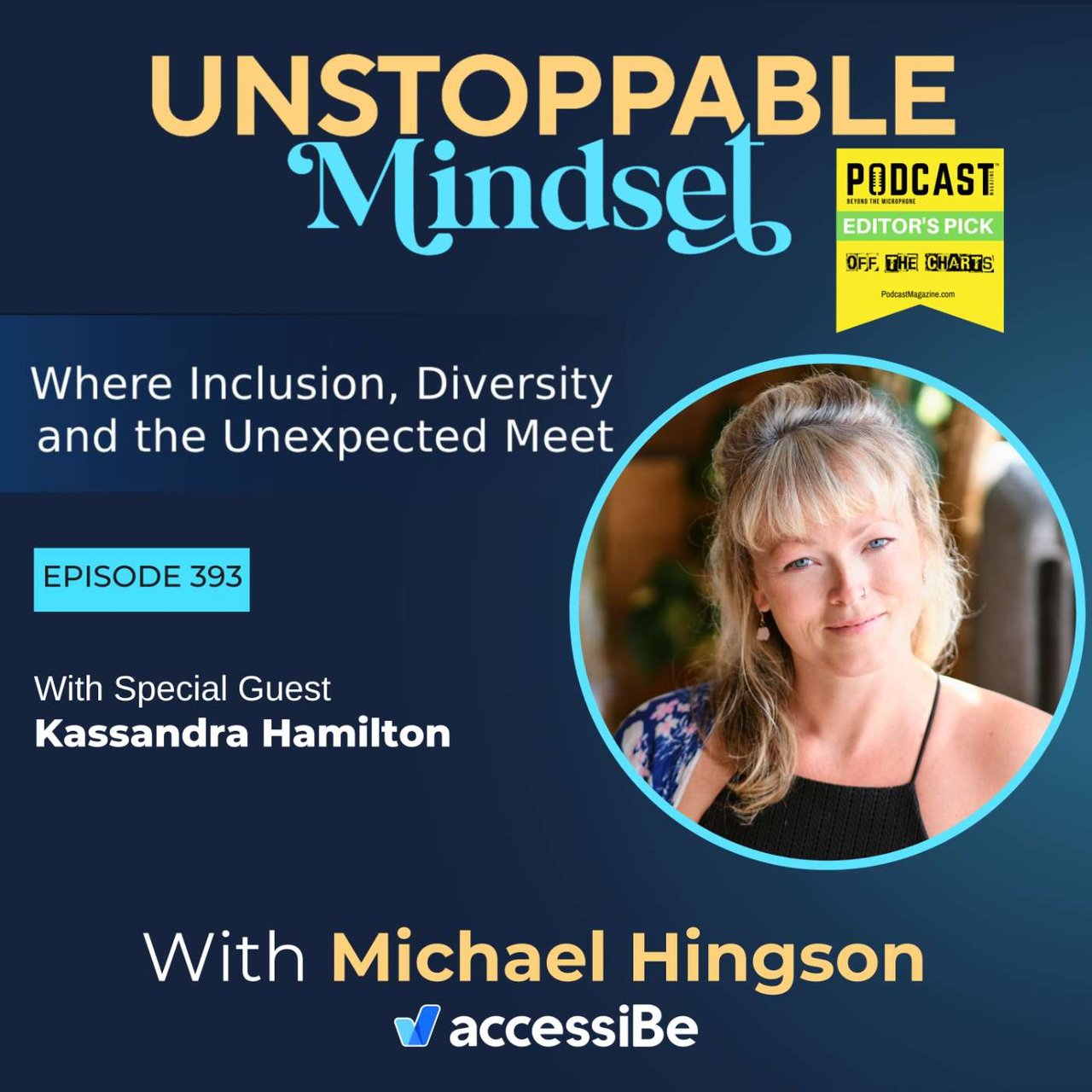
Episode 393 – Why Realigning from the Inside Out Creates Unstoppable Energy with Kassandra Hamilton
Burnout shows up quietly, and in this conversation, I think you will hear just how deeply it can shape a life. When I sat down with Kassandra Hamilton, she opened up about building a meaningful career in global and Indigenous health while struggling with exhaustion, anxiety, and the pressure to look like everything was fine. Her turning point came when she finally stopped long enough to ask what she truly needed.
Kassandra talks about people pleasing, giving her power away, and the inside out process she now teaches to help others realign their lives. We walk through the RAIN method, the importance of boundaries, and the small daily choices that help you rebuild trust in yourself. My hope is that you walk away feeling grounded, encouraged, and ready to take one step toward a more aligned and Unstoppable life.
Highlights:
01:12 – Learn how early purpose can quietly shape the path you follow.
02:51 – See how a wider view of global health reveals what truly drives burnout.
06:56 – Understand how systems and technology can add pressure when they overlook human needs.
12:50 – Learn how hidden emotions can surface when you slow down and pay attention.
17:37 – Explore how reclaiming your power shifts the way you respond to stress.
24:23 – Discover how emotional regulation tools help you move through difficult moments.
41:18 – Learn how small, steady changes rebuild energy and direction.
47:36 – Understand why real burnout recovery starts with alignment, not escape.
About the Guest:
Kassandra Hamilton is an alignment life coach, bestselling author in 3 categories, musician, healer, and facilitator. She is dedicated to helping others find inner alignment and live from the inside out, rather than in a burnout state or in autopilot mode. After completing a degree in biology and international development, and then completing a Masters of Science, she wanted to pursue a career in medicine. She has always wanted to be of service to others, and as a child she literally had dreams of holding her hands towards people and visualizing light being sent to them. only way it made sense in terms of a traditional career trajectory while she was in school was to pursue medicine.
After completing her Masters degree, she decided to work alongside doctors to see what their day to day was like and how they were creating a positive impact in their communities. What she actually saw was a lot of burnout, paperwork, and dissatisfied lives of people that were once passionate about medicine. She was working for Doctors of BC in Vancouver, with a high end office and apartment, when she collapsed one day in her apartment from an overwhelming sense of anxiety, burnout and grief. She had lost her dog, her boyfriend, and both her grandparents all within three months. On top of that, she was in a career that looked good on paper, but wasn’t actually fulfilling her purpose of being of service to others. She no longer wanted to pursue medicine and didn’t know how she got to a dead end if she had followed all the “right” steps according to society’s blueprint for success.
She spent the next few years really learning about her inner world and what her purpose in life was. She became dedicated to her own healing and coping with anxiety and burnout. For the next decade, she began working with First Nations across Canada. She witnessed and learned about the importance of looking at the whole person, from a spiritual, mental, emotional, and physical lens. Everything seemed to be connected. As someone with a science background, she had always been fascinated with the intricacies and magical elements of everything that comes together in one singular cell. Our emotions are energy in motion, and if they don’t move through, they get stuck. We decide if we allow our emotions to flow or not. Kassandra also realized how powerful our minds are. With one thought, we create a story. That story becomes our reality. With all of these realizations, she came to understand that we are literally magicians of our own realities. Kassandra has learned and experienced, time and time again, that health and happiness stems from our internal world first and is a combination of our mental, spiritual, physical, and emotional realms. Once we deal with our inner worlds and live in state of awareness over how we are operating in the world, we can project that version of ourselves out into the world to create positive change.
In a world that constantly pulls us outward – with notifications, expectations, distractions “The Magic of Realigning From the Inside Out” is about bringing us back home to ourselves. Through deeply personal storytelling, scientific insights, and soul-centres practiced, Kassandra invites readers to reconnect with their inner compass. This is a guidebook for anyone longing to move from autopilot to alignment and discovering what it truly means to live with intention, purpose, and clarity.
Because the answers aren’t out there, they HAVE to start from within. We weren’t meant to just get through the day. It is exhausting trying to fix and control everything “OUT THERE.” And the thing is, we have no control over what’s happening out there anyways, We were meant to thrive and share our gifts with the world. This is how positive ripple effects are made. This is Kassandra plans to leave the world a better place, and support others to do the same.
With the external chaos, political mess, climate change, and growing tensions worldwide, She decided it was time to start creating some positive changes.
She now has started a coaching practice committed to sharing her work with others, and her book compliments her work, outlining a 4-phase approach to moving from anxiety, fear, burnout, to living in alignment and inner power.
After a very successful book tour showcasing her bestseller (in 3 categories) “The Magic of Realigning From the Inside Out” – she is going on tour. But this isn’t just any book tour – it is centred around creating community connections. She will be doing wellness workshops and talks in local libraries, bookstores, and wellness venues around burnout prevention, boundaries, resilience, and authentic leadership, leveraging my book as a tool for this. She is currently in the planning stages and open to support in making this happen.
Kassandra is dedicated to sharing stories that inspire personal development and growth. She brings a unique perspective to storytelling, blending data-driven insights with narrative. With years of experience in health information management projects with First Nations communities in Canada, she has become fascinated with the power of sharing compelling stories through complex qualitative data. Her book is titled “The Magic of Realigning From the Inside Out” and is now available on Amazon and 50+ more platforms.
Outside of writing, she loves traveling, dancing, hiking, paddleboarding, and putting on community events that promote inner healing and connection. She also provides sound healing sessions, Ayurvedic Head Massage, and Bio-Energy Healing sessions at a local wellness establishment in her community. She volunteers at Connective Society as a restorative justice mentor for youth who are struggling with a lack of leadership or role models in their life.
Lastly, Kassandra is a singer/songwriter and a musician. You can find her playing at local open mics, hosting backyard community jam sessions, or at gigs around Vancouver Island. She put out an EP under the artist name “Kazz” in 2018 called “Reflections” and has released 4 singles under this title since. This year (2025), she started a new collaborative label with her partner who is a music producer, and they have released two songs under the artist name “Cyphyr & Myraky.”
Her mission is this: So many people believe the answers are "out there" and feel helpless in the current state of the world environmentally, politically, economically etc.
Instead of feeling helpless, paralyzed by fear, or living under the influence of external circumstance and chaos, we can create real change by first realigning from the inside out to reconnect with our inner power and creativity. Imagine a world where people took responsibility for their life, knew their purpose, and felt like they were living life in full alignment with this. Imagine what our communities would look like then?
Above all else, Kassandra wants to inspire others to create positive ripple effects out into the world.
Ways to connect with Kassandra**:**
Instagram: @kassandra hamilton
Facebook: Coaching with Kassandra
TikTok: coachingwithkassandra
LinkedIn: Kassandra Hamilton
Website: www.kassandrahamilton.com
Linktree with all my info: https://linktr.ee/kassandra.hamilton
Spotify: Under name "Kazz": https://open.spotify.com/artist/0gpUecr9VkVJMmVIyp1NFt?si=byM7VdL9QDeezl5-666XKQ&utm_medium=share&utm_source=linktree&nd=1&dlsi=9a801d5edc774e1d
Under name "Cyphyr & Myraky" – new collaborative label
Amazon Link to Book: https://a.co/d/2yWISSu
Book Trailer: https://www.youtube.com/watch?v=cDKW9ZNrsvA
Rogers TV Community News Story: https://www.youtube.com/watch?v=u0eOnQ2DAdg
Nanaimo News Bulletin Story: https://www.nanaimobulletin.com/local-news/nanaimo-health-and-life-coachs-new-book-guides-inner-alignment-8182386
About the Host:
Michael Hingson is a New York Times best-selling author, international lecturer, and Chief Vision Officer for accessiBe. Michael, blind since birth, survived the 9/11 attacks with the help of his guide dog Roselle. This story is the subject of his best-selling book, Thunder Dog.
Michael gives over 100 presentations around the world each year speaking to influential groups such as Exxon Mobile, AT&T, Federal Express, Scripps College, Rutgers University, Children’s Hospital, and the American Red Cross just to name a few. He is Ambassador for the National Braille Literacy Campaign for the National Federation of the Blind and also serves as Ambassador for the American Humane Association’s 2012 Hero Dog Awards.
https://www.facebook.com/michael.hingson.author.speaker/
https://www.youtube.com/user/mhingson
https://www.linkedin.com/in/michaelhingson/
accessiBe Links
https://www.youtube.com/c/accessiBe
https://www.linkedin.com/company/accessibe/mycompany/
https://www.facebook.com/accessibe/
Thanks for listening!
Thanks so much for listening to our podcast! If you enjoyed this episode and think that others could benefit from listening, please share it using the social media buttons on this page. Do you have some feedback or questions about this episode? Leave a comment in the section below!
Subscribe to the podcast
If you would like to get automatic updates of new podcast episodes, you can subscribe to the podcast on Apple Podcasts or Stitcher. You can subscribe in your favorite podcast app. You can also support our podcast through our tip jar https://tips.pinecast.com/jar/unstoppable-mindset .
Leave us an Apple Podcasts review
Ratings and reviews from our listeners are extremely valuable to us and greatly appreciated. They help our podcast rank higher on Apple Podcasts, which exposes our show to more awesome listeners like you. If you have a minute, please leave an honest review on Apple Podcasts.
Transcription Notes:
Michael Hingson 00:00
Access Cast and accessiBe Initiative presents Unstoppable Mindset. The podcast where inclusion, diversity and the unexpected meet. Hi, I’m Michael Hingson, Chief Vision Officer for accessiBe and the author of the number one New York Times bestselling book, Thunder dog, the story of a blind man, his guide dog and the triumph of trust. Thanks for joining me on my podcast as we explore our own blinding fears of inclusion unacceptance and our resistance to change. We will discover the idea that no matter the situation, or the people we encounter, our own fears, and prejudices often are our strongest barriers to moving forward. The unstoppable mindset podcast is sponsored by accessiBe, that’s a c c e s s i capital B e. Visit www.accessibe.com to learn how you can make your website accessible for persons with disabilities. And to help make the internet fully inclusive by the year 2025. Glad you dropped by we’re happy to meet you and to have you here with us.
Michael Hingson 01:21
Well, hi everyone. I want to welcome you to another episode of unstoppable mindset. We’re really glad that you’re here with us today. Our guest today is Kassandra Hamilton, from up in British Columbia, way, and she has, I think, a lot to talk about. She’s a coach. She talks about burnout and but also about her many talents. She sings, she’s a musician, and on top of everything else, she’s an author, and she just wrote a book that has just come out. So we’ve got lots to talk about, or she has lots to talk about, and we’ll talk about it with her. So, Kassandra, welcome to unstoppable mindset. We’re glad you’re here.
Kassandra Hamilton 02:08
Thanks for having me, Michael. I’m really grateful to be here today.
Michael Hingson 02:12
Well, I’m excited. There’s obviously a lot to talk about, I think so. Tell us a little bit about the early Cassandra growing up, and all the usual things. You know, you got to start at the beginning somewhere,
Kassandra Hamilton 02:22
absolutely, yeah, so as a kid, I mean, I’ve always been curious. My mom used to get very puzzled by me as a child, because I would always ask, like, who is God and how is the world made? And I just had all these questions. And it just never really stopped. When I was six, I had a vision of helping people and healing them with my hands, and I just saw this light between my hands and other people, and it was this recurring dream I kept having, and I didn’t understand it in the practical sense. So I pursued a very traditional, you know, career in medicine, because that’s what made sense to me, and the social conditions that we had in front of us, and that didn’t really pan out for me. I just it wasn’t resonating. I felt like the system was very rigid. And I just have always been fascinated with more of a holistic picture of someone you know, like their physical, emotional, spiritual selves, and so the just focusing on the physical alone just wasn’t cutting it for me. I knew there was so much more, and I was so curious about all of that. So yeah, I’ve gone through different sort of journeys on my path, and come back to a place of really wanting to be of service and share some of the tools and strategies that I’ve learned along the way.
Michael Hingson 03:47
Well, you started down the road of going into medicine, didn’t you? Mm, hmm. And what was your master’s in? Because I know you had your your master’s degree, and then you started working with doctors. What did you get your master’s degree in?
Kassandra Hamilton 04:02
Yeah, so I completed a master’s of science because it was in the stream of global health. And so I was really fascinated by the multifaceted aspect of that. And not just looking at physical impact in the world. We looked at, you know, political and economic, geographic indicators of health really gave me that sort of overall vision of what health looks like from from that bird’s eye view. And then I wanted to pursue medicine after that, because, again, I wanted to be of service to others, but I ended up working with doctors to see if that’s actually what I wanted to do, and I just saw the amount of burnout that doctors were experiencing and how 80% of their workload was paperwork.
Michael Hingson 04:56
And so what did. You do.
Kassandra Hamilton 05:02
So I left that work. I was there for two years, and it just I wasn’t buying it. So I left. I started my own company as a consultant, and realized that a lot of the issues I was seeing abroad, I actually we had a lot of gaps here in Canada, especially with our indigenous communities, the disparities there were just huge, and so I focused my energy for the last decade on working with indigenous communities and unlearning a lot of sort of colonial ways of doing things and really integrating the holistic health model that is presented from from that culture that I was working with, and it’s really, really been transformative and instrumental in the way that I approach health now,
Michael Hingson 05:51
well, I’m curious about something sort of off the wall. I appreciate what you’re saying about paperwork, and I’m sure there are all sorts of legalistic reasons why there has to be so much paperwork and so on in the medical world, especially when everybody’s so concerned about things like malpractice and all that. But do you think any of that has gotten any better? Or how has it changed as we are progressing more to a paperless or different kind of charting system where everything is done from a computer terminal. I’m spoiled. My doctors are with Kaiser Permanente, and everything is all done on wireless, or at least on non paper chart. Types of things that they’re just typing into the computer, actually, as as we’re communicating and we’re talking and I’m in visiting and so on, but everything is all done online. What do you think about that? Does that help any
Kassandra Hamilton 06:53
so very great question. So when we’re talking about accessibility, I’m going to say no, not for indigenous communities, at least here in Canada, I’ll speak from my experience, but things have gone digital, and actually what I was doing was working as a digital health consultant to bridge health gaps in digital systems. Because what was happening and what still happens is there’s systems that are quite siloed, and so a lot of health centers that are remote will be using paper still, or they’ll be using system for that and another system for this. And so there’s no wrap around, diligence around the client. And so there is this huge accessibility issue, which is what I’ve been working on for the last 10 years.
Michael Hingson 07:41
Well, do you think that as well? Hopefully you’ll see more paperless kinds of things go into play. But do you think in areas where the paper quantity has decreased, in the online or digital chart systems have come into play. Does that help burn out at all? Do you think again?
Kassandra Hamilton 08:08
You know what? It really depends. Like you’re you’re only as good as your as your system allows, and so if you haven’t allowed for inclusivity, and for example, a lot of the work that was funded in the first couple years that I was doing, there was no due diligence to figure out whether or not these remote areas even had internet. So without internet, they were pumping money into all of these systems that were super high tech, not culturally appropriate. A lot of elders don’t even own a computer, let alone a smartphone or anything like that, or have service. So it was there was a huge disconnect there, and so part of the work I’ve been doing is a lot of advocacy and helping government agencies understand the connecting pieces that are are instrumental in the success of digital health implementation. Yeah, well,
Michael Hingson 09:09
you know here, I know a fair amount about the whole digital chart system, because my sister in law was a critical care unit nurse at Kaiser, and then she managed several wards, and then she was tasked to be the head nurse for on the profit side, to help bring digital charts into Kaiser and and so I heard a lot about it from her and especially all the doctors who opposed it, just because they didn’t want any change. They wanted to just do things the way that they had always done them. Yeah. And so the result is that they kind of got dragged kicking and screaming into it a little bit. But now I hear people mostly praising the whole system because it makes their job a lot easier. On the other hand, the other thing that happens, though, is they the system crams more patients into a doctor’s appointment schedule every day, and so I’m not sure they’re always seeing as much of patients as they should of any given patient, but I guess they have more doctors that specialize in different things. So no matter what happens, the doctors can all see whatever there is to see, because everything is in the chart, right?
Kassandra Hamilton 10:41
And so Absolutely, in theory, and in urban areas where that works, you know, the digital systems are set up properly, absolutely. But in terms of going back to your question about burnout, if there’s one nurse for one community, and she’s a chart in five different, you know, systems that it’s actually going to add to her burnout at the end of the day. Yeah?
Michael Hingson 11:04
Well, yeah, and I appreciate that. I mean, so clearly, there’s still quite a disparity, but it does, it does sound like in areas where they’re able to truly bring digital charts and capturing information digitally into the system where, where that does exist, it can make people’s lives, doctors, lives and so on, a little bit easier, and maybe contribute a little bit less to burnout.
Kassandra Hamilton 11:34
Yeah, absolutely. And of course, that’s the hope, and that’s you know, why we continue to do the work to bring it into this, especially with AI too, like bringing more efficiency into the workplace, and it’s all part of it. So yes, absolutely there’s, there’s definitely some, some hope, and some, you know, leaner, leaner ways of doing things for a lot of people. So yeah, yeah.
Michael Hingson 12:01
I’ll hope it will continue to get better, and that the influence will expand so that the more rural areas and so on will be able to get the kinds of things that the more urban areas have. Now I live in an area that’s fairly urban, but we don’t have a Kaiser hospital up here. We have clinics, but we don’t have a hospital. And apparently there’s now, finally some movement toward making that happen. But it’s interesting, where we used to live, in Northern California. We lived in a very what was, although we weren’t, but was a rich County, and there were 200,000 people or so in the county, and there was a Kaiser hospital in the county. There was a Kaiser hospital about 30 miles away in San Francisco, and there were Kaiser hospitals going north, 1520, miles further north, in Petaluma. So there are a lot of hospitals, but we are in an area where there are over 400,000 people now, and there isn’t a Kaiser hospital here, and that just has always seemed kind of strange to me. And the response is, well, the doctors don’t want to move up here. I mean, there are all sorts of different reasons that are given, but it just seems strange. So if you really need to go to the hospital, they do have contracts that sort of work sometimes, or you have to go about 50 miles to get to the nearest actual Kaiser hospital, right? So it’s strange.
Kassandra Hamilton 13:38
It is strange. And there’s a lot of things. Who knows who made the last call on decision? Right? So, right, yeah.
Michael Hingson 13:48
Well, again, so the rumor goes they’re going to be building a hospital here, and I think that will be a good thing. So we’ll see. We’ll see how it goes. But you experienced burnout,
Kassandra Hamilton 14:00
didn’t you? I did? Yes, I tell us about that, if you would. Yeah, absolutely so when I was 27 and I went, that was
Michael Hingson 14:13
last year, right?
Kassandra Hamilton 14:14
Yes, thank you. It was 10 years ago, but on the outside, I was thriving. Michael, I was like, working for doctors of BC, I had an apartment on the ninth floor. I had an ocean view. I had the apartment downtown. I was, you know, dating. I was like, doing all these things. I was achieving, pushing and showing up. And inside I was running on empty, and I was very disconnected from my purpose, from myself, and that breakdown became eventually a breakthrough, but in the process, you know, I lost all my grandparents and my dog, and I didn’t have tools for dealing with my anxiety. Yeah, and social media sort of just amplified that sort of comparative feeling, and I just started to slow down and like really realign, and I realized how many people were living on autopilot and surviving instead of thriving. And that’s really when I wanted to become committed to helping others reclaim their purpose and their authenticity, and not just bounce back from burnout, but like rise into something greater, and like reconnect with themselves and their why of their purpose of being here. You know,
Michael Hingson 15:33
yeah, because you you thought you were thriving, but you really weren’t. Yeah, exactly which is, which is unfortunate, but still, those kinds of things happen. So what did you So, how did you go from experiencing burnout to moving forward and realigning? What? What did you learn? How did you discover it and what actually happened.
Kassandra Hamilton 16:01
So I, you know, I, for a long time, went through my own inward journey. And I, you know, I went to counseling, I sought other ways of healing, through energy work, I tried all the different tools and modalities, and I realized over time, it meant flipping the script, and most of us live from the outside in, and we’re chasing expectations and people pleasing, letting circumstances dictate our worth, and living from the inside out to me meant connecting with who I was and my values and and the truth of finding my like finding my purpose, and letting that be the driver, and that means having boundaries. It means speaking up when you’re when you’re scared or you have fear. I know you’ve done a lot of work with fear and how to leverage that for a more positive outcome, rather than letting it stop you. So in my life, that shift has really helped me stop outsourcing my power and allowed me to show up authentically in my work and my relationships and creativity, and that’s where my freedom and vitality really lives, and I really want to share that with others.
Michael Hingson 17:12
That’s interesting. Way that you put it, you’re outsourcing your power. What do you mean by that?
Kassandra Hamilton 17:18
I was giving my power away. I was waiting for someone else to approve of something that I did. I was showcasing my, you know, achievements, and that was how I attached value to my identity and who I was.
Michael Hingson 17:34
And of course, what that really meant is that you, as you said, it was all about people pleasing and so on. And how did you change all that?
Kassandra Hamilton 17:43
It wasn’t overnight, I’ll bet it wasn’t, yeah, and so I changed all that by getting curious and by going inside. And I have a four step process that I share in this book that I’ve now written. And the first step is to observe yourself, like, how are you showing up? What kind of patterns are coming up for you? And then starting to understand, like, why, where did those come from? And then starting to re tune that part of yourself, like, Okay, so that’s how I’m showing up. How do I want to show up? And how can I change my patterns, and how I react to things, to do that, and that’s how you start to, sort of like flip the narrative and limp from the inside out.
Michael Hingson 18:26
How do people do that? Because we’re, because we’re, I think we’re really trained to behave that way. We’re we’re trained to as, as you would put it, all too often, give your power away or outsource your power. And how do we change that mentality?
Kassandra Hamilton 18:48
Yeah, well, we have to first observe ourselves. We have to look at, you know, how are boundaries being used in your life? Or are they even there? Are you showing up for yourself as much as you’re showing up for other people? Are you being authentic in what really is, in alignment with your own values? Are you living on purpose? So these things are what we look at, and then I have tools and frameworks and questions to help people really start to observe themselves from an outside perspective and ask themselves, Is this really how I want to be living right now? Is this allowing me to live the life that I want?
Michael Hingson 19:34
Yeah, and is it, is it helping me grow Exactly? And that’s that’s a lot of the issue that that we face. I know, in my my book live like a guide dog that wrote was published last year. We we talk a lot about the fact that people need to learn, or hopefully will learn, how to be much more introspective and. And analyze what they do every day, and really put that analysis to work, to to learn. What am I afraid of? What is going on? Why am I worried about this? Because I don’t have any control over it and and people just don’t grow up feeling that way, because we don’t really teach people how to learn to control fear and how to be introspective, which is part of the problem, of course, right?
Kassandra Hamilton 20:27
Or even how to manage our emotions, right? Like emotion is energy in motion, and if we do not allow it to move through us, it gets stuck, and it shows up in our bodies as a physical ailment, yeah. And that’s the mind, body, spirit connection. That’s why physical, mental, emotional health is so important to look at as as a whole, not just in silo.
Michael Hingson 20:51
So how do you how do you teach people to take a different view than what we typically learned how to do well?
Kassandra Hamilton 21:01
So once we’ve observed what people what people are, how they’re operating, we then start to understand where it comes from. So a lot of people are programmed either by society or early childhood experiences, and then they are just operating on autopilot from those patterns. But they don’t know that. So once you start like, awareness is everything, and once you see something, you can’t unsee it. So at that point, it’s like, okay, how can we move from this place to where you want to be? And so I have a lot of tools for understanding and processing your emotions in real time. I have tools for understanding and managing nervous like your nervous system, I look at it from a science and health background as well as a spiritual background. So it’s like blending the tool to and understanding that healing isn’t just physical and mindfulness and slowing down and journaling and just taking the time to actually try and understand yourself.
Michael Hingson 22:03
So how has all of this changed how you live your life?
Kassandra Hamilton 22:08
Well, I since I started operating in a different way, I bought a house. I bought another house, about another house, I, you know, wrote a book. I changed careers. I am coaching people now I’m just like really living in my element, in my my full purpose, which is have this written on my wall that I want to help others rediscover their magic, so we can all fly together. So it’s really about spreading positive ripple effects in the world, you know, but starting at home and in our communities. And I believe that that inside out ripple effect is so much more powerful than anything we can do out there,
Michael Hingson 22:56
just so that we get it out there. What’s the title of the book?
Kassandra Hamilton 22:59
It’s called the magic of realigning from the inside out.
Michael Hingson 23:04
Since we, we talked about it, I figured we better get the title out there. Yeah, thank you. And there is a picture of the book cover and so on in the show notes. But I just wanted to make sure that you, you did tell people the title. Well, tell me, is there an incident or a moment where you realize that your work could really create change in someone’s life?
Kassandra Hamilton 23:32
Yeah, you know, that’s an interesting question. I’ve been asked that a few times, and the answer is that I just have a very strong morning practice where I journal. And throughout that journaling the last few years, I realized my process of integrating all of these tools and what it’s done for me, and it just became like again, me observing myself through the pages and recognizing that I you know, it was my responsibility to share this, this work that I had done with other people, and not from a place of of ego, but really from that place of wanting to share stories and experiences in hopes that it will inspire others to, you know, take the time to Get curious and courageous about their own lives.
Michael Hingson 24:22
Did you have any kind of an aha moment or a moment with anyone besides yourself that really caused you to realize, Oh, I’m really making a difference here. I’m really able to do this, and it makes a lot of sense to do what I’m doing.
Kassandra Hamilton 24:38
Well, it’s so funny, because informally, all of my friends will come to me for, you know, advice or coaching or reframing or whatever, and then eventually I was like, Man, I should get paid. And
Michael Hingson 24:53
they’re not your friends anymore, because now you’re charging them, right?
Kassandra Hamilton 24:58
So it’s something that I’ve. Always really wanted to do, and I’ve always been fascinated by people and how their brains work, and what their resistance to change is, including my own. And yeah, I guess I just sort of had this moment a few years ago when I was like, I want to really focus my time on and energy to help other people have these moments of insight, or aha moments, or realizing they can pivot and actually start creating what they want in their lives.
Michael Hingson 25:29
So what kind of tools do you use in your coaching process to help people do that?
Kassandra Hamilton 25:34
Yeah, I lean on a lot of work from Gabor Mate and Deepak Chopra. I use tools that I’ve learned through Tara Brock. So my favorite tool, actually, that I, that I use, and I, I encourage people to try, is rain. And so if I could leave one sort of tool for people here today, it would be rain. And rain stands for recognize, acknowledge or accept, investigate, and then nourish. And so anytime people are in an activated emotional state or a negative emotion, they can sit away from their current situations, whether it’s you go to the bathroom, or you sit alone for a few moments and you just recognize, okay, what is it that I’m feeling anxiety? Alright, we’ve named it. I recognize it. I’m accepting and acknowledging that I feel anxious. And then I is investigating, why do I feel anxious? What is the reason I feel anxious? And once you have figured out why, you can start to comfort yourself from a place of compassion, like it’s okay to feel this way, you know Michael, like emotions are just children that want to be seen and heard, and the more you shove them down, the more chaos ensues. So when you comfort those emotions and you understand them, they move through you, naturally, emotion energy in motion. That’s how we can assist ourselves in getting better at letting the emotions move through us.
Michael Hingson 27:08
Yeah, and something that comes to mind along that that same line is the whole issue that you’ve already talked about, some which is talking about what what you feel, whoever you are, and be willing to express emotions, be willing to be honest with yourself and with other people. And again, I just think that we so often are taught not to do that. It’s so unfortunate.
Kassandra Hamilton 27:36
Absolutely, absolutely, we’re not taught about anything. And I have a long list for the education curriculum, let me tell you, yeah, boundaries, you know, emotional regulation, emotional intelligence, yeah, reframing, Like there’s just so many things, so many things.
Michael Hingson 28:03
So you’ve, you’ve helped a lot of people, primarily, who do you do you coach? Who are your your typical clients? Or does it matter?
Kassandra Hamilton 28:14
So I typically coach people between ages 25 to 40, but I actually recently had a senior reach out to me after she found an article in the paper, and so I’m not excluding people from who I work with, but generally speaking, that’s sort of the age range is 25 to 45 people who maybe have reached a, you know, the career they thought they were always going to do and get there, and they’re like, this, isn’t it? This isn’t it for me, I’m burnt out. I’m tired. It’s not what I thought it was going to be. Or maybe they’re in a relationship and they’re stuck and feeling burnt out from that. So yeah, that’s the age group that I work in. Because regardless of what issue you’re working on, career, relationship, sense of self, these tools will help you pivot to really realign with your purpose.
Michael Hingson 29:03
So how do you help people go from being stuck to realigning and empowered
Kassandra Hamilton 29:10
through my four step process? So I don’t want to give too much away, but people will just need to read the book to find out.
Michael Hingson 29:19
Well, if you can describe maybe a little bit in general, just enough to Yeah.
Kassandra Hamilton 29:24
So just like I was saying before, like first getting really clear on how people are operating, so that’s the observed part, and then starting to understand themselves through the different patterns that are coming up on a weekly, daily basis. So it’s a lot of investigating and getting data in the first couple weeks, and then after that, we start to understand how to rewire things through different tools that I introduce, and we do it in small, manageable steps. My coaching programs are either six weeks or two. 12 weeks long. And throughout that process, we try things, and everyone’s different. So some tools stick, you know, more than others, and that’s okay. I just have a the approach that I’ve moved them through, and by the end, people are having amazing experiences and feeling like it’s life changing. And I have, you know, a lot of people reaching out with testimonials that I just, you know, really helped fuel me to continue this work.
Michael Hingson 30:26
Have you done this at all with children? I
Kassandra Hamilton 30:30
haven’t, but it’s so interesting that you asked that because I really love working with youth. I work in a restorative justice volunteer program here in my community, and it’s all about providing mentorship and being a role model for for youth that have maybe lost their way. And that’s definitely an area I’m curious about. It’s funny that you mentioned that.
Michael Hingson 30:55
Well, it just, you know, the the reality is that the earlier we can get people to think about this and change and go more toward the kind of processes that you promote, the better it would be. But I also realize that that’s a it’s a little bit different process with with youth, I’m sure, than it is with older, older people, adults and so on. But I was just curious if you had done any, or if you have any plans to maybe open any kind of programs more for youth to help them the same way, because clearly there are a lot of stuck youth out there.
Kassandra Hamilton 31:37
Yeah, very much so. And to be honest, like with the amount of technology and information overload and state of the world, like the amount of overwhelm and anxiety among youth right now is just through the charts, yeah, yeah. So definitely something that’s been on my mind, and I I’m very curious as to what sparked you to ask that, because it’s definitely something I’ve been exploring so
Michael Hingson 32:02
well, it just popped into my head that that’s an interesting thing to think about. And I would also think that the earlier we can and in this case, you can, reach children, the more open they probably are to listening to suggestions if you can establish a rapport with them. The reality is that that at a younger age, they’re not as locked in to ways of doing things as they might be later on, my wife was my late wife was a teacher for 10 years, then she loved teaching second and third graders, and she said even by the time you’re getting to fourth graders, they’re starting to be a little bit more rigid in their mindsets. And so the result was that it was harder sometimes to reach them. And I think that’s true, and I and I know that everything I’ve ever read or heard younger the child, the more open they are, and the more they’re able to learn. Like younger children are better able to learn more than one language and so on. And the earlier you can get to children, probably the better it would be all the way around.
Kassandra Hamilton 33:19
Absolutely, absolutely, yeah, yeah, definitely, an avian Avenue. I’ve been curious and exploring myself. So, yeah,
Michael Hingson 33:28
I wonder, I wonder what the techniques would be, because I’m sure that the techniques are going to be a little bit different than than what you face with older people,
Kassandra Hamilton 33:37
not necessarily like I think at any age, it’s good to learn about boundaries and why they’re important and understanding what we think they are versus what they actually are. And same with, you know, seeking validation outside of ourselves. Like I don’t think, I don’t think it’s quite I think it might be a little bit more stuck when we’re older, but I don’t think it’s very different. Yeah, I guess it just depends. Just depends.
Michael Hingson 34:07
Well, you talk a lot about boundaries, authenticity, authenticity and purpose. How does all that really go into your whole coaching program?
Kassandra Hamilton 34:22
Sorry? In what sense, like, can you ask that it may be a different a different way?
Michael Hingson 34:29
Well, um, you talk, you’ve you’ve mentioned boundaries a number of times, and authenticity and so on. So I’m just curious, how do they fit into what you do and what you want people to do okay?
Kassandra Hamilton 34:41
So people will come to me and they’re, you know, feeling burnt out. They’re constantly on. They’re juggling family relationships, digital overload. They don’t have space to breathe, let alone, you know, connect with themselves. And underneath that, there’s often a lot of people pleasing or fear. Not being enough or living by other people’s expectations, and so so many of them are feeling exhausted, unfulfilled, lack of worth when they come to me and they’re just like, I don’t know what else to do. And often, a misconception about burnout is that you need to work harder for things to get better, or you just need a small break to reset, and then you’re fine. But if we don’t change anything in that, in the mind, in the mindset, then people are just going to go back to the way, the way they were.
Michael Hingson 35:33
How would you really define burnout?
Kassandra Hamilton 35:38
I would define burnout as people feeling helpless, feeling like they’re living on autopilot, exhaustion, feeling like there’s just so much to manage and they don’t have the time or the energy again, feeling like they can’t or don’t know about boundaries, and yeah, they’re unfulfilled. They’re not feeling like themselves. And so what I would suggest for anyone who’s feeling that way is one of the things you can do is just just pause, create a moment of space for yourself, even if it’s just five minutes a day, ask yourself what you really need, and it sounds simple, but most of us are so disconnected or needs that we don’t even ask the question. But that pauses our power. It can be the doorway to listening to yourself again, and from there, you can start making choices that really align with what you actually want?
Michael Hingson 36:43
One of the things that I suggest, and we do it in live like a guide dog, and I suggest it to people whenever we get in these discussions, is, no matter what you say about not having time, you absolutely have time, especially worst case at the end of the day, when you’re starting to fall asleep, take the time to analyze yourself, take the time to become more introspective, because you have that time because you’re in bed for heaven’s sake. So you’re really not supposed to be doing anything else, or shouldn’t, but it’s a great time to start to think about yourself, and I think that’s a great time to deal with all the things that you’re talking about here as well.
Kassandra Hamilton 37:20
Oh yeah, absolutely, yeah. And people have time for what they prioritize. That’s that’s the truth. And whether that’s something people want to accept, it’s absolutely the truth. You will make time for the things that are important to you.
Michael Hingson 37:35
Yeah, well, and that’s what it really comes down to does, isn’t it that you’re always going to make time for the things that you find are important to you, and the reality is that you’ll be able to progress when you discover that some of the things that are important to you are the kinds of things that we’re talking about here that will avoid burnout or get you away From that absolutely we just have to really neck us back to boundaries and authenticity and purpose. It just gets back to knowing what you really need, and ultimately, no one can know that better than you about yourself.
Kassandra Hamilton 38:16
Absolutely, we have to reconnect to what matters and build the life that gives energy instead of only draining it.
Michael Hingson 38:23
Yeah, and we can, we can do that, but we do need to take the time to make that happen, and that’s why I really suggest do it at the end of the day. It’s quiet and or you can make it quiet, and you can really learn by doing that you don’t have to watch TV until an hour after you’ve fallen asleep, and then you wake up and discover the TV’s on. You can take the time to become a little bit more introspective and learn more about yourself that way. And that’s exactly what will happen if you really think about it
Kassandra Hamilton 38:55
100% and you know, at my book launch, people were asking, like, how did you write a book, and it was like, it’s not it’s not hard in the sense that it’s hard, it’s hard because you have to show up every day. But that consistency, whether it’s five minutes or an hour, like the consistency is everything. So showing up for yourself in small ways or whatever feels manageable at first, will naturally give you more energy to wake up early and give yourself more time. You know, it’s just happens that way.
Michael Hingson 39:25
Yeah, yeah. Well, I agree. What’s your favorite tool that you use with clients?
Kassandra Hamilton 39:31
So it would be the one I shared with you earlier rain. It has been very instrumental for people in transforming how long it takes them to go from from a place of fear or anxiety or resentment to just processing it and being neutral. And it’s amazing.
Michael Hingson 39:53
And again, just to reiterate, it rain stands for,
Kassandra Hamilton 39:57
recognize, accept or acknowledge. Manage, investigate and nourish,
Michael Hingson 40:05
that’s cheating. You get both both spellings of rain in there. That’s that works, but it makes perfect sense and and I’m assuming that you’ve felt you’ve had pretty good success with people. Have you had anyone that just resists, even though they come to you and they say, Oh, I’m burned out and all that, but you start to work with them and they just resist? Or do you find that you’re able to usually break through?
Kassandra Hamilton 40:35
So it’s funny, because a lot of people that come to me are very resistant to it, because of the nature of burnout, where people feel like don’t have the time or the energy right at the beginning, a lot of people are very resistant, and they say so in their testimonials. No, at first I felt resistant, but then I didn’t know that these things were actually going to give me exactly what I what I needed. So I’ve worked with a couple nurses. I worked with a woman who was managing, like, working four jobs, and she was super burnt out. But eventually, probably by like two or three weeks in, people are starting to feel the differences, and they’re, they’re all in. So yeah, it does take a bit to get them there, but once they’re there, they’re they’re flying so,
Michael Hingson 41:22
yeah, oh, that’s that is so really cool, because you’re able to break through and get people to do exactly what we’ve been talking about, which is so important to do,
Kassandra Hamilton 41:34
yeah, yeah. And you know the moments for me that just feel like, Oh, this is the work I meant to do, is seeing someone go from that place of burnout or defeat because they’re working a job they don’t enjoy to starting their own business that’s leveraging their creativity and their passion, or they’ve repaired a relationship, or they’re finally feeling confident in themselves like there’s No better gift to me than to see that change in somebody.
Michael Hingson 42:06
What are some of the most common struggles that you see in people? I know we’ve probably talked a lot about it, but you know, it’s good to summarize. But what are some of the kind of the most common struggles that you find in people? And why do you think that people are experiencing so much burnout? And I’m assuming that those two are related,
Kassandra Hamilton 42:27
yeah, yeah. So, okay, so if we were talking about career, people that are managing a career that is very demanding, and that is all they do, and they have no energy for time like for things outside of work. What they say is that they’re feeling numb, or they’re living on autopilot, or they don’t recognize themselves anymore. Another shared that she was really scared of leaving because of a financial aspect. And so I think at that point, you just start to flip the narrative and ask, well, what are you sacrificing by staying right? So like, maybe we need to get a part time job while we’re exploring our creativity and building a new business for ourselves, but it’s 100% possible, and these programs are not meant to make these drastic changes overnight. They’re small, incremental, consistent changes that over time bring you to a place of alignment with what you actually want to create in life. Do you
Michael Hingson 43:34
find that there are some people who feel I can’t stay here, I’ve got to leave or this boss isn’t good, or whatever, when, in reality, it’s it’s something different, and that a mindset shift makes them discover that they really are in a good well, they’re in a good position, or they have a good career, or whatever, but their perspective has just been off.
Kassandra Hamilton 43:56
Yeah, absolutely. So someone said something to me the other day that it stuck with me at the time, but it was something like, If you can’t, if you can’t get out of it, you better get into it. Yeah, that’s a good point. It’s like, yeah, sometimes it’s just with how you’re showing up for yourself and for the people around you. And that’s the shift that needs to happen. So it’s not necessarily about leaving a job. Thank you for bringing that up. It is about changing your life from the inside, and a huge part of that is mindset and the energy that you’re bringing to a situation. Because how you do one thing is how you do everything. So, yeah,
Michael Hingson 44:41
it’s it’s like, well, one of the things that I constantly tell people is there are a lot of times that something occurs to you or that you’re involved with you have no control over, because you’re not the one that that did it, or you’re not the one that directly made this happen. And but you always have the choice of how you deal with whatever happens. So even if you don’t have any direct influence over something occurring, you have always the opportunity to determine how you’re going to deal with it. And that’s always something that I think is so important for people to analyze and think about. But I think all too many people don’t
Kassandra Hamilton 45:21
absolutely the power is in our pause. And that’s something I tell people all the time, the power is in your pause. Slow down, take a second, don’t respond right away. And then come from a place of power, and you know that it changes everything.
Michael Hingson 45:38
Well, the reality is that the more of that that you do, the more you pause, the more you think about it. The fact is, the quicker, over time, you’ll be able to make a decision, because you’re teaching yourself how to do that
Kassandra Hamilton 45:54
truly. Yep.
Michael Hingson 45:56
And so for a while, you may not be able to or you you are not confident enough to be able to make a decision right away, which is fine, you should pause. But the fact of the matter is, I think what I really describe it as, and I think it’s so true, is you need to learn to listen to your inner voice, because your inner voice is going to tell you what you need to do. And you just need to really learn to focus on that, but we don’t. We always say, Oh, that’s too easy. That can’t be the right answer when it really is.
Kassandra Hamilton 46:26
It really is. And so again, that pause is also about space, right? So when I feel triggered by something, I will take the space to let myself come back down from that and then ask myself what I really want, or again, coming back to boundaries, if someone asks me if I want to do something, and I’m a very social person, and I love connection, so right away, I want to say yes, I’ll, you know, do that thing with you. Now I have a really beautiful way to still show that it’s like something I want to partake in, but honor myself as well. By saying I love this idea, I need a little bit of time to figure out if I can fully commit to this, and I’ll get back to you at this time so it shows integrity, not only to myself, but to to that person as well, and showing up in a way that it like, if I have capacity to do that, then I will, yeah.
Michael Hingson 47:25
Well, if somebody listening to this kind of feels unfulfilled or stuck exhausted, what’s the very first step that you would suggest that they take?
Kassandra Hamilton 47:37
Just like I was saying, just take a pause.
Michael Hingson 47:40
I knew you were going to
Kassandra Hamilton 47:41
say that create a moment of space. Ask yourself, what’s really going on and what you really want, and then ask yourself if your actions are all the choices that you’re about to make align with that, yeah.
Michael Hingson 47:56
And the reason I asked the question was, was really just to get you to reiterate that and to get people to hear it again, because we have to really come together in our own minds and decide what we want to do, and we shouldn’t have knee jerk reactions. There’s no need to do that, if we think about it and really take the time to ponder what makes the most sense to do. Can we’ll get the right answers if we work at it
Kassandra Hamilton 48:22
100% you just have to put in a little bit of curiosity and time to figure it out. Yeah, yeah, absolutely.
Michael Hingson 48:33
What do you think is one of the greatest misunderstandings about burnout and what is the truth that you really wish more people knew?
Kassandra Hamilton 48:46
People think burnout is just about being tired or needing a vacation, but it’s so much deeper than that. And you know, it’s a sign that we’ve been living out of alignment with ourselves, and that rest alone isn’t going to fix it real, real recovery is is coming from changing the way that we live and setting boundaries and reconnecting with what matters and building a life that gives energy instead of strain.
Michael Hingson 49:16
Yeah, again, it gets back to that authenticity thing.
Kassandra Hamilton 49:19
Yep, that thing, yeah.
Michael Hingson 49:26
What are some of the biggest transformations that you’ve seen from your clients that you’re really pleased about?
Kassandra Hamilton 49:33
I’ve seen clients go from anxious and depleted to, like I said, starting businesses that they love. And that wasn’t even something that we worked on together, it was like just a few tweaks, you know, simple but not easy, shifts that they made. And then I get emails or comments about how they’re starting businesses that they love, and they’re full time booked in that so like that. That’s been a big transformation. Question for a few of my clients. One woman was trying to find a relationship, and she had tried everything, and from all different angles, and it wasn’t working, and truthfully, she needed to come back to herself and align with herself, and when she did that, you know, nine months later, she found the love of her life, and one client said she stopped feeling numb for the first time in years. Another shared that she actually laughed and felt joy again. And these transformations are powerful because they’re not just surface change or changes. They’re they’re life changing shifts in how people see themselves and what they what they feel like they can create in the world.
Michael Hingson 50:46
And ultimately, isn’t most of this transformation or shift really a change in one’s mindset.
Kassandra Hamilton 50:54
Yes, it is mindset, and it is also taking the time, taking the time, having the courage and having awareness of how we are operating in our daily lives, and why, yeah, and then shifting that.
Michael Hingson 51:12
Well, tell us all about the book. When did it launch, and what’s happened, and what do you see coming down the line for it and so on? Yes, I know you have a lot to talk about, so tell us.
Kassandra Hamilton 51:27
So the magic of realigning from the inside out is very much in line with what I coach about, which is about bringing us back home to ourselves. And I share a lot of personal storytelling and scientific connections and soulful practices that I’ve tried that have worked really well for me, and I really invite readers to reconnect with with themselves. So it’s sort of like a guidebook like the first the first half of the book is a lot of stories, the second half is more tools and strategies. And overall, it’s the idea that, you know, the answers aren’t out there. They have to start within. And we weren’t meant to just get through the day. It’s exhausting to try to fix and control everything out there. The thing is, we have no control over what’s happening out there anyways, and so we have our one wild and precious life, and it’s like, what are we going to do with that, especially in a world that’s constantly pulling us outward with notifications and expectations and distractions? Yeah, I really believe this is how we show up to make a positive difference in the world by working on ourselves and spreading that upward.
Michael Hingson 52:40
So when did the book launch?
Kassandra Hamilton 52:43
August 21 was my book launch here on Vancouver Island, and I’m actually organizing a little book tour. Yeah, across the province here. So yeah, that’s stay tuned. It’ll be next month. I think so.
Michael Hingson 53:01
Have you had any kind of book tours, or what kind of publicity Have you had so far for the book?
Kassandra Hamilton 53:06
So I was working with a publicist, which was very new to me, and I was able to connect with some press. So a couple newspapers came to my book launch. There was, I think it was like 50 people that showed up, and the mayor came to give a speech, and he wants to meet with me for lunch next week and talk more about what I could do with the book, which is great, because I really think I can use it as a tool for helping in my own community and maybe even offering organizations some opportunities to explore strategies to get their their employees out of burnout. Yeah? So that’s kind of what’s happened so far, and a lot of bookstores have taken it up. So I’ve got all the local bookstores here. Have it. It’s not available on Amazon, yeah, and it’s actually a bestseller. I reached bestseller status in three categories. What categories, personal development, personal growth, and I think anxiety was the third one I have to look back at it.
Michael Hingson 54:14
Well, definitely congratulations are in order for doing that. Though. Thank you. Thank you. So that’s that is definitely kind of cool to to have that kind of situation and that kind of status happening with the book. It makes it very exciting and certainly gratifying in so many ways. When did you start coaching? Did you when did you actually start your company?
Kassandra Hamilton 54:37
So I started coaching. Let’s see two, two, no, a year and a half ago. So honestly, formally, not that long, but it’s already just something I’m so passionate about and getting more and more positive feedback on. So yeah, I guess in the grand scheme of things, I’m just getting started.
Michael Hingson 54:59
Well, that’s fair. That’s fine. Yeah, we, we think you’re going to go far at least. I think you’re going to go quite a, quite a distance with all of this. Do you just coach people directly, one on one? Do you do virtual coaching? Do you coach outside of British Columbia and all that?
Kassandra Hamilton 55:18
Yeah, you know, I mostly work virtually, because then I can be accessible to more people. So that’s how I actually prefer to work, is virtually, but I’m open to, you know, meeting people where they’re at and however they want to communicate. So I’ve been doing phone calls with with one person and then zoom with another, and if people do want to do in person, I’m open to it. It’s just a little bit more restrictive in terms of reach. But I’m also going to be doing some wellness workshops and talks around these tools and strategies I’ve learned, and using my book as a tool as I go through the province next month. So it’s not just going to be about the book. It’s going to be presenting and giving workshops and talks around this work, and then presenting my book as a tool to use in in helping people get back to a place of alignment and energy again.
Michael Hingson 56:20
Well, on your on your website, we haven’t talked about that yet, but on your website, do you have any videos of talks or anything like that that you’ve done?
Kassandra Hamilton 56:31
Not of any talks. I think my first one, to be honest with you, is, was at the book launch, but it went so well that I’m just sort of, I’m I’m adding fuel to that fire, you know, and I’m just gonna keep going, yeah. So I haven’t done any talks beyond that one yet, but I have some testimonials and things on my website. So those are the videos that are there.
Michael Hingson 56:55
Well, for people who are listening to this today, who feel like they want to do. So, how can they reach out to you and connect with you, and what? What happens?
Kassandra Hamilton 57:05
Yeah, so the best way is to reach out to me through my website or my I have a link tree link that I think I might have sent you, Michael, but it has all my different links for working on with coaching or reaching out in different ways and contact information. So link tree, Instagram are my main ones, but also obviously email and my website. So what is your website? It’s www, dot Kassandra with a K Hamilton, which is my last name.com,
Michael Hingson 57:40
so that’s easy. Www, dot Kassandra Hamilton com,
Kassandra Hamilton 57:44
yeah, and on Instagram, it’s at Kassandra with a K underscore Hamilton, so
Michael Hingson 57:50
Okay, yeah, have you? Have you done much with LinkedIn?
Kassandra Hamilton 57:55
I have, yeah, I also have LinkedIn, yep. And I have Tiktok, and I have Facebook,
Michael Hingson 58:00
all the things, all the different suspects, all the usual suspects, yes, yeah. Well, that is, you know, that is really pretty cool. I hope that people will reach out, because you’ve off, you’ve clearly offered a lot of very useful and relevant information. And I think that it’s extremely important that people take it to heart, and I hope that maybe we’re going to be able to have contributed to your getting some more people in the business too.
Kassandra Hamilton 58:30
I really appreciate that, Michael and I know you’ve done so much work with people as well, and inspired others, you know, astronomically. So I really appreciate and feel grateful for the time that you’ve given me today.
Michael Hingson 58:46
Well, this has been a lot of fun, and we’ll have to do it again. You’ll have to come on and some point in the future and let us know how things are going and how the book is doing, and how everything else is happening. But I, but I really do value the fact that you’ve spent so much time with us today.
Kassandra Hamilton 59:03
Thank you so much. At least we’re in the
Michael Hingson 59:06
same time zone. That helps. Yes, that’s true. Well, Kassandra, I want to thank you for being here, and I want to thank all of you out there for listening to us and being with us and watching us, whichever you do. I’d love to hear from you as well. I’d like to get your thoughts and your opinions. Please reach out to me. At Michael H i, that’s m, I, C, H, A, E, L, H, I, at accessibe, A, C, C, E, S, S, i, b, e.com, I’d like to get your thoughts. Like to know what you thought of today’s episode, wherever you are experiencing the podcast, please give us a five star review. We value your reviews highly, and we would really appreciate you giving us reviews of this episode and the podcast in general, and for anyone out there, including you, Kassandra, who might know of anyone else who ought to be a guest on unstoppable. Mindset and tell their own story. Please reach out. Let us. Let us know. Email me again. Michael H i@accessibe.com love to hear from you. You can also go to our website, which is www dot Michael hingson.com/podcast, so that’s m, I C, H, A, E, L, H, I N, G, s, o n.com/podcast, we’d love to hear from you. So whatever you do, we really appreciate you being a part of us today, and we we value very much all your time. So Kassandra again, thanks very much. This has been cool.
Kassandra Hamilton 1:00:37
Thanks, Michael.
Michael Hingson 1:00:44
You have been listening to the Unstoppable Mindset podcast. Thanks for dropping by. I hope that you’ll join us again next week, and in future weeks for upcoming episodes. To subscribe to our podcast and to learn about upcoming episodes, please visit www dot Michael hingson.com slash podcast. Michael Hingson is spelled m i c h a e l h i n g s o n. While you’re on the site., please use the form there to recommend people who we ought to interview in upcoming editions of the show. And also, we ask you and urge you to invite your friends to join us in the future. If you know of any one or any organization needing a speaker for an event, please email me at speaker at Michael hingson.com. I appreciate it very much. To learn more about the concept of blinded by fear, please visit www dot Michael hingson.com forward slash blinded by fear and while you’re there, feel free to pick up a copy of my free eBook entitled blinded by fear. The unstoppable mindset podcast is provided by access cast an initiative of accessiBe and is sponsored by accessiBe. Please visit www.accessibe.com . AccessiBe is spelled a c c e s s i b e. There you can learn all about how you can make your website inclusive for all persons with disabilities and how you can help make the internet fully inclusive by 2025. Thanks again for Listening. Please come back and visit us again next week.


 Facebook
 Twitter
 Youtube
 Linkedin