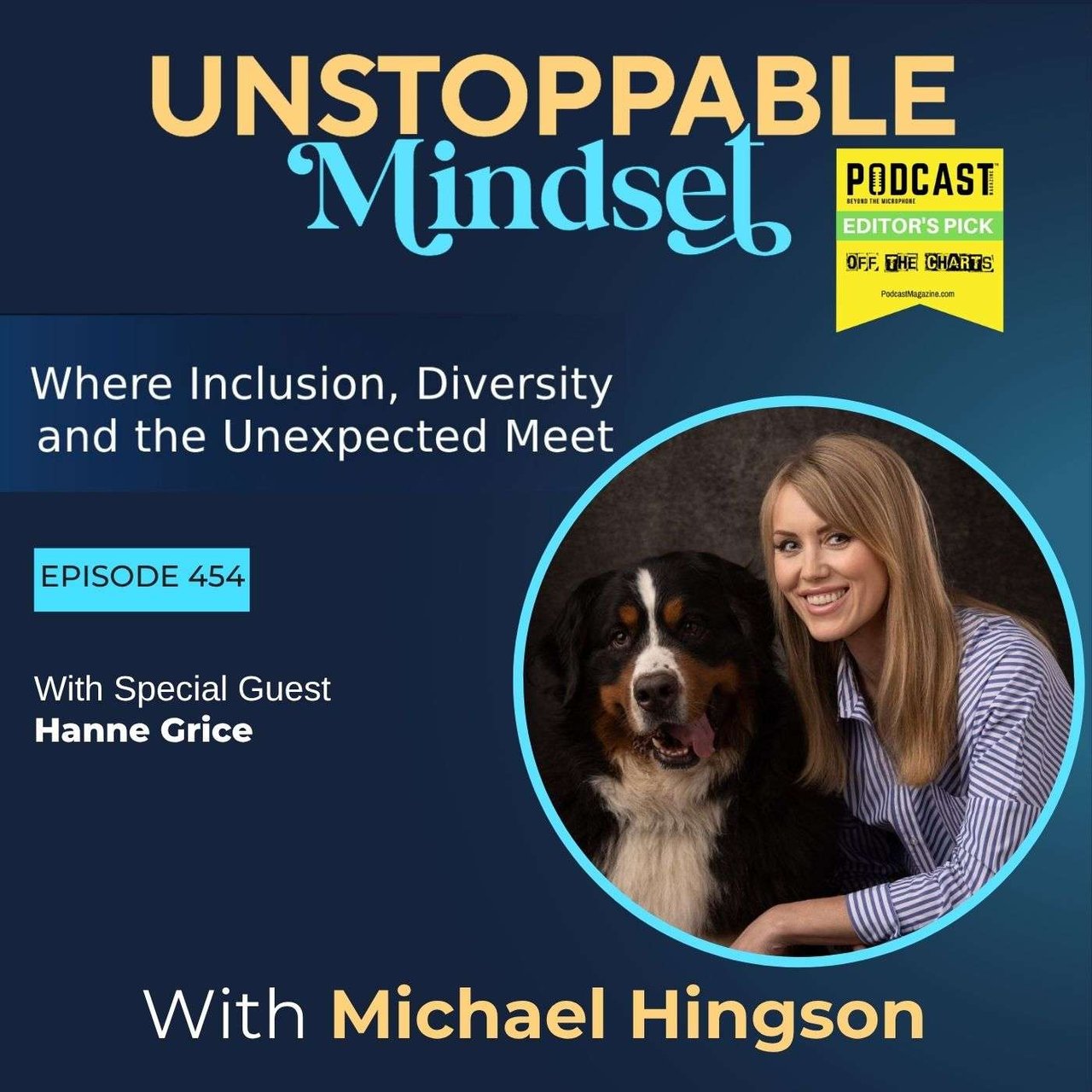
Episode 454 – The Truth About Dog Behavior That Most Owners Miss with Hanne Grice
Every animal is telling you something. The real question is whether you’re paying attention.
I sit down with animal behavior expert Hanne Grice to explore what our pets reveal about trust, stress, communication, and even ourselves. Drawing on nearly 20 years of experience, Hanne explains why behavior is never random, why outdated dominance theories continue to harm animals, and how curiosity leads to better relationships with both pets and people. We also discuss guide dogs, emotional regulation, grief, parenting with dogs, and the science behind building trust through predictability and choice. I believe you’ll find this conversation valuable whether you share your life with animals or simply want to become a better leader, communicator, and observer of those around you
Highlights:
05:47 – The biggest breakthrough in animal behavior starts with changing the human.
09:35 – A common belief about dog dominance is challenged by modern science.
20:34 – Jane Goodall’s work transformed how we understand animal emotions and personalities.
31:02 – Hidden medical issues often explain behaviors owners mistake for disobedience.
45:14 – Giving animals more choice can reduce stress and strengthen trust.
58:21 – Remarkable stories show how animals have influenced history in unexpected ways.
About the Guest:
Hanne Grice is a UK Clinical Animal Behaviourist, Certified Trainer, and award-winning educator who specialises in the science of human–animal relationships. She founded Hanne Grice Pet Training and Behaviour in 2006 and has supported thousands of families across dogs, cats, and small companion animals. Her work centres on evidence informed welfare, behaviour change, and practical strategies that help people and their animals nurture stable, healthy relationships.
Alongside clinical practice, Hanne lectures at the postgraduate level in applied animal behaviour, human–animal interactions, and the psychology that shapes how people understand and interact with their pets. She previously served on the Board of the UK’s Animal Behaviour and Training Council. When her tenure concluded in July 2025, she was appointed an Honorary Individual Member in recognition of her outstanding contribution to the charity’s mission to raise and protect professional standards.
Hanne is known for making science accessible. Her “How Does…” series explores everyday behaviour across species, and her “Animals in History” films examine the remarkable roles animals have played across cultures and time. She is the author of Playing with Your Dog (2010), a practical guide to enriching the lives of companion animals through evidence-informed play. Her research includes studies on dog–owner relationships during pregnancy and early parenthood, as well as ongoing work on behaviour change techniques for animal professionals.
She continues to develop tools that bring together behavioural science, practical welfare, and effective communication, helping owners and practitioners create environments where animals feel safe, understood, and able to thrive.
Ways to connect with Hanne**:**
Hanne Grice YouTube: Hanne Grice Pet Training & Behaviour – YouTube
Facebook: Hanne Grice Pet Training and Behaviour
Instagram: Hanne Grice on Instagram
LinkedIn: Hanne Grice | LinkedIn
TikTok: Hanne Grice (@hannegrice) | TikTok
https://youtube.com/playlist?list=PLOf6YEUpLhiktobqDFUSrjuXKBQUW_xyz&si=T9593esdANzVVYoM
https://youtube.com/playlist?list=PLOf6YEUpLhik4U80OJWUMHd5JwbDNZbwd&si=atOLyb_foY_7AVjs
About the Host:
Michael Hingson is a New York Times best-selling author, international lecturer, and Chief Vision Officer for accessiBe. Michael, blind since birth, survived the 9/11 attacks with the help of his guide dog Roselle. This story is the subject of his best-selling book, Thunder Dog.
Michael gives over 100 presentations around the world each year speaking to influential groups such as Exxon Mobile, AT&T, Federal Express, Scripps College, Rutgers University, Children’s Hospital, and the American Red Cross just to name a few. He is Ambassador for the National Braille Literacy Campaign for the National Federation of the Blind and also serves as Ambassador for the American Humane Association’s 2012 Hero Dog Awards.
https://www.facebook.com/michael.hingson.author.speaker/
https://www.youtube.com/user/mhingson
https://www.linkedin.com/in/michaelhingson/
Thanks for listening!
Thanks so much for listening to our podcast! If you enjoyed this episode and think that others could benefit from listening, please share it using the social media buttons on this page. Do you have some feedback or questions about this episode? Leave a comment in the section below!
Subscribe to the podcast
If you would like to get automatic updates of new podcast episodes, you can subscribe to the podcast on Apple Podcasts or Stitcher. You can subscribe in your favorite podcast app. You can also support our podcast through our tip jar https://tips.pinecast.com/jar/unstoppable-mindset .
Leave us an Apple Podcasts review
Ratings and reviews from our listeners are extremely valuable to us and greatly appreciated. They help our podcast rank higher on Apple Podcasts, which exposes our show to more awesome listeners like you. If you have a minute, please leave an honest review on Apple Podcasts.
Transcription Notes:
Michael Hingson 00:03
One of the biggest things holding you back isn’t what’s in front of you, but rather what you believe. Welcome to Unstoppable Mindset, where inclusion, diversity, and the unexpected meet. I’m your host, Michael Hingson, speaker, author, and advocate for inclusion and possibilities. This podcast explores how the beliefs we carry shape the way we live, lead, and connect with others. Each week, I talk with people who challenge assumptions, face adversity head on, and show what’s possible when we choose curiosity over fear. Together we focus on mindset, resilience, and the small shifts that lead to meaningful change. Let’s get started. Hi everyone, I am Mike Hingson, or you can call me Michael Hingson, just to make sure you get the Hingson part right. I am the host of Unstoppable Mindset, and today we get to chat with Hanne Grice from over in the well, across the pond, shall we say. So it’s later in the evening there, and she was just telling me that her children celebrate Christmas tomorrow because they also have another Christmas to celebrate on Thursday, so I might be jealous. It is being recorded by the way two days before Christmas in 2025 and we’re looking forward to it. Hannah is an animal behavior, she’s an expert in all of that. She’s done a program called How Does, which I’m interested to learn more about. She is also founded other organizations dealing with training, I think, probably more humans than pets, but all about pet training and developing relationships. Just before we came on, we were talking about a couple of our kiddies, and I should tell you, Hanne, I had a guide dog, my second guide dog, Holland, who was a golden retriever, lived 15 years, so he lived a long time, and was actually three weeks from retirement when he collapsed, and I think had a stroke and a heart attack, and the vet said we could bring him back, but he wouldn’t have a good quality of life, so, but we were only without a guide dog for three weeks, but anyway, with all that aside, Welcome to Unstoppable Mindset. We’re glad you’re here.
Hanne Grice 02:34
Thank you so much for having me. It’s an honor, and I’m sorry to hear about Holland. So, thank you for sharing that.
Michael Hingson 02:42
Well, here’s a wonderful puppy dog, and now we have Alamo, who will be 10 years old on the 14th of May, and he will have been a guide dog for me for eight years on the 24th of February, and that’s especially interesting because the 24th of February is my birthday, so I regard Alamo as a wonderful birthday present, which is kind of cool.
Speaker 1 03:17
That is cool. And how long, Michael, would you typically have a guide dog for when do they typically retire.
Michael Hingson 03:24
Typically it’s an average thing. It really is all a question of how the guide dog is doing, and so on, because it’s a very stressful job, but it’s also up to me to keep the stress as low as possible. But typically it’s, it’s six to eight years, and I expect Alamo to work and be around for quite a while, yet he’s just doing really well and isn’t showing much age, and I’m happy with that. And then Stitch is going to be 16 in January, so we guess we rescued her back in 2015 and and so she’s she’s been around, and the two get along pretty well together. They don’t chase each other or anything like that, but, but they do communicate, and they talk, and they touch noses, and all that. And every so often, Stitch steals Alamos bed, and poor Alamo doesn’t know what to do about it, because Stitch has claws, and he knows it. So he just goes and finds another place to collapse until she leaves.
Speaker 1 04:20
Yeah, cats and dogs, they find a way, but two of the species that I work very closely with, so yeah, and a testament to the quality and type of relationship that you have with them, that they’re aging so well. So that’s great to hear.
Michael Hingson 04:36
One of the things that I insist on when I’m having to get a new guide dog, which I don’t anticipate doing for a long time yet, but one of the things that I insist is that any guide dog I get has to have been raised around cats and get along with cats. I’ve seen a couple of guide dogs that are cat haters, and I would never want that kind of thing, especially when it’s such an. Easy distraction when that happens.
Speaker 1 05:02
Yeah, yeah, I can’t imagine what it’d be like if suddenly you’re finding yourself careering down the street, right? My dog was chasing the neighbor’s cat, not good, not good for any of the animals or human involved. So, yeah,
Michael Hingson 05:15
my fourth guide dog, Lynn, loved to chase rabbits, now not out of any kind of meanness or anything like that. She just wanted friends, and she loved to visit my first guide dog, Squire, when we were in Boy Scouts, and went to a camp one on a camping trip one weekend. Actually, caught a road runner, and we discovered that the road runner had a broken leg, but we fixed it, and the road runner took off, but again he just wanted to talk. He never hated any animal, and you know, none of my guide dogs have ever done anything, except they’ve never known a stranger. Everyone is a friend to them, people in and animals, which is great,
Speaker 1 05:58
and that’s what I love about my job, Michael, because I am, and you said at the start I’m working with animals, but predominantly it’s the humans that engage my services, it’s the humans that are looking for help and support with their animals, and so when any of my students or young and aspiring clinical behaviorists or trainers say to me, "Oh, I want to do this job because I love animals. I don’t like people. I always say, well, you’re going to be in the wrong job. You have to like humans as well, because they’re the ones that really you’re working with to help change their animals’ behavior, and they pay the bills.
Michael Hingson 06:36
Well, since you do work a lot with training animals and so on. Have you had any success at training politicians? I mean, there’s an animal for you.
Speaker 1 06:44
I have had all sorts of clients on my books, from the rich and famous to sportsmen and politicians, so I can’t disclose names. However, what I will say is I have successfully used my effective consulting skills on humans to reframe, because actually, if we think about when they engage my services, usually it’s because there’s a fractured pet owner relationship. For example, you might have a dog that’s lunging at other dogs, or you know, the cat that’s attacking another cat in the household, and by the time they come to me, they’re really frustrated. They’re labeling their animals as naughty, and actually, my role is to take an investigative approach, look at all the evidence, and help the clients understand, you know, why the animals are doing what they’re doing, what’s the function, and usually we start to see that human mindset shift when they have that understanding, and that’s incredibly powerful, because you know once we get that human understanding, the behavior change in animals then follows, so it really does begin with the insight in the humans.
Michael Hingson 08:04
Really good point. I’ve seen a lot of people interacting with guide dogs, and some of them get very nervous, especially when they get lost or something isn’t going exactly the way they want. When the reality is that nervousness translates to the dog, and the fact is that the dog gets stressed out because their person is stressed out, and I think there’s a lot of truth to what the dog whisperer, Caesar Milano, says, is that it’s that the dogs are looking for a pack leader, they want the humans to do it, but when some of these people get so nervous, they stress out the dogs, and that has a significant effect on the lifespan. A guiding is is very stressful, and the dogs take it very seriously and want to do a good job, and they want to know that they’re doing a good job, and if you get stressed,
Michael Hingson 08:59
it’s a problem.
Speaker 1 09:00
Absolutely, what I would say is it’s more scientific in the sense that when we look at the evidence out there in terms of how our animals influence us and vice versa, it tends to be much more subtle.
Michael Hingson 09:18
Yeah,
Speaker 1 09:19
for example, animals do act as a stress buffering mechanism, for example, if we’re feeling worried about something or unsettled, if we see our dog lying, you know, calmly by our feet, we’re going to pick up on those cues, and that will help us settle, and there’s a good amount of evidence, as you’ll be aware, Michael, of, you know, how animals can lower our heart rates, our breathing rates, they can reduce our stress hormone levels, but what’s interesting is that doesn’t happen in isolation, and over time humans and their animals do fall into these shared rhythms, like you’re talking about. So essentially, we are synchronizing things like our routine, our movement. Our emotional states, and so that synchrony does work both ways, and when to your point, as our stress levels rise or our routines become unstable, absolutely our animals will often reflect that, and it’s not about leadership at all, it’s actually about emotional, our emotional regulation, or inability to regulate that, exactly
Michael Hingson 10:23
right,
Speaker 1 10:24
or have stable routines, and you know, certainly we saw the impact animals had for us during the pandemic, you know, lots of people lost that social contact, they lost their structure, and so their animals became anchors for routine and emotional stability, so this also helps explain why researchers, as well as our lived experiences, show that attachment to our pets can rival or even exceed some of those that we form with people, and that also explains why when we look at grief, when we lose a pet, and you talked about your gorgeous Holland, and you know your previous guide dogs, you know that that loss of a pet can be as intense as you know when we lose a close friend and a partner. So, back to what you were saying, yes, there’s lots of evidence to show heart variability synchronizes, you know, cortisol blood cortisol levels will synchronize, you know, but it’s, it’s more than sort of some of the popular culture would have us believe in terms of alpha and leader, and I think if there’s one thing I could burst a bubble on, it would be around that notion about that the dog is trying to dominate us or take control, and the reason being is because it all comes down to some outdated and flawed research from the 1940s that was then attempted to replicate in the 70s, and as I said, the research design was deeply flawed. It was mixing captive balls from different groups together, so, of course, there’s going to be fighting, and so I guess for anyone listening, I would like them to just be really aware that dominance isn’t a personality trait, it simply describes a relationship between individuals in a specific context, so when your dog is sat next to you at home, they’re not plotting to take over the household, they’re not like, you know, Dr. Evil in Austin Powers, they’re not trying to take over the world, they’re when we see the behaviors like the chasing after the road runner, or the lead pulling after the neighbor’s cat, or the growling when they’re being touched for grooming, or when they’re guarding objects, those behaviors are usually linked to fear or frustration, learning history, even pain, and so when we look through things with a dominance lens, that alpha lens, it attempts to explain animal behavior without actually helping the animal. Do you know what I mean? So, yeah, so when we fish shift, I should say our focus to understanding what’s actually driving that behavior, how is that environment, or how’s the handling from that individual contributing or compounding the issues that people are coming to me to get help with? You know, what does the animal need to learn instead? Then we get actually better welfare outcomes and much more reliable behavior change done in a science-led, ethical, humane way.
Michael Hingson 13:45
Well, I was talking about Squire chasing the Roadrunner. It is my, and it’s always been my opinion that Squire was the first one to see that that that bird was injured, and I am absolutely certain that he would never have been able to catch the road runner if that road runner had been able to go at full speed, but the, but the bird had a broken leg, and we fixed it, you know, we taped it, we split it, and then the bird ran away, and Squire didn’t, didn’t follow it, but I think that there was a sense, and I’m still convinced to this day that that was the case, and I don’t want my dogs to be afraid. My previous guide dog to Alamo, actually not even Africa, but going back to Roselle, who was with me in the World Trade Center, Roselle was afraid of thunder. Now she didn’t start out being afraid of thunder, but we really didn’t know how to deal with it, probably correctly, and she developed this phobia, so that she could even sense when a storm was coming before it got to us, and we worked to calm her down as much as we could, but she was our early warning system for. Storms, and you know, but that was also one of the reasons that I knew on september 11 that we were going, you know, that we didn’t have to just rush out of the office like crazy people, because she wasn’t reacting after the building was struck, she wasn’t reacting with any kind of fear evidence at
Speaker 2 15:24
all.
Michael Hingson 15:24
Mostly she was yawning and going, "Who woke me up? You know, and, and the bottom line is that she didn’t sense anything, and I wasn’t smelling any smoke, and I knew that whatever was going on wasn’t such an imminent emergency that we couldn’t try to evacuate in an orderly way, and, and that’s what happened, but I, you know, I have a question for you. How did all this start for you? So, tell us a little bit about the early Hanne growing up, and how did you get into the whole idea of dealing with animals and starting this whole process?
Speaker 1 15:56
Well, partly stories like yours, fascinating, absolutely fascinating. Um, so as a child I, there’s a big age gap between my brother and my sister and I. So I was the youngest, and I was always fascinated with human animal interactions anyway, but because I think my siblings, where they were so much older, my animals were really my constant companions, and so that’s where the deep love of a range of species started, and I was very lucky in that I think because there was such an age gap and my brother and sister weren’t around, my parents were sort of, yeah, you can have another rabbit, you can have a stick insect, and it was kind of just keep it quiet, and then I’d be busy with my animals, and then as I sort of grew up, became more aware, as you do, into your sort of preteens and then teens, was really interested in watching how people behaved around their pets, which comes back to some of the stuff you were saying earlier, doesn’t it, and I became really curious as to why someone could describe themselves as an animal lover, yet use methods or make choices that clearly compromised the animal’s welfare, so that really fascinated me, and I can’t pinpoint it to a single defining moment, but certainly I wasn’t fortunate to, unlike my students nowadays, because I also lecture, they can do what I do as a degree. When I was growing up, it was vet or very nursing, so it took a while before I could viably get onto the degrees and masters to specialize, but I think for me what continues to motivate, and I’ll be 20 years in practice in 2026 is the, the impact, positive impact my role can have on the human animal relationship, in the sense that you know they can, they can come to me, and they’re at the brink of despair, the clients, because they’ve maybe looked at the internet, they’ve asked well-meaning friends, they may have gone to other professionals, and nothing seems to be working. And actually, you know, it takes further exploration. I can detect stuff that might not be picked up before, because I’m taking like a detective approach, looking at medical history, looking at the owner reporting, asking questions, observing the animal, and all of that information can then lead me to determine, okay, what’s going on, and how we approach it, and so when done robustly and systematically that shift in the relationship starts to improve, because they better understand one another, and when an animal starts to go, "Hey, you’re listening to me, you’re getting what I mean when I kind of do x, y, or z in terms of behavior. That’s when the shift happens, and for me, the magic and what really motivates me doing this job day in day out is improving the human animal relationship.
Michael Hingson 19:06
Was there any defining moment that caused you to say, yeah, this is exactly what I want to do with the rest of my life, or was it just sort of a gradual thing?
Speaker 1 19:17
Oh golly, I mean that for me it’s it’s a bit like, you know, if you ask something, somebody like an artist to do a painting, at the end of it, there’s the finished picture, and for me, I liken it, it’s like lots of little building blocks to get to that end picture. For me, the magic really is, is seeing a fractured relationship repair and be better than it was, and so there’s been many, many moments over 20 years in my career where that’s happened, and those glimmers, as I call them, of what I celebrate, and it’s very easy for us all, isn’t it, to have those negative ninny moments, those imposter sounds. Syndrome moments, and I hold on to all the reviews, or the little texts that I get when my clients go, "Hey, I walked past another dog, and my dog kept his call, you know, yay, you know, they’re the things that drive me and motivate me to keep going, because some of the cases I work with are really heavy, you know, take quite a lot of emotional toll, and I guess that’s the stuff that you know the every person doesn’t see with clinical behaviorists, is that we do lay in bed at night worrying about other people and their animals.
Michael Hingson 20:30
Yeah, I know what you’re saying. Coincidentally, just this morning I was reading an article about people we lost in 2025 and of course, one of the people mentioned one of the trailblazers, as the New York Times put it, was Jane Goodall. Have did you ever meet her? Have you had any interactions with her? Because one of the things that they talked about was that she took a completely different approach to interacting with chimpanzees and truly developed a personal relationship. She named them, and she became accepted by them. That really was.. I don’t want to say amazing, because I don’t think that kind of thing is amazing, but that really just told me how much she obviously understood. Did you ever meet her, or get to deal with her at all?
Speaker 1 21:20
I really wish that would have been amazing. Jane Goodall is one of the most inspiring people, you know, in my opinion, and I’m really glad you mentioned her, Michael, because she, her work really paved the way for us to understand back in the 70s, really, that animals have personalities.
Michael Hingson 21:45
Yeah,
Speaker 1 21:46
because it was, it was months and years of taking things really slowly, being really unintrusive, observing. It took many years for her to be accepted around the truth, because they can be really dangerous animals, and so, and that was a really good example, you know. I was saying earlier about taking things slowly and systematically, and she recognized that chimpanzees were individuals, they had different emotions, just like us, they had different personality types that didn’t really change as they grew, and it was through her work, particularly with one called David Graybeard, that led to her sort of gaining more public awareness, and she had her critics, you know, at the time they thought she, oh
Michael Hingson 22:35
sure,
Speaker 1 22:36
she was a bit like Diane Posse, they thought she was some sort of crazy lady who was terribly anthropomorphic, and that wasn’t the case at all. No, so you know it’s it’s real leaders in, in the field, like Jane Goodall and the Diane Fosses, that that has paved the way for the likes of me to then go, yes, our animals have emotions. It wasn’t, you know, Darwin led the way in the 1800s with the first idea of this, but you know it’s not that long ago that really we thought animals were just unthinking, you know, blobs that you know were incapable of feeling pain, and sadly even today in social media we see some awful advice given out to cat or dog owners about how you deal with problems in order to have a quick fix, you know, and that’s not the case at all. So, yeah, I’m really happy you brought her up, because, yeah, amazing lady.
Michael Hingson 23:35
Well, I don’t remember exactly when it occurred, it was sometime when I was 10 or 11, sometime in the very early 60s. She came and lectured in the area where I grew up, in the Antelope Valley, and my parents and I did go to see her. I don’t remember anything about the lecture, but it was.. I know it was.. it was interesting, and I wish I could remember more of it, but that was the only time that we were ever close to her, but it was, it was fascinating, and of course, knowing about her life and the things that she did, I absolutely understand and agree with you. When I worked, which I did for Guide Dogs for the Blind for six and a half years, we lived in Northern California, about seven miles from Guide Dogs for the Blind, and literally just down the street from the Marin Humane Society, which is one of the more famous and well-known organizations of its type in the United States, and talking to some of their people, they, they said, How so often it’s not really training the animals that is what we’re dealing with here, it’s training the humans, and it is because it’s the humans that really need to get a clue and understand that these animals have as much of a personality and as much knowledge to share. As we do, and are born with more instincts, and we could learn to listen to our own instincts, if we would observe these dogs a whole lot more, and these animals a whole lot more than we do. Now, I don’t know about cats, but you know that’s another story.
Speaker 1 25:13
Yeah, yeah, we often like to label. Yeah, that’s fascinating. That’s super cool that you got to see her in the 60s, even if you can’t remember what she said, that’s really impressive. I remember
Michael Hingson 25:28
doing it, but that was about that’s about it, actually.
Speaker 2 25:32
Yeah, wow, that’s
Michael Hingson 25:33
kind of fun. Yeah, if
Speaker 3 25:38
you enjoy Unstoppable Mindset and would like to help us continue bringing these conversations to you each week. We’ve created a way for you to support the show. Your contribution helps us cover production costs and continue sharing stories, insights, and ideas that inspire people to live with purpose and possibility. If supporting the podcast feels right for you. You’ll find the link in the show notes. Thank you for being part of the Unstoppable Mindset community,
Michael Hingson 26:11
but you know the fact is that animals really can contribute a whole lot more to our lives than we think, and we just need to be the ones to take the initiative and develop the relationships. I talk to people all the time about dogs, and I say that dogs, and I firmly believe, do love unconditionally, unless there’s some horrible thing that happened to them that that affects their, their views, but dogs love unconditionally, but they don’t trust unconditionally. The difference, though, between dogs and people is that dogs are more open to trust, and they want to develop that trusting relationship. And if we would learn to do that as well, it would be such a wonderful thing. Now it can be that you will like with human to human trust, you might find that somebody doesn’t earn your trust. That’s okay. Then you move on, but we need to learn to be more open to trust than we than we tend to be.
Speaker 1 27:14
Yeah, absolutely. Really well said. And you know, in terms of how do we develop secure, healthy bonds between us and our animals. It’s built on several things, and that includes predictability, responsiveness, and emotional safety. That’s your trust bed, isn’t it? And so one of the clearest findings that we have from attachment research is that animals cope better when they can predict how their humans going to respond.
Michael Hingson 27:46
Yes,
Speaker 1 27:47
and when their attempts at communication are noticed and make sense to the animals. So, for example, in everyday life, you know, this might look like your dog pausing or turning their head when we’re reaching out to stroke them, or it might be the cat choosing to leave a stroke as you’re attempting to reach out to their cheek, and how we recognize this as the human would be to go, "Oh, okay, I’m going to ease off, because clearly you know you’re turning your head, you’re lip licking, that’s telling me you’d rather I stop trying to reach out to pet your head or the cat walking way, I’m going to allow you to do that pussy cat rather than follow you and try and pick you up and give you a cuddle. So when handlers respond in those ways to their animals responses, the animals learn very quickly, hey, my communication works, and then that understanding strengthens the animal owner relationship, and another thing that plays into that, which is what I’m always talking to clients about, is processing time plays an important role in building healthy, secure relations, because often animals need much longer to take in information or decide how to respond, particularly if they’re feeling emotionally aroused, unsafe, or trying to learn something new. And when we rush them, and a real good example of this is some my clients will ask the dog to sit, and if the dog doesn’t do it within a split second, they’re going sit, sit, they’re repeating the cue over and over again, and that unintentionally puts pressure rather than giving clarity to the dog, and it can then often lead to confusion and even frustration, and that’s going to show up behaviorally, so for example, we may end up with the dog, then jumping up at the owner or grabbing the lead and ragging it. So, I always say, look, if we slow down, if we allow space for the animal to process what we’re asking them to do, if we respond calmly and consistently to their subtle cues that they communicate through body language. And so on, animals begin to expect safety rather than threat from us, and that expectation therefore reduces things like stress. It supports learning, it makes behavior much more resilient, because the relationship itself is secure, and these are the same principles that sit at the heart of child-parent attachment, where there’s predictability, there’s responsive caregiving, and that helps the child feel safe enough to explore and learn.
Michael Hingson 30:32
It’s also just as relevant for any kind of teaming relationship, even within companies, and the true leaders of companies who catch on to these kinds of things and learn how to communicate and process to determine whether somebody is truly understanding what they’re communicating or not is an extremely important thing, because the fact of the matter is none of this is overly magical, whether it is between human and animal or human and human, but we do need to recognize the values and what it really is is meaning when, for example, we don’t react to someone not doing instantly what we say, which isn’t the way to do it.
Speaker 1 31:17
Absolutely, yeah, really good example using principles that we see in leadership, HR, you know, and that’s why when they’re recruiting, they spend so much time typically looking at personality types, how that’s going to match with the team, you know, so yeah, really good point there, Michael, about leadership and the importance of that people centric approach, which I think, with you know, sadly, you know, not to go too political, we’re seeing real crazy times
Speaker 2 31:47
at the moment,
Speaker 1 31:48
and a lack of true leadership with that empathetic, human-centric approach, whatever side of the political spectrum you sit on.
Michael Hingson 31:57
Yeah, and it is, it’s all over. I hope something will come and break that pattern and get people to recognize what really should work and what really does work well in your case, even when you walk into a home, what is it that you observe, or how do you determine how an animal feels for the first time when you come in and see them before you really even get a chance to talk with their people.
Speaker 1 32:25
Yeah, that’s a good question. Animals, you were talking about Brazil and thunder, and she pick up on, you know, atmospheric changes. We know that biometric changes are picked off on by many, many non-human animals, so because they communicate using a combination of sensory information, be it sense, sound, visual signaling. I can walk into a client’s house and immediately pick up on something. So, I’ll give you some real examples. I recently had a case with Dusty Gorgeous Cocker Spaniel, and I was called in because she had developed severe resource guarding, so she’d get really growly and snappy, and sometimes bite the owner when she’d taken something of theirs, and they were trying to take it off them. As soon as I walked into Dusty’s home, I could smell her, I could smell her ears, and that led me to suspect straight away there’s some sort of likely infection going on here, and so working collaboratively with the vet, as clinical animal behaviorists do, that was confirmed, and the level of pain she’d been experiencing turned out to be a significant, significant contributory factor in her case for guarding, because guarding of the items provided some form of emotional regulation, whereas you know from an outsider’s perspective she might have just been labeled naughty and disobedient, which isn’t the case at all. Another example is I’m always watching how an animal moves, or how the owner interacts with them. How the animal, therefore, responds in return. And I touched on, you know, predictability a moment ago. And many stress signs that our animals will give us are really subtle and often misinterpreted. So let’s take zoomies, you know, when the dog goes crazy around the lounge, and they may be jumping all over the sofas, etc. or humping the visitor, you know, the leg when the person comes in. Frequently, that’s labeled as over excitement, or even dominance. When in reality, these are really often indicators of stress or discomfort, and small details also matter, so for example, the holding of breath or an increased blink rate, turning away from an outstretched hand. You know, these are really kind of brief moments that can be missed, and yet they tell us a huge amount of information. About how that animal was feeling about that interaction at that moment in time, and more recently I had a couple of cats, different cat cases, but urinating around the home, you know, up toasters on beds and sofas and things like that, and when, because I work with clients all around the world, as well as the UK, I can’t always physically be there in person, so I’m reviewing the footage, and they managed to capture video of the cats moving around their environment, and then also urinating in their litter tray, and straight away I could spot the position of the whiskers, the eye shape, the ear position, the tension in the muzzle, the posture, and when they’re moving around, and these were consistently scoring high on something called the cat groom miss scale, and that’s a validated pain assessment
Michael Hingson 35:54
tool.
Speaker 1 35:54
So all of that information provided further investigation for the bet, and again, medical conditions are identified, and clearly you’ve got learning occurring anyway. So, there’s always the behavior modification side, but these are just with dusty in the cat examples showing how there’s often some other stuff like medical bits and bobs that are compounding the issues as well. Often I might be in a situation where you know the dog is belching or they’re gnawing at their paws or their franks. Now that in itself can indicate perhaps gustatory issues or skin problems, but also context is critical because that’s if that’s happening when I’m there it could also be a stress sign, yeah, because an unfamiliar person, me, is present, so I’m looking at patterns, and does that happen when visitors aren’t there, and and so on, and so on. So I come back to what I said earlier, really, it’s like a detective, you’re looking at all the evidence and piecing that together, and that then helps us understand what function is that undesirable behavior serving, whether that’s the cat, you know, urinating against the toaster, or the rabbit scratching or biting the human.
Michael Hingson 37:14
Well, so I’ve mentioned Roselle, one of the things that I was told when I first met Roselle, was she likes to steal socks, and, and I found that to be true. She loved to steal them and hide them, and that was it. She never chewed them up, but it, it really was a game, and we, we found socks in very strange places, and she actually, a couple times, stole my wife’s slippers, but again, she stole them, and she hid them, and it was, she, she was very proud of herself. She thought it was a fun game, and you know, we never reacted negatively to it, because clearly it wasn’t a bad thing. She didn’t ever chew them up, so we knew it wasn’t a bad thing, and we just accepted it as a game.
Speaker 1 38:06
Yeah, yeah, and you know, partly if you think about, you know, her breed and species, partly that could be cashing, you know, partly it’s fulfilling an entertainment function, as you said, a game, so yeah, and that will come down to her learning history before she came to you, and so on. So, yeah, really lovely example. She sounds like a complete poppet. Oh,
Michael Hingson 38:28
I’ve always described her as a pixie by any standard, but, but yeah, she was, she was a wonderful dog, and the bottom line was it was also how we reacted to her, because if we had started to react in a negative way, that would have introduced stress, and that wouldn’t have been a good thing either.
Speaker 1 38:50
Yeah, absolutely. And you know, your story is is remarkable, and you talked about her and fireworks, yet she was so steady on that day, so I wonder, yeah, and I was just wondering, Michael, if, if I can ask you, you know, what do you think helped Friselle remain so steady in those conditions where many humans were being overwhelmed, understandably, on that day in 911
Michael Hingson 39:19
Well, I, I’m sure this won’t totally surprise you, but I spent a lot of time before september 11 learning all I could about the World Trade Center, including what to do in the case of an emergency, and so I think that probably the most significant thing was probably Roselle was was looking at me and how I reacted and recognizing the fact that we do work and did work well as a team, so I wasn’t panicking, and that helped her focus as well.
Speaker 1 39:55
Yeah, and you know that’s a really good example where you talked about. Up getting to know the environment, and kind of practicing, you know, going through those drills of what to do in an emergency, because I’m always saying to clients, repetition, consistency is the mother of success, you know. So, my goodness, did that pay off dividends, and you keeping your cool head, and both of you helping each other, amazing.
Michael Hingson 40:21
Yeah, you’ve spent a lot of time studying kind of the transitions that that people go through, parenthood, children, pregnancy, and so on. How do dogs react to that? What are.. what are you.. what do you observe, or.. and what would you advise about that?
Speaker 1 40:41
It’s really interesting, Michael, because actually there’s very little research out there in terms of what happens when a new baby arrives, you know, what happens to the family dog, and that’s why I’ve explored it, and what stood out with my research, which looked at expectant parents and the other group with the postpartum parents, is that once baby arrives, and this won’t be a surprise to anyone with children, but you know parents are spending understandably all their time focused on the baby, so what immediately happens is there’s less time interacting with dogs, and so the biggest drop tends to be in the quality and type of interactions that are occurring, for example, walking durations, walking frequency, and also play, and the ones that stay in terms of the interactions that remain the same are the low effort ones, the quick ones, which is like stroking the dog or giving them a treat, and also my research found that many parents describe having huge levels of guilt once the baby arrived, because you know they are aware that now their dog, which may have been their fur baby, you know, the kind of surrogate child before the real one arrived, now was sort of come down a peg or two, and also what came out of my research is there’s often because new parents are knackered, let’s be honest, broken sleep is that they can easily become frustrated and sometimes the dog becomes the one that the frustration is directed at, and then layered on to that, we also have physiological stress synchrony. We were talking about synchrony between ourselves and our dogs, and an example is that research has found that when a baby cries, our blood cortisol level rises in the parents, but it also rises in the family dogs. Blood cortisol levels also rise. So, what that shows is, oh my goodness, you know, there’s a significant impact on the new baby that has on the dog’s day-to-day life, and it might not be obvious, because the dog may just kind of plod to the bed and rest, but there’s all this other stuff going on that might not be obvious. So, the key takeaway from my research is that, you know, if you’re having a baby and you have a dog, you know absolutely baby prep your dog for that change that’s going to come, you know, especially if your dog has any problem behaviors, you know, be it pulling on the lead, they don’t like visitors, you know, build support systems, so in less qualified humane, ethical trainers and behaviorists, dog walkers, so we’ve got some sort of routine, or in less family support or friends to help out, so there’s some predictability, there’s some quality one to one time for the dog once baby comes, and all of that, along with really good management of the home environment through dog ate safe zones, etc. for the dog and the baby, that’s going to protect the pet’s welfare, but it’s also going to reduce the risk of behavior problems escalating.
Michael Hingson 44:05
The other kind of thing that I can imagine will happen, hopefully more than not, is that the dog will bond or work to develop a bond with the new baby in the family.
Speaker 1 44:18
Absolutely, and that’s one of the most important things about baby prepping is that if we create some sort of understanding. Okay, I’m being exposed, let’s say gently to baby sounds whilst I’m licking on this long-lasting chew, and this is quite nice, hearing this baby cry, you know. This recording, or I have, I joke, I have like a lending library with fake babies, you know, and my clients may think I’m mad to start, and very quickly they’re realizing actually it’s really good to train my dog to go and station on their mat while I’m carrying a baby or pretending to change the nappy on this fake baby, and the dog’s learning I can, I can go to my mat and sit and settle while you know my own is doing this. Yes, and you know, so if we create that sort of learning, it’s, it’s not then such a shock to the dog, and I even get my clients practicing walking with a pram and the dog, because the dog’s got to learn to walk nicely with the pram, you know, and inevitably, you know, the owners are accidentally running over the dog’s paws to start, or just simple things, like, oh my gosh, I hadn’t even thought about how do I get out the house with the baby, the dog, and the pram. So, sometimes just, just practicing, like you said, about getting to know the environment at the Twin Towers, it’s really important to practice these things for real world,
Michael Hingson 45:36
and the reality is, even a dog with a big long tongue isn’t going to drown a baby,
Speaker 1 45:42
of course. You know, and we know, and we absolutely know that those little ones that grow up with animals, particularly dogs, have really strong guts, micro, you know, flora, and so it’s, it’s helpful, you know, if they’re sort of around the animals. So clearly we just got to be sensible in terms of managing the interactions, but absolutely I’m a huge fan of nurturing those dog baby buns, and do you know what one of the best things is when the baby throws some of that food onto the floor from the highchair when they’re weeding, that’s that’s a sure far way for that dog to learn to love that baby,
Michael Hingson 46:20
yeah, you know, there’s nothing wrong with a little bribe every so often.
Speaker 1 46:24
Pennies from heaven, I call it.
Michael Hingson 46:27
That’s right. What is the one behavior that you wish that people would just get rid of and not not have anymore?
Speaker 1 46:37
Well, I talked about earlier in terms of myth busting and the busting, the myth about our dogs wanting to take over the world, and us needing to be sort of leaders, and that’s not the case at all. I think, for me, it’s the importance about agency and understanding what do we, what do we mean by giving our animals agency, so for example, you know, if our animal has some sort of influence over what happens to them, rather than just being passive receivers of what we’re telling them what to do, if we give them choice, behavioral science and lived experience shows that absolutely that reduces uncertainty, and we know that uncertainty is a major driver of stress, so if we look at zoological settings, there’s a Copenhagen Zoo, for example, give their guinea pigs choice whether to be petted or not, and how they do that is they bring out a carrier and the guinea pigs know that if they hop in the carrot carrier, it means they’re going to go and see the kids, sit on the kids’ laps, and they’ll be petted, and so you’ll have guinea pigs that rush into the carrier, and then you’ve got other guinea pigs who go, "Heck, not today, and those ones that choose not to go in the carrier are simply not handled, and then I’ve got peers of mine who work with dolphins, and they will show the dolphin picture of two of the trainers, and they’ll let the dolphin decide who do they want to work with in that session. So that’s an example of giving a dog adult dolphin and guinea pigs agency. Another one is in the states, so in the Smithsonian National Zoo and Toledo Zoo, they’ve specifically designed exhibits where orangutans can, by choice, spray the visitors with water. So, basically, the orangutans push a button, and that button causes a shower to go all over the visitors on the other side of the enclosure, so that acts as a form of enrichment, and it also provides a really neat way for the visitors to feel like they’re directly connecting with the animals, so in all of those examples stress-related behaviors actually drop because the animals have choice, and so if we apply that principle to our pets at home, you know, agency would look like allowing the family dog to choose which way to walk occasionally, or allowing them the time to stop and sniff, or offering choice between resting places, or letting our cat decide when they want the interaction to end, or I don’t know, offering up a choice of different toys or different food stuffs, and seeing which way does your pet go, you know, what do they find motivating, which toy or which food stuff in that moment in time do they want, so these small choices tell animals that they have some sort of control over their environment, and so why that’s so important, and why I’d love everyone to be aware of that, is behaviorally this really matters, because when animals are feeling sort of overridden or trapped,
Michael Hingson 49:59
yeah.
Speaker 1 50:00
They’re much more likely to rely on coping strategies that include avoidance or shutdown or even escalating behaviors like grounding and biting, and conversely, when they experience agency, their learning improves, their emotional regulation becomes easier, and their behavior becomes more stable, so agency isn’t about letting our animals run the household. It means it means we as humans are deliberately designing interactions so that the animals feel safe and they have appropriate choices, and that balance supports welfare and leads to much more reliable behavior change over time.
Michael Hingson 50:43
I think that all too often we are the greatest contributors to stress in our pets’ environments, like dogs, and so on. And I know one of the things that is emphasized when we get new guide dogs is guiding itself is extremely stressful. The dogs have been brought up to respect the job, to like to do the job, and they’re absolutely committed to doing it as well as they can. Now, to keep that attitude up is our job, and one of the things that I’ve learned over the years, you know, people will come up, "Well, I want to pet your dog, and my response is, "No, don’t pet the dog. Now, if there’s time, however, I will stop, and I’ll take the harness off and say, "Now you can pet the dog, because the harness is the indicator that the dog is working, but dogs need to relax too, and so I know Alamo, especially, just loves it when the harness comes off, and he’d love to cheat more and visit with people, even when the harness is on, but he does understand the difference, and so I do work to try to make sure that when people want to pet the dog, if I have any time at all, I will stop and I’ll take the harness off and say, "Now you can pet the dog. You need to understand why we’re doing this, and that gives me the opportunity to explain it. Now, the only difference, the only time that’s there’s an exception to that, is if a child comes up and wants to pet the dog. I will always stop and take the harness off, because it doesn’t matter. I want kids to grow up being comfortable around these dogs, and sometimes the parents will go, "Oh, that dog might bite, and all that, and I’ll say, "No, the dog won’t, and I’ll always take the harness off for children. I may not always have the time to do it for adults, but I’ll take the time for kids, because I want them to really understand that these dogs are not mean, and that they have a job to do, and so it gives me the opportunity to talk about that.
Speaker 1 52:52
Yeah, that’s great that you are promoting those fantastic child dog interactions, and you know what you’re talking about is exactly what we’ve been discussing, in terms of that predictability, that consistency. You know, when the harness is off, you know that that gives the dog a clear signal. So, that’s fantastic.
Michael Hingson 53:13
Yeah, that’s also part of it, that they know that when the harness is on, time to work, at least you’re supposed to be serious anyway, no. Now, what? What’s one thing that you wish dog owners would understand about cats and small animals that they tend not to pay attention to?
Speaker 1 53:31
Yeah, you made me smile earlier, Michael, when you mentioned cats, because I was thinking about this. So, I guess you know, often cats and small animals are characterized as independent or aloof. Yeah, when in fact their communication styles are just maybe less obvious than the dog that’s wackling the body, and you know, the tail, etc. And you know, looking really happy when the owner returns home, whereas the cat may sort of slink past, and we think, oh, okay, they’re not that fast, but you know, their behavior is shaped by very different evolutionary pressures, and that’s particularly around safety and conflict avoidance. So, when cats, for example, you know, act aloof or appear distant, it’s much more about de-escalation, so research into feline social behavior shows that cats rely heavily on subtle signals like slow being blinking or head turns or ear position, choosing elevated resting spots to manage sort of social distance and reduce tension, and those behaviors are affiliative or calming, yet they’re often missed by our ourselves or misinterpreted, and again, what seems like they’re independent or aloof or distant is in reality them simply working hard to regulate proximity in ways that feel safe to them and. So you know, never feel offended if your cat moves away from you in the sofa to perch on a higher spot, because they’re just managing their own comfort and control, and similarly, with rabbits or guinea pigs, they’re a prey species, so their behavior is organized again differently, and they’re neurologically wired to prioritize things like visibility or escape routes or control of space, so research consistently shows that when prey animals feel exposed or they’re unable to run away, obviously stress responses are going to escalate quickly, and what people will therefore label as a rabbit, skittish, for example, is in fact a really logical response to feeling unsafe.
Michael Hingson 55:47
Yeah,
Speaker 1 55:47
so when we, when we stop looking at behavior through our human lens, which is what Jane Goodall and others have, you know, tried to help people understand, when we stop looking at it through human lens and consider what safety looks like for the animal. You know, welfare improves, owner animal relationships tend to strengthen.
Michael Hingson 56:10
I don’t know how Stitch figures out how to deal with a blind person, because all that link, blinking, and all that goes way over my head, of course. But even so, she’s obviously figured it out, because we do have a good relationship, and she, as I’ve explained earlier, comes and yells at me when she wants to eat, and she’ll come up and rub against me, and so on, but I think that overall she’s figured out enough that, well, maybe he’s a little bit different than some of the people I’m used to, so we figure it out, and we make it work,
Speaker 1 56:42
absolutely. And do you know what cats are very clever in that, over the 1000s upon 1000s of years we’ve been around them, they’ve developed these unique vocalizations that really, that they don’t do to other cats, but they do only to humans, which taps into our sort of caregiving responsibilities to feed them or be attentive, so yeah, brilliant example, when, when she’s crying at you to have some sort of interaction or food,
Michael Hingson 57:12
yeah. Tell me about your, your program. How does..
Speaker 1 57:17
oh gosh, so basically I’m drawn to sort of questions that people may have the answers to, but can’t articulate, or everyday behaviors that we may take for granted. And an example of that might be, you know, why does it take so long for a dog to find the perfect spot to poo? You know, why they twirling around, and that’s to do with the Earth’s magnetic field. So, the how does series, I deliberately choose questions that sit at the intersection of curiosity and science. Some of the topics are more serious than others, but I do intentionally use some questions or look at some areas that are silly, for example, how does a dog fart, and why does some linger, and that might sound silly, but it’s a brilliant entry point into physiology, digestion, dog behavior, and it kind of hooks people in, particularly the younger audiences, as you can imagine, and once they’re engaged, then you can start to introduce real, real science without it feeling heavy, and another deciding factor, when I’m looking at subject matters, will be, you know, what’s the science behind it? Is there robust research that can explain the science accurately without stripping it of nuance, and then you know, I might look at a different angle, like with my animals and history series, which is another one that I do, where it’s still grounded in human animal interactions, but it’s about historical moments involving animals, and what do those stories reveal about humans, and how we understood them, how we valued them or misunderstood them, and so on. So those two series, how does is the kind of science behind what animals do, and so on. And the animals in history is still approaching curiosity, but from a different angle.
Michael Hingson 59:17
Is there one animal in history that really has changed how you think about animals that you maybe have talked about in your animal history series.
Speaker 1 59:26
Gosh, I, at the last look, I think I’ve done about 67 so far of the animals in history, and there are some that really stick with me, and if I am allowed to have more than one, is that all right, Michael?
Michael Hingson 59:43
Oh, sure.
Speaker 1 59:44
Okay, so there’s ones like Operation Acoustic Kitty, which is completely inhumane and unethical by today’s standards, but back during the Cold War, they basically, the US researchers. Tried to create cat spies, and basically fitted them with microphones and listening devices within their bodies, and it was a bit barbaric, to say the least, but that experiment was scrapped. It wasn’t very successful in the real world. The cats, when they were experimenting with them out on the street inevitably got run over or distracted. There’s other experiments like attaching incendiary devices to bats in an attempt to help with the Second World War effort, which was unsuccessful because the bats didn’t always do what the researchers hoped they would do, and then there’s Project Pigeon, which is fascinating, and that’s where researchers trained pigeons to guide missiles through pecking the screen, and that was scrapped because then Oppenheimer’s bomb took over from that project, but you know these are some of the examples about how animals are drawn into human conflict strategy, even technical ambition. And then there’s there’s fascinating ones like Snowball, who was a Canadian cat, and her DNA was used to solve a crime in a murder case in 19 419 94 and basically it was the first time ever that animal forensics had been used in that way. So fundamentally it changed how we think about animals as part of our human environments, not just emotionally but evidentially, and then there’s quirkier stories as well, but you know the stories that stand out include yours, Michael and Roselle. On that day, as I’ve said to you before, when we first met and chatted, you know that, that to me is just, I mean, it just gets me, your story, so yeah.
Michael Hingson 1:02:04
So, what’s next for you?
Speaker 1 1:02:07
Golly, so there’s always many plates spinning. Let’s say I’m working on putting the Animals in History series into a book, so my plan is to produce a version of the video series into a form that would be of interest to young kids and adults who are interested in in the quirky and the curious, and then always stay curious, I guess. You know, I think curiosity matters. It’s what drives my how does series. It’s what interests me with the animals in history, and my articles that are right, my podcasts, etc. So, whether we’re talking about humans, whether we’re talking about non-human animals, it makes far more sense to pause and ask what might that individual individual be experiencing rather than rushing to explain or correct it, and I think if we’re patient, if we’re responsive, if we allow animals the time and humans that they need to cope in a world that’s often crazy, and for animals largely designed by us, I think will be much better advocates for our animals and each other. So, I always think, stay curious. So, that’s what I will stay as my mantra going forward.
Michael Hingson 1:03:34
And it doesn’t get better than that. And I hope that you stay curious. And I think curiosity is such a wonderful thing that that we should do a whole lot more than we do. Well, I want to thank you for being here with us. This has been fun. Can you believe we’ve been doing this over an hour? Oh gosh, I can all hold
Speaker 1 1:03:53
on forever. So, oh, I’m not
Michael Hingson 1:03:55
complaining, I’m not complaining. We’ll have to do this again.
Speaker 1 1:03:58
Yeah, thank you so much for having me. Well,
Michael Hingson 1:04:00
this has been fun, and I want to thank all of you for watching and listening. Love to hear from you and hear what you think, but Hannah, for you, if people want to reach out to you, how do they do that?
Speaker 2 1:04:09
It’s just my name, Hanne grice.com is my H A
Michael Hingson 1:04:14
N N E, not A,
Speaker 1 1:04:16
yeah, Danish way, so H A double N E, G G R I C e.com So I’m on the website. You can just Google my name, follow me on socials. If you have any questions, you have any ideas for the how does, or want me to explore a story for the animals in history, always open to suggestions as well as feedback.
Michael Hingson 1:04:36
Cool. Well, and I hope all of you will give us some feedback. I’d love to hear from you, feel free to email me at Michael H I M I C H A E L H I at Accessi B A C C E S S I B e.com Please give us a five star rating wherever you’re observing our podcast, but more important than a rating, give us a great review. We love reviews, and people who are interested in listening to the podcast. Just really appreciate people who have already heard the podcast reviewing it, so please give us a review, and whatever you do, if you know anyone who ought to be a guest on Unstoppable Mindset, including you, Hannah, we’d love introductions to anyone that you think ought to be a guest on the podcast, and with that, again, I want to thank you, Hannah, for being here. This has been absolutely wonderful.
Speaker 1 1:05:24
Thank you again, and take care, everyone listening.
Michael Hingson 1:05:30
Thank you for being here with me on Unstoppable Mindset. I hope today’s conversation left you with a fresh perspective, a new insight, or at least something worth thinking about. If you’re ready to go deeper into the ideas that shape how we see ourselves and others, I have a free gift for you. Head over to Michael hingson.com and download my free ebook, Blinded by Fear. It explores the invisible beliefs that hold us back and shows you how to reframe them, so you can move forward with clarity and confidence. Be sure to subscribe to our podcast, leave a review, and share this show with someone who can use a reminder that growth starts with mindset. When people think differently, we all move forward together. Thanks again for listening. Keep learning, keep questioning, and keep choosing to live with an unstoppable mindset. Thank.