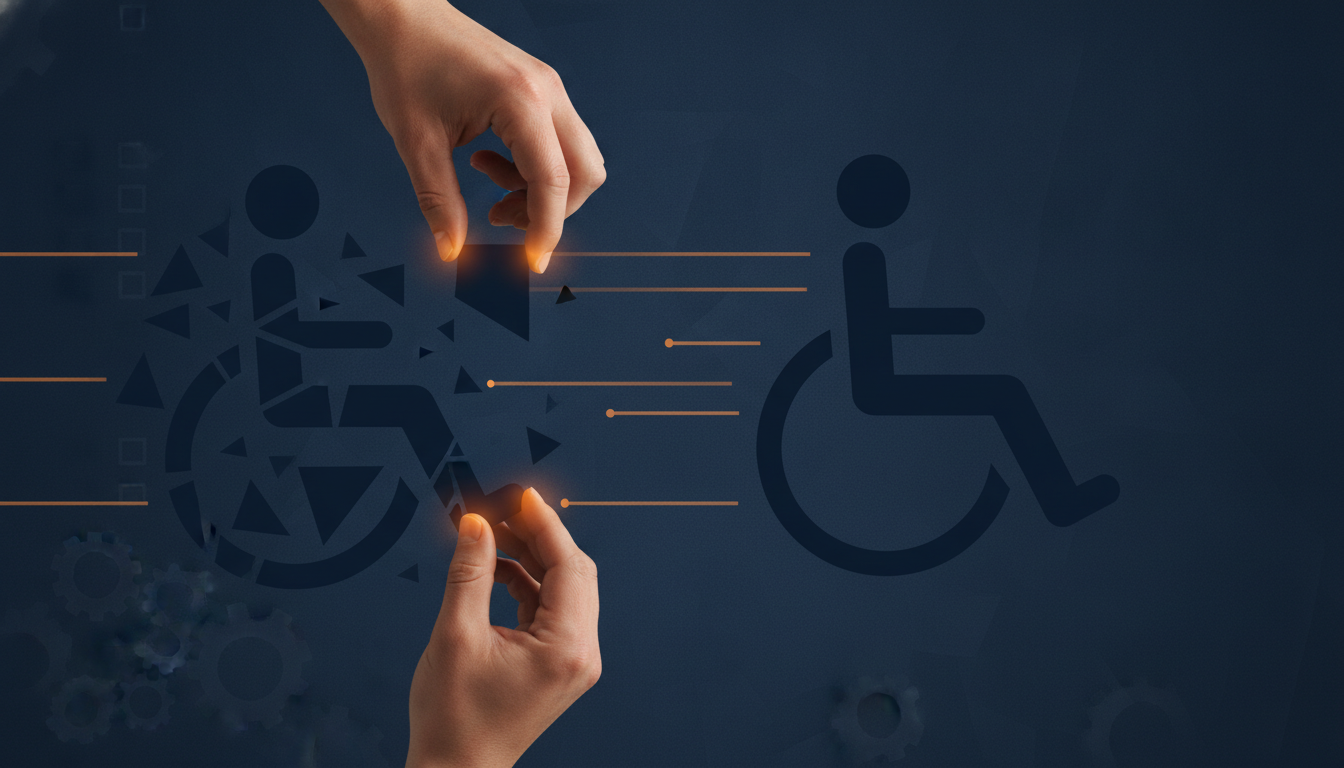
The Most Common Mistakes Companies Make When Trying to Be Disability Inclusive
The Most Common Mistakes Companies Make When Trying to Be Disability Inclusive
Michael Hingson identifies the most common mistakes companies make in disability inclusion as relying on compliance checklists, offering one-time training, ignoring assistive technology in design, and treating disability as separate from broader DEI strategy.
Most organizations want to be disability inclusive — but good intentions without the right framework often produce surface-level results that leave disabled employees and customers feeling unseen. The gap between policy and lived experience is where inclusion either lives or dies. Michael Hingson, blind since birth and a survivor of 9/11, has spent decades helping organizations move from checkbox compliance to genuine belonging.
Mistake #1: Treating Compliance as the Finish Line
Compliance checklists miss the lived experience gaps that determine whether disabled people actually feel welcome. Meeting ADA requirements or installing a ramp is a legal floor — not a cultural ceiling. Organizations that stop at compliance send an unintentional message: ‘We did the minimum so we don’t get sued.’ True inclusion asks a deeper question: ‘Would a person with a disability choose to stay, grow, and lead here?’ That question requires ongoing listening, not a one-time audit.
Mistake #2: Offering One-Time Disability Awareness Training
One-time training doesn’t drive culture change — it creates a brief awareness spike that fades within weeks. A single lunch-and-learn on disability etiquette may feel productive, but without follow-up, reinforcement, and leadership modeling, behaviors revert. Sustainable inclusion requires training woven into onboarding, management development, and team communication norms. Organizations that invest in ongoing education — including hearing directly from speakers with lived disability experience — build the muscle memory that transforms culture over time.
Mistake #3: Ignoring Assistive Technology During Product and Workplace Design
Assistive technology is ignored during product and workplace design far too often, creating exclusion baked into the foundation of a company’s tools. Screen readers, captioning software, and adaptive input devices are afterthoughts in most product cycles — added during accessibility audits rather than integrated from day one. The same is true of physical workplaces, onboarding systems, and internal platforms. When disabled employees encounter tools that don’t work for them, the message is clear: you were not considered. Inclusive design from the start is both smarter and more cost-effective than retrofitting accessibility later.
Mistake #4: Siloing Disability Outside the DEI Conversation
Disability inclusion is frequently excluded from DEI strategy, leaving it underfunded, understaffed, and disconnected from the organization’s broader equity goals. Many DEI initiatives center race, gender, and sexual orientation — critically important — while disability becomes an HR accommodation issue handled separately. But disability intersects with every other identity. Centering disability within DEI creates stronger advocacy networks, more thoughtful policy design, and a culture where all forms of difference are genuinely valued. Michael Hingson’s work emphasizes that moving from diversity to inclusion requires treating disability not as an edge case, but as a core dimension of the human experience.
Mistake #5: Assuming Rather Than Asking
Surface-level fixes often emerge from assumptions about what disabled people need — rather than from conversations with them. Organizations redesign spaces, revise job descriptions, or select adaptive tools without consulting the disabled employees those changes are meant to serve. This well-meaning paternalism undermines trust and wastes resources. The most effective disability inclusion programs are co-designed with disabled voices at the table — not just as beneficiaries, but as architects. As Michael Hingson often says, trust is built by listening first and leading second.
Frequently Asked Questions
What is the most common mistake companies make with disability inclusion?
The most common mistake is treating legal compliance as the endpoint. Meeting ADA requirements is a starting point, not a destination. Companies that stop at compliance miss the cultural, technological, and interpersonal dimensions that determine whether disabled employees and customers truly feel included.
Why doesn’t one-time disability training work?
One-time training creates a temporary awareness spike but doesn’t change behavior long-term. Without reinforcement, leadership modeling, and integration into everyday team culture, the lessons fade quickly. Ongoing education — including input from speakers with lived disability experience — is what drives lasting cultural change.
How should companies include disability in their DEI strategy?
Companies should treat disability as a core dimension of DEI — not an HR accommodation sidebar. This means including disabled voices in DEI planning, allocating dedicated budget and leadership focus, and recognizing that disability intersects with race, gender, and other identities across the workforce.
What role does assistive technology play in disability inclusion?
Assistive technology must be integrated from the design phase — not added as an afterthought. When screen readers, captions, and adaptive tools are considered from day one in products, platforms, and workplaces, inclusion becomes structural rather than remedial, saving time and cost while signaling genuine commitment.
How can Michael Hingson help organizations improve disability inclusion?
Michael Hingson delivers keynote talks and training that move organizations from surface-level compliance to authentic inclusion. Drawing on his lived experience as a blind professional and 9/11 survivor, he helps teams build trust, rethink assumptions about disability, and create cultures where every person can contribute fully.